

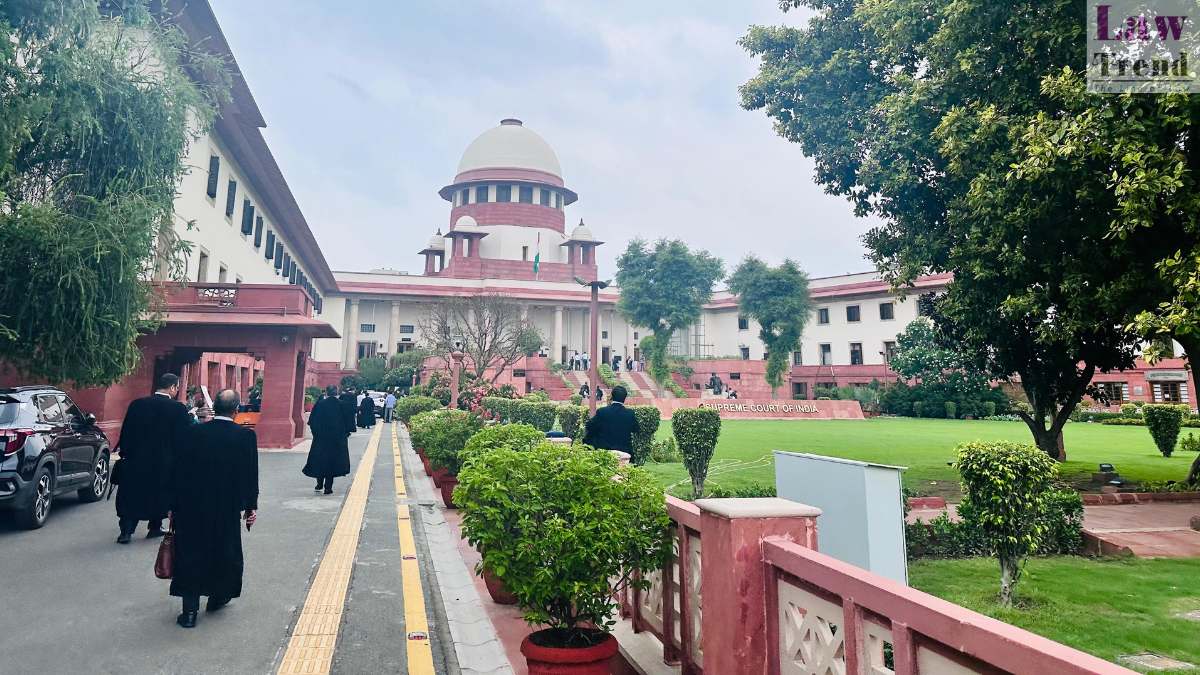
The Supreme Court has expunged adverse remarks made by the Madras High Court against IPS officer A. Arun, former Commissioner of Police, Greater Chennai, after accepting his unconditional apology over a preventive detention order he passed under the Tamil Nadu Goondas Act. The Court also cautioned that an apology cannot replace due care when exercising powers that affect a person’s liberty.
A Bench of Justice Vikram Nath, Justice R. Mahadevan and Justice Aparesh Kumar Singh made clear that its order was limited to the remarks and would not affect the High Court’s decision setting aside the detention order.
Background: Detention Under the Goondas Act
Arun, now Director of the Tamil Nadu Police Academy, was serving as Commissioner of Police, Greater Chennai, at the relevant time.
The case arose from Crime No. 178 of 2025, registered on 29th August 2025 on a complaint by one Ravi. He alleged that he had entered into a sale and construction agreement with M/s. Lokaa Developers Pvt. Ltd. for an apartment and paid ₹1,38,08,095 towards the consideration. The apartment was allegedly never handed over, and the property was allegedly dealt with in favour of third parties and later mortgaged on the basis of documents alleged to be forged.
The company’s directors, the detenue and his wife, were booked under Sections 409, 420, 465, 468, 471 and 120-B of the IPC. They were arrested on 1st September 2025 and remanded to judicial custody, and other cases on similar allegations were also registered against them.
On a proposal from the Inspector of Police, Central Crime Branch-II, Arun passed a detention order on 22nd September 2025 under Section 3(1) of the Tamil Nadu Act 14 of 1982, classifying the detenue as a “Goonda”.
The detenue’s daughter, Varsha Sharma, challenged the order through H.C.P. No. 2066 of 2025. On 29th May 2026, the Madras High Court allowed the petition and set aside the detention order, while making adverse observations against Arun in paragraphs 6, 8, 10 and 19 to 23 of its judgment.
Officer Tenders Unconditional Apology Before Supreme Court
Arun was personally present during the hearing. Senior counsel Sidharth Luthra, appearing for him, submitted that the officer had realised his error and was willing to tender an unconditional apology. He added that the remarks, if left on record, could seriously affect the officer’s professional reputation and career.
Additional Advocate General Prashanto Chandra Sen appeared for respondent nos. 2 to 5, while counsel Vairawan A.S. represented Varsha Sharma.
In his affidavit, Arun expressed regret for not apologising before the High Court and for failing to accept the error in his detention order. He stated that he ought to have accepted the error when summoned by the High Court, and assured the Court that he would exercise greater care in future.
Supreme Court on Preventive Detention Powers
Taking note of the apology, the Court underlined the standard expected of authorities exercising detention powers. It observed, “This assumes particular significance in matters of preventive detention, where the exercise of statutory power directly affects the liberty of an individual. Such power must, therefore, be exercised with utmost circumspection and in strict conformity with the requirements of law.”
The Bench added that “an officer holding a senior position in the police administration is expected to appreciate the significance of the duties entrusted to him and the responsibility that accompanies the exercise of statutory powers.”
While noting the officer’s regret and assurance, the Court cautioned, “We also caution that the tendering of an apology cannot be regarded as a substitute for due care in the exercise of powers affecting the liberty of a person.”
Outcome
Considering the apology, the assurance and the circumstances of the case, the Court accepted the apology and directed that the adverse remarks in paragraphs 6, 8, 10 and 19 to 23 of the High Court’s judgment be expunged. The appeal was disposed of.
Case Title: A. Arun v. Varsha Sharma & Ors.
Case No.: Criminal Appeal arising out of SLP (Crl.) No. 16725 of 2026
Bench: Justice Vikram Nath, Justice R. Mahadevan, Justice Aparesh Kumar Singh
Date: November 2, 2026


