

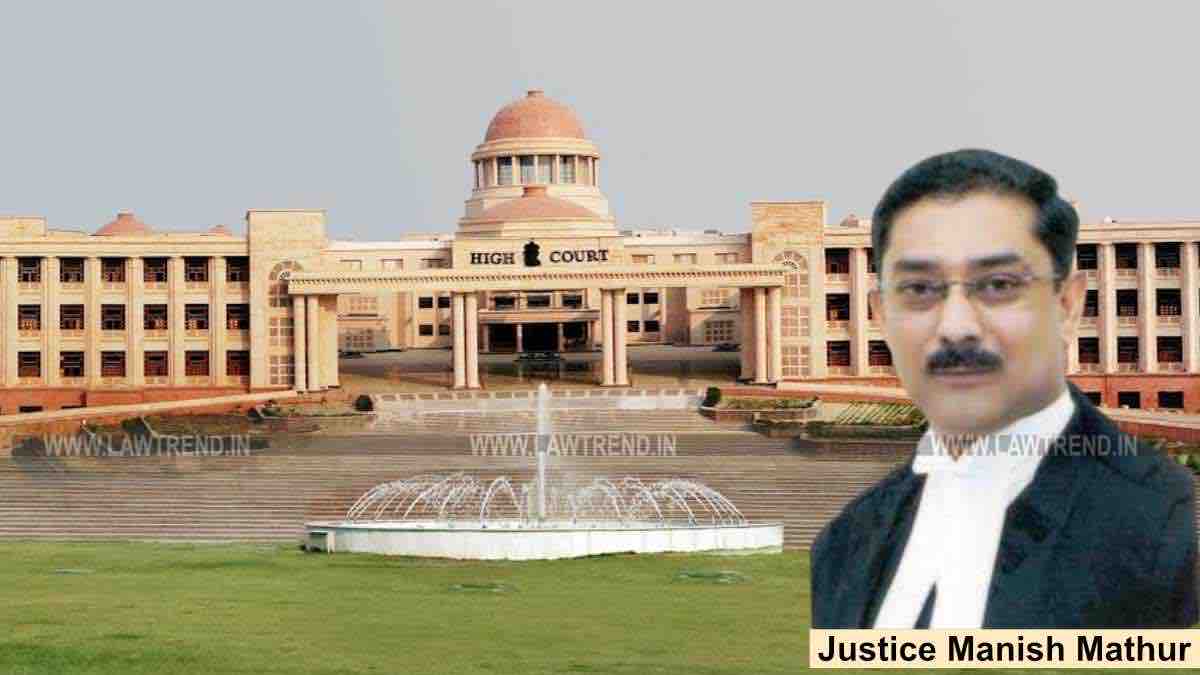
In an important ruling delineating the mandatory procedure prior to the commencement of a criminal trial, the High Court of Judicature at Allahabad (Lucknow Bench) held that recording a finding regarding the discharge of an accused under Section 227 of the Code of Criminal Procedure (CrPC) is an indispensable prerequisite before framing charges under Section 228 CrPC. Setting aside an order passed by the Special Judge, SC/ST Act, Lucknow, Justice Manish Mathur allowed the criminal appeal and held that even where charges have been previously set aside with a remand to frame charges afresh, the trial court cannot bypass the statutory requirement of considering discharge, whether upon an accused’s application or on its own motion.
Background of the Case
The proceedings stem from an FIR registered as Case Crime No. 423 of 2018 against the appellant, Satish Sharma. Following investigation, a charge-sheet was submitted on July 15, 2018, and a summoning order was issued by the trial court on July 28, 2018. The appellant had initially challenged the charge-sheet and summoning order under Section 482 CrPC (Application No. 3560 of 2019), but the petition was rejected on December 4, 2019.
Thereafter, the trial court framed charges against the accused on May 28, 2019, and the examination of Prosecution Witness 1 (P.W. 1) commenced. The appellant challenged the framing of charges in Criminal Appeal No. 1084 of 2019. On February 27, 2020, the High Court allowed the appeal, set aside the order framing charges dated May 28, 2019, and directed the trial court to frame charges afresh taking into consideration the provisions of Section 212 CrPC.
Pursuant to these directions, the matter was listed before the Special Judge, SC/ST Act, Lucknow, in Special Trial No. 301 of 2018. During these proceedings, the appellant sought the adjudication of an application under Section 91 CrPC for the production and summoning of documents, which had earlier been rejected, as well as the consideration of discharge under Section 227 CrPC. On June 29, 2026, the trial court rejected the appellant’s plea on the ground that the High Court’s remand order dated February 27, 2020, had only conferred jurisdiction to frame charges afresh under Section 212 CrPC, precluding the trial court from going beyond those directions. Aggrieved, the appellant approached the High Court under Section 14-A(1) of the Scheduled Castes and the Scheduled Tribes (Prevention of Atrocities) Act, 1989.
Submissions by the Parties
Senior Advocate Anurag Shukla, assisted by advocates Nandesh Verma, Shashwat Vajpayee, Nitish Shula, and Pranshu Agrawal, appearing for the appellant, contended that under the scheme of the CrPC, it is incumbent upon a trial court to record a finding regarding the discharge of an accused under Section 227 CrPC prior to framing charges under Section 228 CrPC. He argued that since no satisfaction had been recorded by the trial court under Section 227 CrPC, proceeding directly to Section 228 CrPC would vitiate the trial. To substantiate this position, he placed reliance on the Supreme Court rulings in Amit Kapoor v. Ramesh Chander, P. Vijayan v. State of Kerala, and Sajjan Kumar v. CBI. Furthermore, he argued that since the trial was reverted to the stage of framing charges after the earlier charges were quashed, the application under Section 91 CrPC ought to be adjudicated afresh.
On the other hand, the learned Additional Government Advocate (AGA) appearing for respondent no. 1 (State of Uttar Pradesh) and advocate Mrs. Suniti Sachan, appearing for respondent no. 2, opposed the appeal. They submitted that the appellant’s application under Section 91 CrPC had already been rejected on May 1, 2019, an order that had attained finality without any challenge in the previous Section 482 proceedings. They further cited objections filed on March 16, 2026, maintaining that once a discharge application had already been disposed of, the issue could not be reopened merely because fresh charges were to be framed.
In rejoinder, the appellant’s counsel clarified that no application had been filed earlier by the appellant under Section 227 CrPC seeking discharge, nor had any such power been exercised by the court suo motu, a submission corroborated by certified copies of the trial court’s order sheet.
The Court’s Analysis and Observations
Examining the statutory framework of Section 227 and Section 228 CrPC, the High Court observed that Section 227 requires the judge to consider the record and documents, hear both parties, and discharge the accused if there are insufficient grounds for proceeding, recording reasons for doing so. The court stressed:
“In the considered opinion of this Court, the stage of Section 227 Cr.P.C. for considering discharge of accused is a sine quo non for proceeding further or not to the stage of Section 228 Cr.P.C. The provision of Section 227 Cr.P.C. also does not make it apparent that the same is required to be considered by trial court only upon an application to be submitted by accused. On the contrary, the provision indicates that trial court on its own also is required to consider the aspect of discharge prior to proceeding under Section 228 Cr.P.C.”
The High Court reviewed three seminal decisions of the Supreme Court explicitly addressing this procedural mechanism:
- Amit Kapoor v. Ramesh Chander (2012) 9 SCC 460: The Supreme Court highlighted that the satisfaction of the court regarding the existence of constituents of an offence is a condition precedent, observing: “There is a fine distinction between the language of Sections 227 and 228 of the Code. Section 227 is the expression of a definite opinion and judgment of the Court while Section 228 is tentative. Thus, to say that at the stage of framing of charge, the Court should form an opinion that the accused is certainly guilty of committing an offence, is an approach which is impermissible in terms of Section 228 of the Code.”
- P. Vijayan v. State of Kerala (2010) 2 SCC 398: The Supreme Court noted that Section 227 confers special power to discharge an accused at the threshold if there is not sufficient ground to proceed, explaining: “This provision was introduced in the Code to avoid wastage of public time when a prima facie case was not disclosed and to save the accused from avoidable harassment and expenditure.”
- Sajjan Kumar v. CBI (2010) 9 SCC 368: The Supreme Court formulated key principles governing Sections 227 and 228 CrPC, affirming that while the trial judge has the power to sift and weigh evidence to see if a prima facie case is made out, “The court cannot act merely as a post office or a mouthpiece of the prosecution but has to consider the broad probabilities of the case, the total effect of the evidence and the documents produced before the court, any basic infirmities, etc.” It was further held that if two views are possible and one gives rise to suspicion only, as distinguished from grave suspicion, the trial judge is empowered to discharge the accused.
Applying these precedents, Justice Mathur rejected the trial court’s stance that it was restrained by the earlier High Court remand order:
“The finding recorded in the impugned order that such a plea regarding discharge cannot be entertained since directions have been issued only for framing of charges under provision of Section 212 Cr.P.C. does not find favour with this Court. There is no prohibition indicated in the order dated 27.02.2020 regarding adherence by trial court to Section 227 Cr.P.C. Even otherwise, once the said provision has been held to be mandatory by Supreme Court, no aspect of estoppel, waiver or acquiescence can come into play and Trial court was therefore bound to have recorded a satisfaction under Section 227 Cr.P.C. prior to proceeding under Section 228 Cr.P.C, if required.”
Addressing the application under Section 91 CrPC, the High Court clarified that the provision leaves the summoning and production of documents to the discretion of the trial court without restricting it to a particular stage. Because the earlier charges had been quashed, the trial had reverted to the stage prior to framing of charges, rendering the earlier rejection redundant. Consequently, the trial court erred in refusing to hear the plea simply because explicit liberty was not granted in the earlier High Court order.
The Decision
Holding that the trial court’s approach was legally unsustainable, the High Court allowed the criminal appeal and set aside the impugned order dated June 29, 2026.
The High Court directed the trial court to first consider the aspect of discharge of the appellant under Section 227 CrPC either on the next date fixed or within a period of 15 days thereafter, recording reasons if it fails to do so within that timeline. The court specifically clarified that the framing of charges shall remain subsequent to, and strictly dependent on, the order passed under Section 227 CrPC.
The trial court was also granted liberty to re-adjudicate the appellant’s Section 91 CrPC application on its own merits by applying its independent reasoning.
Case Title: Satish Sharma v. State Of U.P. Thru. Secy. Home Lko. And Another
Case No.: Criminal Appeal No. 1814 of 2026
Bench: Justice Manish Mathur
Date: September 29, 2026




