

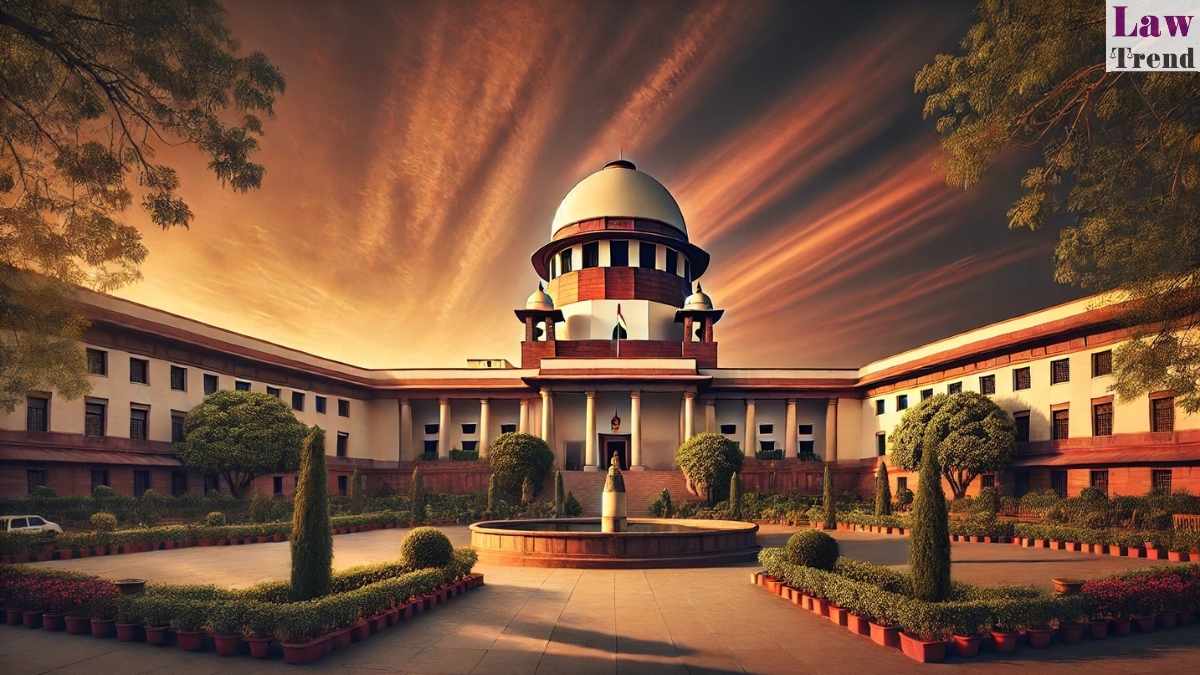
The Supreme Court on Wednesday delivered a split verdict on whether petitions challenging the Chief Election Commissioner and Other Election Commissioners Act, 2023 should be referred to a Constitution Bench, with Justice Dipankar Datta declining the Union government’s request and Justice Satish Chandra Sharma holding that the case raises a substantial question of constitutional law requiring consideration by a larger bench.
Despite differing on the need for a reference, the two judges agreed that the matter should be placed before the Chief Justice of India for constitution of a five-judge bench so that the constitutional issues can be decided without further delay.
The petitions concern the validity of the 2023 legislation governing appointments to the Election Commission, particularly the exclusion of the Chief Justice of India from the three-member selection committee for appointing the Chief Election Commissioner and Election Commissioners.
Judges Differ on Need for Reference
Justice Datta rejected the government’s submission that the challenge should be referred to a Constitution Bench. Justice Sharma took the opposite view, holding that the issues involved require an authoritative determination under Article 145(3) of the Constitution.
Article 145(3) requires at least five Supreme Court judges to hear cases involving a substantial question of law concerning interpretation of the Constitution.
The bench also expressed concern about constitutional references remaining pending for long periods, observing that delays extending from five to 20 years or more do not reflect well on the institution. It stressed that resolving constitutional questions remains one of the Supreme Court’s core responsibilities.
Challenge to Selection Committee Under 2023 Act
The petitions challenge Section 7 of the 2023 Act, which provides for a selection committee consisting of the Prime Minister, the Leader of the Opposition in the Lok Sabha and a Union Cabinet Minister nominated by the Prime Minister.
The challenge centres on Parliament’s decision to exclude the Chief Justice of India from the committee.
Before the enactment of the law, a five-judge Constitution Bench in Anoop Baranwal v. Union of India had ruled in March 2023 that appointments of the CEC and Election Commissioners would be made by the President on the advice of a committee comprising the Prime Minister, the Leader of the Opposition and the Chief Justice of India.
That arrangement was to continue until Parliament enacted a law under Article 324(2) of the Constitution.
Parliament subsequently passed the 2023 Act in December that year, replacing the CJI on the selection committee with a Union Cabinet Minister nominated by the Prime Minister.
Justice Datta Raises Independence Concerns
While pronouncing his opinion, Justice Datta made prima facie observations concerning the composition of the selection committee.
He observed that expecting a Cabinet Minister to take a position contrary to the Prime Minister or the government would be unrealistic, and said the inclusion of a Cabinet Minister did not provide the kind of independent counterweight that a neutral member could bring to the selection process.
Justice Datta also stressed that free and fair elections require an Election Commission that is not only independent in substance but is also perceived as independent. He observed that a member nominated by the Prime Minister could not ordinarily be expected to oppose the Prime Minister.
His observations were made at the stage of considering the reference question, while the constitutional challenge to the legislation itself remains pending.
Remarks on Collegium System
Justice Datta also responded to criticism of the Collegium system raised by Solicitor General Tushar Mehta during the hearings.
He rejected the characterisation that judges simply appoint judges, describing that formulation as a misconception and pointing to the consultation process involving inputs from the State and Union executives as well as intelligence agencies.
He also referred to Dr B.R. Ambedkar’s vision while discussing the functioning of institutional appointment mechanisms and highlighted concerns over selective implementation by the executive.
Justice Sharma Favours Constitution Bench Decision
Justice Sharma disagreed with Justice Datta on the reference issue and concluded that the questions raised in the petitions require authoritative determination by a Constitution Bench under Article 145(3).
With the two judges taking different positions, the matter will now be placed before the Chief Justice of India for constitution of an appropriate five-judge bench.
The substantive challenge to the 2023 Act, including the validity of the selection mechanism under Section 7, remains pending.




