

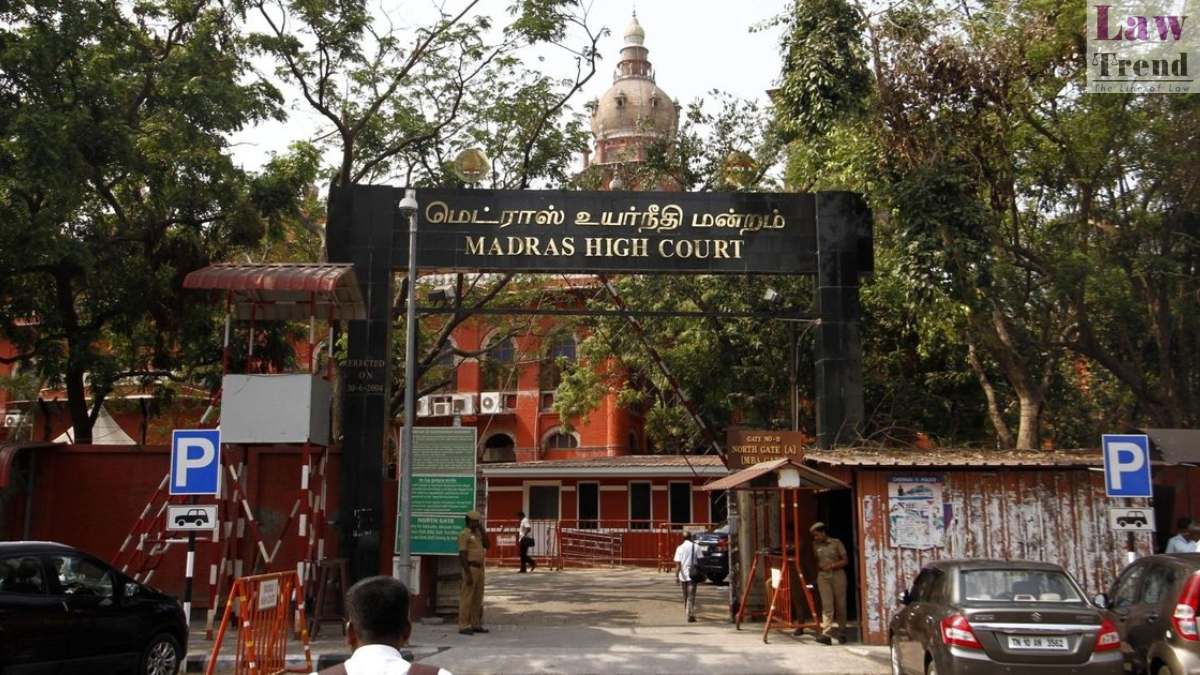
The Madras High Court has ordered a former finance manager to pay Rs 50 lakh in compensation to the executive director of a Chennai-based policy research centre for tarnishing his reputation through unfounded workplace allegations of financial misconduct.
In an order issued on September 21, Justice K. Govindarajan Thilakavadi ruled that accusing a senior professional of financial misappropriation represents a grave charge of moral and professional delinquency that inherently degrades their standing in society and among academic and professional peers.
The court granted the relief in a civil defamation suit brought by the executive director of the Inclusion Economics India Centre, an outfit functioning within the Institute for Financial Management and Research (IFMR). While the executive director had sought over Rs 1 crore in compensation, the bench fixed the sum at Rs 50 lakh after noting that the plaintiff had established significant injury to dignity and professional standing, but had not demonstrated direct, measurable monetary loss such as lost earnings or cancelled engagements.
Uncontested Allegations And Judicial Assessment
The defendant, who previously served as the centre’s projects finance manager, neither appeared during the proceedings nor submitted a written defense or testimony. Consequently, the court noted that the plaintiff’s oral statements and corroborating documentary trail stood unchallenged.
Justice Thilakavadi remarked in the order that the manager’s accusations went beyond routine workplace grievances or criticism. By directly imputing that the executive director misappropriated institutional resources, the communications struck at his personal honesty and professional integrity.
Assessing the appropriate compensation, the bench held that damages cannot merely mirror the amount demanded in the plaint. Instead, the final award was calibrated by weighing the severity of the imputations, the professional circles in which they were shared, the plaintiff’s standing, and the distress caused.
Origins Of The Institutional Dispute
The underlying friction began within the Inclusion Economics India Centre, which conducts policy research in partnership with state and central government departments as well as international researchers. The defendant had joined the centre as projects finance manager in June 2018 on a monthly salary of Rs 1,41,667.
According to court filings, an internal audit was initiated on March 24, 2022, following an alert from a whistleblower regarding financial irregularities. The inspection uncovered fund misappropriation, leading to the manager tender of resignation the following day, March 25.
The executive director stated that when confronted with the audit findings, the manager acknowledged his actions during a telephone discussion with the registrar and chief financial officer, attributing the conduct to greed. The manager subsequently returned Rs 6,07,988 to the institution across two separate instalments.
Email To Auditor Triggered Legal Action
The basis for the defamation claim arose two months later. On May 26, 2022, the former manager sent an email to the forensic auditor containing allegations against the executive director’s conduct and character. The communication was subsequently forwarded to the institution’s registrar, and the executive director became aware of its contents on October 11, 2022.
Before initiating the lawsuit, the executive director served a legal notice on December 16, 2022, which drew a response from the former manager on December 20. An employee disciplinary action report followed on February 7, 2023.
Placing these records before the bench, the executive director argued that the email was a deliberate bid to inflict professional damage. The high court concluded that the documentary record substantiated both the transmission of the defamatory material to individuals involved in institutional management and auditing, and the severe reputational harm that followed.




