

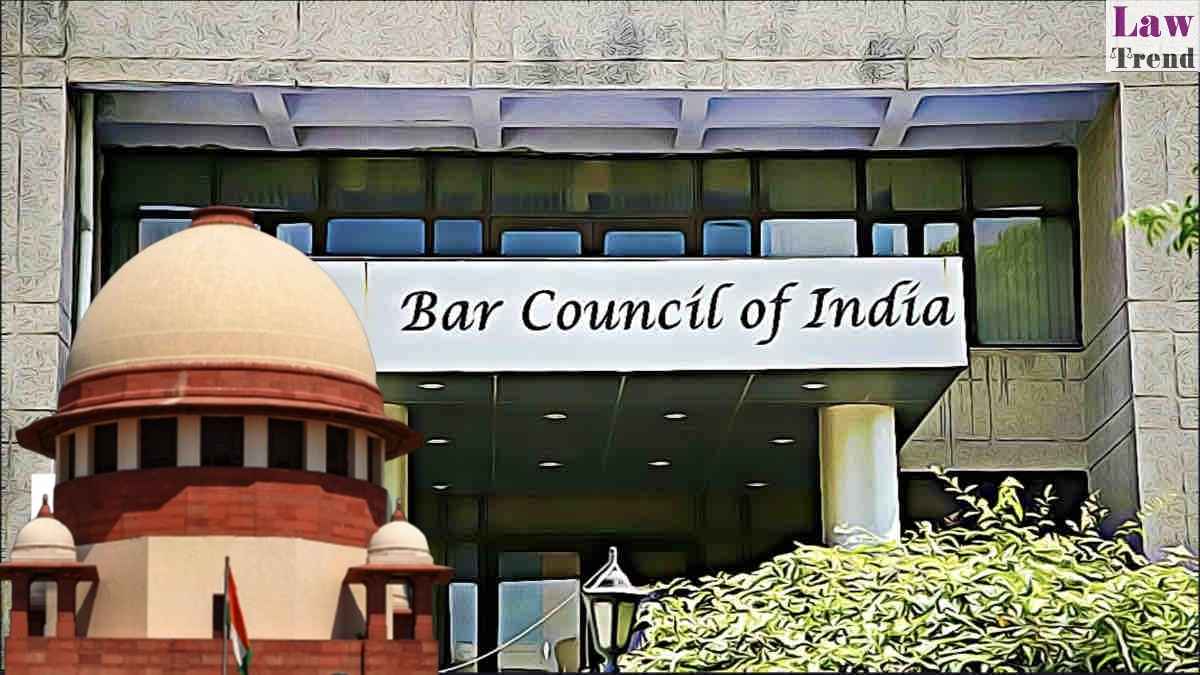
The Supreme Court on Wednesday raised questions over the extent of the Bar Council of India’s authority in the field of legal education, observing that while the BCI may prescribe curriculum, duration of courses and standards of legal education, the issue of whether it can control or run law colleges requires examination.
A Bench of Chief Justice of India Surya Kant and Justices Joymalya Bagchi and V Mohana was hearing a petition concerning funds transferred to BCI Trust PEARL-First, which replaced the earlier BCI trust in 2020.
The Court issued notice on the petition filed by Girish Mittal. Notice was accepted by the BCI’s standing counsel, and the Bench also directed that a copy be served on the office of Solicitor General Tushar Mehta.
Court Flags Scope of BCI’s Role
During the hearing, CJI Surya Kant observed that the BCI can frame curriculum, determine the duration of legal education programmes and take measures for promoting legal education, but questioned whether those powers extend to controlling educational institutions.
The Bench indicated that it would examine the scope of the BCI’s authority to regulate and control law universities.
The Court said the central question concerned how far the BCI can regulate legal education, including the interpretation of Section 7(1)(h) of the Advocates Act, 1961, which empowers it to promote legal education and lay down standards of such education.
The CJI also indicated that the issue could be referred to a larger Bench if necessary.
Plea Raises Questions Over Law Colleges in Goa and Andhra Pradesh
The petition raises concerns over the creation and functioning of two law colleges in Goa and Andhra Pradesh following arrangements entered into by BCI Trust PEARL-First with the respective State governments.
Questions have also been raised about the routing and utilisation of BCI funds in connection with the trust and the two institutions.
Appearing for the petitioner, Advocate Prashant Bhushan raised concerns regarding the transfer of funds to the new trust. He referred to the role of Manan Kumar Mishra, who has headed the BCI since 2012, in the creation of PEARL-First and stated that Mishra had declared himself a lifetime trustee of the new trust.
Petitioner Alleges Conflict Between Regulatory and Management Roles
Bhushan submitted that the laws governing the two colleges effectively place their management under the control of the BCI.
He told the Court that 27 of the 35 members of the colleges’ Executive Council are nominated by the BCI and that the relevant Acts also provide for the trust to run the institutions.
The petitioner argued that such an arrangement conflicts with the principle that a regulator should not itself run an institution that it regulates. Bhushan referred, among other cases, to the Supreme Court’s ruling concerning the BCCI while advancing this submission.
Respondent Defends BCI’s Powers
Senior Advocate Atmaram Nadkarni, appearing for a respondent, maintained that the BCI does possess powers in relation to legal education and said the position could be demonstrated from the statutory provisions.
He referred to the regulatory framework governing medical education and submitted that the Medical Council of India had also regulated medical education while dealing with enrolment of doctors. He further referred to a Constitution Bench judgment and the position taken by the University Grants Commission concerning medical education.
Concerns Raised Over Funds and College Approvals
Senior Advocate Shobha Gupta also raised concerns regarding funds transferred to the BCI Trust PEARL-First.
She submitted that donations running into crores were being received by the BCI Trust in connection with approvals granted to law colleges and told the Court that relevant documents would be placed on record.
After hearing the submissions, the Supreme Court issued notice and decided to examine the statutory scope of the BCI’s powers in regulating legal education and its involvement in the management of law institutions.




