

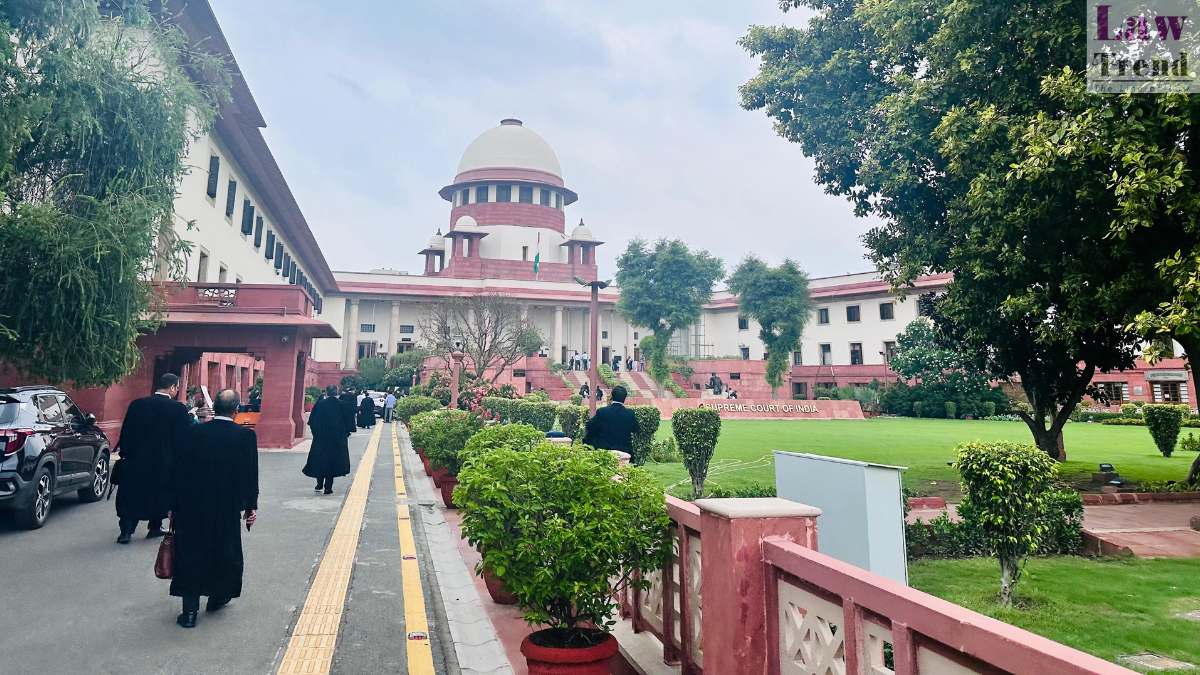
The Supreme Court has concluded its suo motu proceedings concerning a controversial Class 8 National Council of Educational Research and Training (NCERT) social science textbook following the replacement of a chapter that discussed corruption in the judiciary.
A three-judge bench comprising Chief Justice Surya Kant, Justice Joymalya Bagchi, and Justice V. Mohana closed the matter after noting that the contentious portion had been excised and substituted in accordance with recommendations submitted by a central government-appointed expert committee. The ruling was issued in a September 1 order that was subsequently released.
Critique Welcomed but Verification Required
Addressing the broader issue of public scrutiny, the top court underscored that the judiciary is neither resistant nor opposed to institutional criticism. The judges observed that informed, equitable, and constructive evaluations serve as an essential component of a thriving constitutional democracy, aiding both institutional accountability and self-correction.
The bench emphasized that the primary distinction to be maintained is between responsible discourse and unverified assertion, rather than between criticism and complete silence. However, the court cautioned that while democratic critique is legitimate, it must be presented through appropriate channels and rational mechanisms instead of being introduced without verification into school curricula directed at impressionable children.
Chronology of Bans and Curriculum Review
The controversy initially led to stern judicial intervention on February 26, when the apex court instituted a comprehensive ban prohibiting any further publication, reprint, or digital distribution of the Class 8 textbook containing the disputed references. During those initial hearings, the bench had remarked that the material had dealt a damaging blow to the institution, likening the situation to a gunshot wound from which the judiciary was bleeding.
Subsequent proceedings on March 11 resulted in court directions instructing the central government to assemble a committee of domain specialists within one week. That panel was tasked with finalizing and revising legal studies curricula not only for Class 8 students but also for higher secondary classes.
Relief Granted to Drafting Academics
The court also revisited its earlier disciplinary directives concerning the three scholars involved in drafting the contentious material: Professor Michel Danino, Suparna Diwakar, and Alok Prasanna Kumar.
In its March 11 directive, the bench had ordered central and state authorities to disassociate from the three academics, having initially recorded that they knowingly and deliberately presented skewed facts to cast the Indian judicial system in a negative light.
That finding was later withdrawn after the scholars filed a joint application explaining the development workflow. The academicians clarified that the curriculum was formulated through a collective editorial process rather than by any single individual acting alone.
Accepting their explanation, the bench recalled the adverse finding of deliberate misrepresentation and clarified that its past remarks had evaluated the text itself rather than the authors personally. The court ultimately modified the March 11 order, allowing central authorities, state governments, union territories, state-funded bodies, and public universities to determine any future association with the three scholars independently, free from the influence of the court’s earlier remarks.


