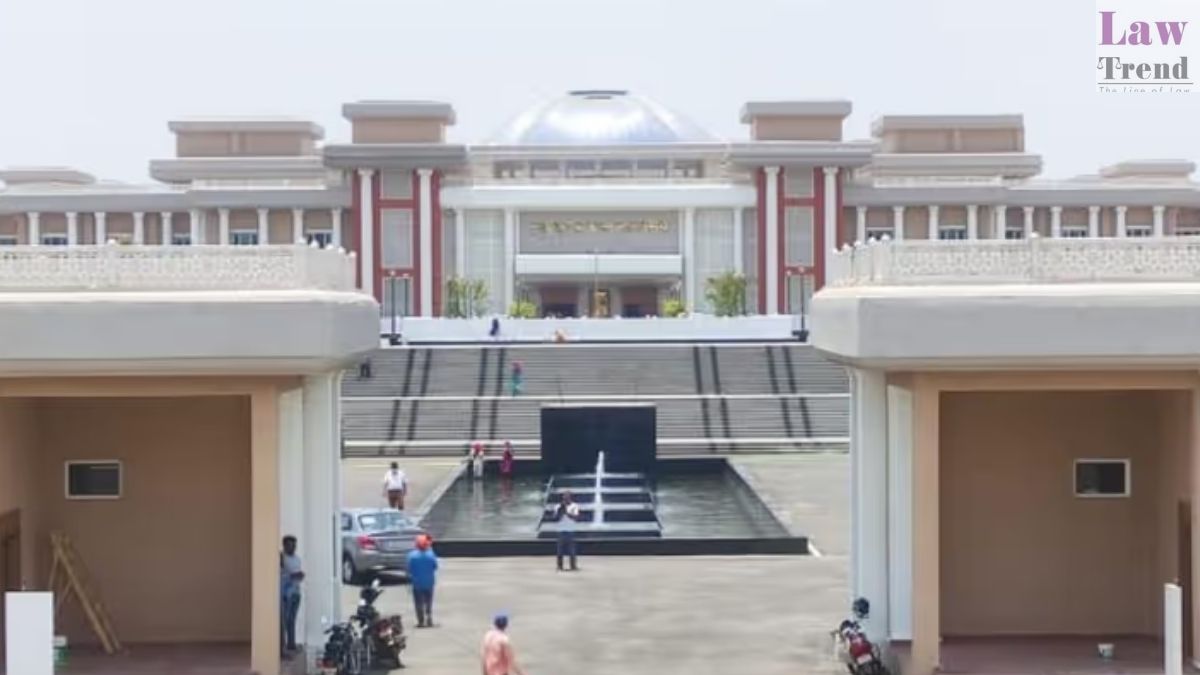
The High Court of Jharkhand at Ranchi, presided over by Justice Pradeep Kumar Srivastava, has dismissed a criminal appeal filed by a former Bharat Coking Coal Limited (BCCL) clerk challenging his conviction for demanding and accepting an illegal gratification of Rs. 300 in 1993. While upholding the judgment of conviction on merits under Sections 7 and 13(1)(d) read with Section 13(2) of the Prevention of Corruption Act, 1988, the High Court modified the substantive sentence of two years’ rigorous imprisonment to the period of custody already undergone by the appellant, citing the lapse of over three decades since the occurrence and the absence of any prior criminal antecedents.
Background of the Case
The matter originates from a complaint lodged on March 22, 1993, by Ramdhari Harijan, an Ex-Minor Loader at Basudeopur Colliery, BCCL, Dhanbad. The complainant alleged that Samir Kumar Choudhary, who was functioning as a Fund Clerk at the colliery, demanded a bribe of Rs. 300 to process and forward his application for Coal Mines Provident Fund (CMPF) arrear payments to the CMPF office in Dhanbad.
Following a preliminary verification by a Sub-Inspector of the Central Bureau of Investigation (CBI), Dhanbad, which confirmed the allegations to be genuine, R.C. Case No. 4(A)/1993(D) was registered. A CBI trap team was constituted, and pre-trap formalities were conducted in the presence of independent witnesses, including the application of phenolphthalein powder to currency notes totaling Rs. 300.
On the afternoon of March 22, 1993, the trap team proceeded to the colliery office. The complainant approached Choudhary while a shadow witness observed discreetly. Upon a renewed demand by Choudhary, the complainant handed over the tainted notes. Choudhary accepted the money with his left hand, counted it with both hands, and placed it inside the left-hand drawer of his office table. Upon receiving a pre-arranged signal from the shadow witness, the CBI team intervened, apprehended Choudhary, and recovered the tainted currency from the table drawer. Chemical analysis of hand wash solutions confirmed the presence of phenolphthalein and sodium carbonate.
Following the completion of the investigation and receipt of prosecution sanction, a charge-sheet was submitted. On February 26, 2005, the Special Judge, CBI-cum-3rd Additional Sessions Judge, Dhanbad, convicted Choudhary and sentenced him to undergo two years of rigorous imprisonment for each offense along with a consolidated fine of Rs. 1,000. Choudhary subsequently challenged this judgment before the High Court.
Arguments of the Parties
Senior Counsel appearing for the appellant contended that the trial court’s verdict was unsustainable due to major contradictions in witness testimonies. It was argued that the sanction order was typed by a typist upon the dictation of the General Manager, who was never examined as a witness, thereby causing prejudice to the defense. Counsel further highlighted that shadow witnesses gave conflicting accounts regarding procedural details, one employee witness turned hostile, and the bribe money was recovered from a drawer rather than from the direct physical possession of the appellant. In the alternative, the appellant prayed for a reduction in sentence, submitting that the incident occurred in 1993, the bribe involved was Rs. 300, more than 30 years had elapsed, he had no prior criminal record, and he had already deposited Rs. 7,000 in total fines (including a Rs. 5,000 conditional deposit for provisional bail) while serving one month and one day in custody.
Counsel representing the CBI vehemently opposed the appeal, asserting that the oral and documentary evidence comprehensively established the demand, acceptance, and recovery of the illegal gratification. The CBI submitted that the appellant failed to offer any valid explanation to rebut the statutory presumption under Section 20 of the Prevention of Corruption Act, 1988, rendering the trial court’s judgment lawful and proper.
Court’s Analysis
Upon evaluating the trial court records and witness depositions, the High Court held that the minor inconsistencies highlighted by the defense did not affect the core structure of the prosecution’s case.
Examining the evidence on record, Justice Pradeep Kumar Srivastava observed: “I have gone through the testimony of the prosecution witnesses as well as the documentary evidence led by the prosecution very minutely and find that the contradictions pointed out by the learned Sr. counsel for the appellant does not appear to be substantive and affecting the core of the prosecution case.”
The Court affirmed the trial court’s finding of guilt, stating: “It appears that the oral and documentary evidence relied upon by the prosecution has categorically proved that the appellant had demanded and accepted the illegal gratification for processing the application of PF arrear of the complainant.”
Addressing the plea for reduction of sentence, the Court evaluated the mitigating circumstances: “So far as quantum of sentence of the appellant is concerned, although minimum sentence is of six months under Section 7 of the PC Act but in the facts and circumstances of this case, it appears that there was demand of Rs. 300 for processing the dues of PF of the complainant.”
Highlighting the prolonged duration of the legal proceedings, the Court noted: “The appellant has already undergone agony of the trial for a period of three decades and there is no previous criminal antecedent.”
Justice Pradeep Kumar Srivastava concluded: “Therefore, it appears that the appellant has sufficiently been punished for his guilt.”
Decision
The High Court dismissed the appeal on merits but modified the sentence of imprisonment to the period already undergone by the appellant, along with the fine amounts already deposited. As the appellant was on bail, he was discharged from the liabilities of his bail bonds.
Case Title: Samir Kumar Choudhary v. The State of Jharkhand through C.B.I.
Case No.: Cr. Appeal (S.J.) No. 314 of 2005
Bench: Justice Pradeep Kumar Srivastava
Date: 20/08/2026