

Onerous Bail Conditions Frustrate Purpose Of Statutory Bail, Amount To Giving Bail With One Hand And Taking It Away With Other: Jharkhand High Court
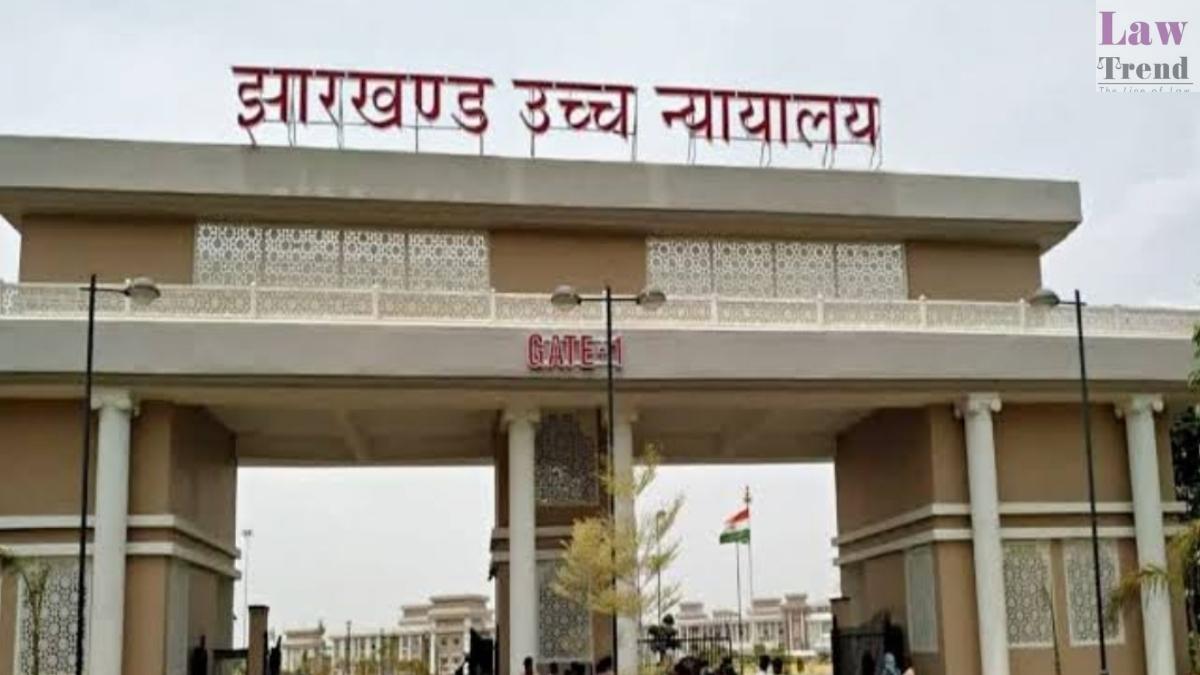

The High Court of Jharkhand, presided over by Justice Sanjay Kumar Dwivedi, has granted a two-week extension to a petitioner to surrender before the trial court after depositing specified monetary amounts, holding that imposing onerous conditions while granting statutory bail frustrates the very purpose of bail and amounts to granting relief with one hand while taking it away with the other.

Background of the Case

The petitioner, Sapath Kumar Chandra alias Sapath Kumar Chand, aged about 57 years, had approached the High Court through a Criminal Miscellaneous Petition (Cr.M.P. No. 2606 of 2026) seeking modification of an order dated March 26, 2014, passed in Anticipatory Bail Application (A.B.A. No. 5103 of 2013).

Under the 2014 order, a co-ordinate bench of the High Court had granted anticipatory bail to the petitioner subject to the condition that he pay Rs. 35,000/- each to three individuals—Sanjay Kumar Dubey, Rajesh Sah, and Arun Singh—and produce a bank draft of Rs. 23,000/- issued in favor of Jeevan Bhagat, alongside executing a bail bond of Rs. 10,000/- with two sureties of like amount to the satisfaction of the Sub-Divisional Judicial Magistrate, Godda.

Arguments of the Parties

Learned counsel appearing for the petitioner, Mr. K.K. Ojha, submitted that the petitioner was unable to surrender within the stipulated time following the 2014 order because he could not arrange the required monetary sums at that time. He informed the court that the petitioner has now arranged the required amount, can deposit it before the learned trial court within a week, and prayed for two weeks’ time to surrender.

On the other hand, learned Additional Public Prosecutor Mr. K.K. Singh (S.C.-V.), representing the State of Jharkhand, opposed the plea, arguing that despite being granted the privilege of anticipatory bail in 2014, the petitioner failed to surrender for a prolonged period, and the modification petition was filed after a lapse of many years.

READ ALSO  Employee Cannot Challenge Colleague's Reinstatement Without Proving Direct Legal Injury: Allahabad High Court

Court’s Analysis and Key Observations

Evaluating the matter, the High Court observed that the bail granted to the petitioner was admittedly a statutory bail and criticized the imposition of harsh monetary prerequisites.

The High Court observed:

“The co-ordinate bench of this court, while granting such bail, imposed an onerous condition, thereby frustrating the very purpose of granting statutory bail. Grant of bail is an exercise of judicial discretion by the Court, based on consideration of several factors. The imposition of conditions while granting bail is also part of such judicial discretion. Such conditions must be based on sound judicial principles and should not be arbitrary or mechanical. Bail conditions should not be imposed merely for the sake of imposing conditions.”

Addressing the nature of bail conditions, the court further remarked:

READ ALSO  Before Summoning the Accused Magistrate Not Required to Record Statement of Public Servant who Filed the complaint: SC

“Under the guise of imposing bail conditions, no onerous condition should be imposed. Conditions which are inherently onerous or incapable of being complied with by the accused would amount to granting bail with one hand and taking it away with the other.”

Regarding the delay in filing the modification petition, the court noted that there is no period of limitation for approaching the High Court under Section 482 of the Code of Criminal Procedure (Cr.P.C.), which corresponds to Section 528 of the Bharatiya Nagarik Suraksha Sanhita, 2023.

READ ALSO  Karnataka HC Quashes Proceedings Against Man Accused of Raping Minor, Orders Marriage With Victim within One Month

Decision of the Court

Taking into consideration the petitioner’s submission that he has now arranged the required amount and will deposit it before the learned court within one week, the High Court extended two weeks’ time from the date of the order for the petitioner to surrender before the trial court.

The High Court modified the order dated March 26, 2014, passed in A.B.A. No. 5103 of 2013, to that extent, keeping the remaining conditions intact, and disposed of the petition.

Case Title: Sapath Kumar Chandra @ Sapath Kumar Chand v. The State of Jharkhand
Case No.: Cr.M.P. No. 2606 of 2026
Bench: Justice Sanjay Kumar Dwivedi
Date: 21.08.2026

Law Trend
Law Trendhttps://lawtrend.in/
Legal News Website Providing Latest Judgments of Supreme Court and High Court

Related Articles

Latest Articles

