

Ex-Parte Inquiry Cannot Dispense With Rule 7 Procedure and Proof of Evidence: Allahabad High Court Quashes KGMU Associate Professor’s Termination
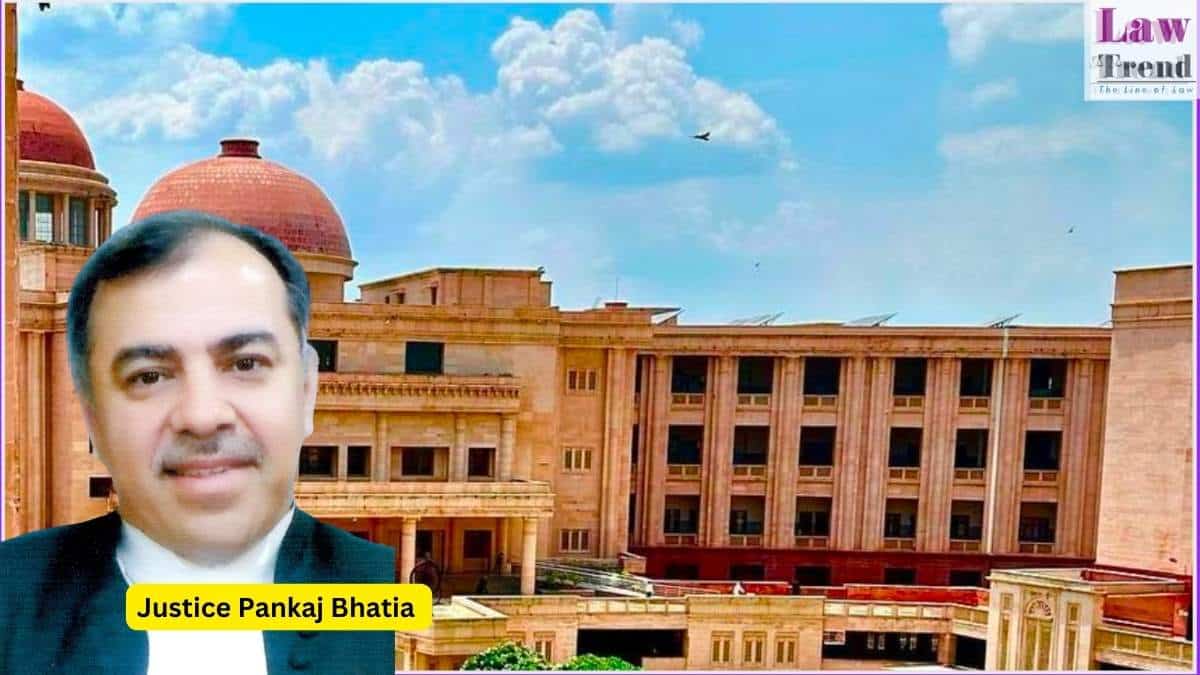

In a significant ruling on departmental inquiry procedures, the Allahabad High Court (Lucknow Bench), presided over by Justice Pankaj Bhatia, has set aside the termination order of Dr. Neetu Singh, an Associate Professor at King George’s Medical University (KGMU). The High Court held that non-participation by an employee in disciplinary proceedings does not exempt an inquiry committee from following mandatory procedural rules, nor does it allow charges to be treated as proved without adducing and proving evidence through witnesses. Remanding the matter back to the stage of filing a reply to the charge-sheet, the Court held that the petitioner is entitled to all consequential benefits of reinstatement with back wages, leaving it open to KGMU to assign work or not during the continuation of proceedings.

Background of the Case

Dr. Neetu Singh was appointed as Associate Professor (Non-Medical) in the Molecular Biology Lab at KGMU’s Centre for Advanced Research Department. During her tenure, she submitted a project proposal titled “Proposal for Genetic Screening of Hemoglobinopathies in pregnant women in the State of Uttar Pradesh” to the National Health Mission (NHM) under the Ministry of Health and Family Welfare, Government of India. On March 25, 2019, the NHM approved a sum of Rs. 385 lakhs for the project and designated the petitioner to act as Nodal Officer.

Controversy arose on May 8, 2019, when Dr. Ashutosh Kumar, Head of the Pathology Department, submitted a confidential report alleging that the petitioner’s proposal was similar to a project submitted by another faculty member, Dr. Neetu Nigam, suggesting plagiarism and the stealing of intellectual rights. In response, Dr. Neetu Singh denied the allegations and subsequently issued legal notices of defamation to Dr. Ashutosh Kumar and Dr. Neetu Nigam.

Following a vigilance report dated August 31, 2019, recommending disciplinary action, KGMU served a charge-sheet dated January 1, 2020, containing four charges against the petitioner. The charges alleged misconduct, insubordination, attempt to steal intellectual property rights, unauthorized pressure by issuing legal notices, and vitiating the academic atmosphere under Section 41(D) and Rule 10.07(3) of the KGMU First Statutes, 2011, as well as the U.P. Government Servant Conduct Rules, 1956.

KGMU constituted a six-member Disciplinary Committee to inquire into the charges, which included two retired High Court judges. In her tentative reply on January 10, 2020, the petitioner denied the charges, requested documents, sought to cross-examine key persons, and requested legal assistance. The Disciplinary Committee rejected her request for legal aid on February 6, 2020, reasoning that the university was not represented by a legal practitioner. Overawed by the presence of two retired judges on the committee and citing non-supply of required documents, the petitioner stopped appearing before the committee.

READ ALSO  Daily Wage Employee Entitled to Subsistence Allowance During Suspension: Kerala HC

On March 11, 2020, the Disciplinary Committee submitted an ex-parte inquiry report finding all charges proved against the petitioner without examining oral witnesses to prove the documentary evidence. Based on this report, the Executive Council of KGMU passed a resolution terminating her services on June 10, 2020.

Arguments of the Parties

Appearing for the petitioner, Senior Advocate Gaurav Mehrotra, assisted by advocates Utsav Mishra, Alina Masoodi, and Surabhi Pandey, alongside advocates Bajrangi Lal Mishra and Anand Mani Tripathi, argued that the Disciplinary Committee failed to adhere to Rule 7 of the Uttar Pradesh Government Servants (Discipline and Appeal) Rules, 1999. They submitted that even in an ex-parte inquiry, the burden of proof lies on the employer, and documentary evidence must be proved through oral witnesses. The petitioner’s counsel relied on Supreme Court precedents including State of Uttar Pradesh v. Saroj Kumar Sinha, Satyendra Singh v. State of Uttar Pradesh, and Jai Prakash Saini v. Managing Director, U.P. Cooperative Federation Ltd. Furthermore, they contended that the charges were vague and ambiguous, and that denying legal assistance when the inquiry panel comprised two retired High Court judges violated principles of natural justice, citing J.K. Aggarwal v. Haryana Seeds Development Corporation Ltd., Ramesh Chandra v. Delhi University, and Dr. Amod Kumar Sachan v. State of U.P.

Per contra, Dr. L.P. Mishra, counsel for KGMU (Respondents No. 2 to 5), assisted by advocates Shubham Tripathi and Inamuddin Ahmad, along with advocates Abhinav Trivedi and Sameer Kalia, argued that the petitioner deliberately boycotted the disciplinary proceedings despite receiving multiple opportunities. They asserted that her direct submission of the project to NHM violated mandatory ethical review guidelines of the Indian Council of Medical Research (ICMR) framed under Regulation 7.22 of the Indian Medical Council Regulations, 2002. KGMU’s legal team contended that all relied-upon documents were authenticated before the committee by the Registrar and that a delinquent employee who intentionally non-cooperates cannot claim violation of natural justice, citing Bank of India v. Apurba Kumar Saha, State Bank of India v. Narendra Kumar Pandey, and State Bank of India v. A.G.D. Reddy.

State Respondent No. 1 was represented by Additional Chief Standing Counsel Pradeep Kumar Singh, while advocate Kumar Ayush appeared on behalf of Respondent No. 6.

READ ALSO  Allahabad HC Imposes ₹1 Lakh Fine on CMO for Defying Order, Denying Renewal of Medical License  

Court’s Analysis and Key Findings

Examining the inquiry report and the decision-making process, the High Court observed that the charge-sheet was vague and that the inquiry panel failed to record evidence to substantiate the allegations.

The Court noted: “The said charge, ex-facie, was vague in the sense that no specific allegation of misconduct were alleged against the petitioner, traceable to violation of Para-41 Rule 10.07(3).”

Addressing the total absence of oral evidence to prove documentary exhibits during the ex-parte proceedings, the Court observed: “A perusal of the enquiry report, reveals that none of the evidences, proposed to be relied upon for proving the four charges levelled against the petitioner, were ever produced before the enquiry committee.”

The Court further emphasized: “Thus, while concluding the enquiry, no evidence whatsoever was led to prove the documents proposed to be used as an evidence for proving the charges levelled against the petitioner.”

On the issue of denying legal representation to the petitioner while two retired judges sat on the inquiry panel, the Court held: “As two Judges were part of the enquiry, the perception in the mind of the petitioner, who had no legal background, cannot be held to be unjustified and thus, the denial of legal representation through legally trained person by the disciplinary committee in its meeting held on 06.02.2020, cannot be justified and is ex-facie arbitrary.”

Rejecting KGMU’s submission that the petitioner’s non-participation condoned procedural lapses, the Court firmly held: “In the present case, the mandate of Rule 7 of the 1999 Rules has not been followed scrupulously by the enquiry committee while concluding the enquiry against the petitioner. The contention of Dr. L. P. Mishra that once the employee had not participated, would debar the petitioner from crying foul deserves to be rejected for the sole reason that even if the petitioner had not submitted a reply, the reply submitted by the petitioner could not amount to acceptance of charge and it was incumbent upon the enquiry committee to have concluded the enquiry in accordance with law specifically following Rule 7 of the Discipline and Appeal Rules and after following the principles of natural justice.”

Judicial Decision

The High Court concluded that the dismissal order suffered from severe procedural errors and arbitrariness: “In view of the reasoning recorded above, this court has no hesitation in holding that the entire proceedings initiated against the petitioner leading to the order of dismissal, suffers from vice of arbitrariness, not following the prescribed procedure and in violation of principles of natural justice and also arbitrarily discriminating the petitioner in defending herself in respect of the charges levelled.”

“The decision making process adopted leading to the passing of dismissal order dated 10/09-06-2020 is clearly flawed and contrary to the Rules, as such, the same cannot be sustained and are quashed.”

The High Court allowed the writ petition, setting aside the termination order dated June 10, 2020. The matter has been remanded back to the stage of filing a reply to the charge-sheet. The Court directed that if the reconstituted inquiry committee includes any member with legal expertise, the petitioner must be permitted to engage legal help. The Court clarified that even if the petitioner does not file a reply, the inquiry must strictly follow Rule 7 of the 1999 Rules and be concluded in accordance with law.

Case Title: Dr. Neetu Singh v. State of U.P. Thru Prin. Secy. Medical Education and Ors.
Case No.: WRIT – A No. 11046 of 2020
Bench: Justice Pankaj Bhatia
Date: August 25, 2026

READ ALSO  Rape Victims Approaching Courts Despite MTP SOPs Shows ‘Flaws in Execution’: Allahabad HC Seeks UP Govt Affidavit on Nodal Mechanism, Early Pregnancy Detection
Ad 20- WhatsApp Banner

Law Trend
Law Trendhttps://lawtrend.in/
Legal News Website Providing Latest Judgments of Supreme Court and High Court

Related Articles

Latest Articles

