

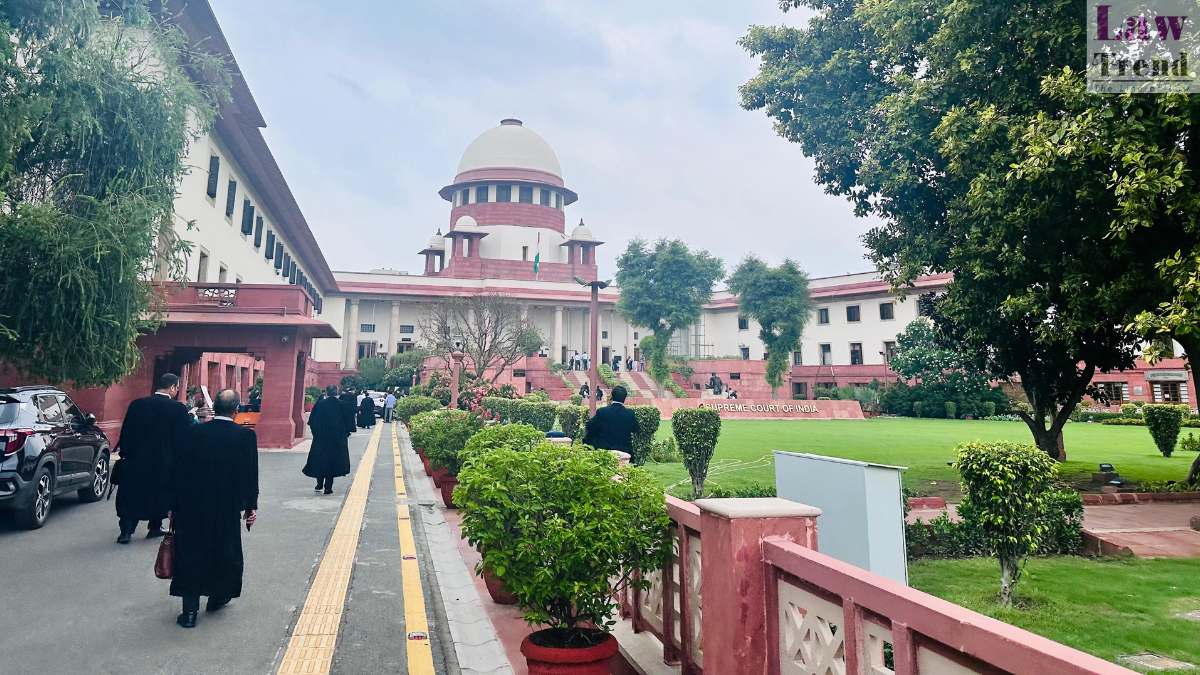
Resolving a decades-long inter se seniority dispute in the Tamil Nadu Ministerial Service, the Supreme Court of India, comprising a Bench of Justice S.V.N. Bhatti and Justice Shree Chandrashekhar, has held that candidates appointed through a regular, competitive selection process cannot be ranked junior to temporary, ad hoc, or compassionate appointees regularised at a subsequent date. The Court partly allowed an appeal filed by direct recruits of the 1983 examination batch, ruling that compassionate appointees cannot claim seniority over them, while also affirming that temporary special appointees must rank below regular direct recruits. Additionally, the Court held that the inter se seniority between compassionate appointees and special appointees must be determined strictly on the basis of their respective dates of regularisation.
Background of the Dispute
The controversy stems from appointments made in the early 1980s across various departments of the Tamil Nadu Government. Between 1981 and 1983, the State Government imposed a ban on the regular appointment of Junior Assistants and other ministerial staff. During this period, temporary appointments were made through employment exchanges under Rule 10(a)(i) of the General Rules in Part II of the Tamil Nadu State and Subordinate Services Rules, 1955 (TN Service Rules). Individuals like M. Prema, R. Kanthimathi, and A. Govindarajan joined service under this emergency provision.
In the interim, the Tamil Nadu Public Service Commission (TNPSC) issued an advertisement for 5,000 Group IV posts and conducted a competitive written examination on November 27, 1983. The results were declared on various dates, and appointments were issued between 1985 and 1987 to candidates commonly referred to as the Direct Recruits of the 1983 batch.
Around 1984, the Government of Tamil Nadu decided to regularise the services of persons appointed on compassionate grounds, issuing G.O. (Standing) No. 951 dated September 14, 1984, which contemplated placing compassionate appointees in the seniority list among direct recruits based on their date of joining. Soon after, vide G.O. Ms. No. 996 dated September 22, 1984, the State regularised the services of temporary Rule 10(a)(i) appointees (Special Appointees) with effect from June 26, 1984. To govern their conditions and seniority, the Governor framed the Special Absorption Rules, 1987 (notified via G.O. Ms. No. 548 dated June 19, 1987), with retrospective effect from June 25, 1984. Under Clause 10 of these rules, special appointees were explicitly ranked below candidates selected through the TNPSC competitive examination held in November 1983, irrespective of the direct recruits’ actual joining dates.
Aggrieved by their placement below direct recruits in provisional seniority lists, several special appointees challenged Clause 10 before the Tamil Nadu Administrative Tribunal in 2001. Simultaneously, direct recruits approached the Madras High Court in 2004 claiming seniority over both compassionate and special appointees. On April 3, 2006, a Division Bench of the Madras High Court held that direct recruits must rank above special appointees irrespective of joining dates, but ruled that the inter se seniority between direct recruits and compassionate appointees must be reckoned on the basis of their initial appointment dates, placing earlier-appointed compassionate recruits above the 1983 direct recruits. This verdict led all competing factions—direct recruits, special appointees, and transferred original applicants—to approach the Supreme Court.
Arguments of the Parties
Appearing for the direct recruits, Senior Counsel Mr. V. Prabhakar argued that persons entering the cadre through back-door, emergency, or compassionate channels cannot steal a march over candidates selected through an open, competitive examination. Relying on the decision in K. Madalaimuthu & Anr. v. State of T.N. & Ors., he submitted that regular recruits are legally entitled to seniority over those inducted via other modes of recruitment.
Counsel representing the compassionate appointees, including S. Prem Kumar and T.A. Kannappa (who were temporarily appointed in 1985 under Rule 48 and regularised in February 1987), contended that they fall within the definition of “direct recruits” under Rule 2(14) of the TN Service Rules. They relied on G.O. dated September 14, 1984, emphasizing that this executive order had never been challenged and clearly permitted them to take their seniority among direct recruits according to their dates of appointment.
On behalf of the special appointees, Senior Counsel Mr. R. Subramanian argued that the general rule of service jurisprudence requires counting seniority from the date of initial appointment once an employee is regularised. He urged that the continuous service rendered by special appointees prior to absorption ought to receive due recognition over direct recruits who entered service much later.
The State of Tamil Nadu supported Clause 10 of the Special Absorption Rules, arguing that compassionate appointments constitute an exception to Articles 14 and 16 of the Constitution of India and cannot claim parity with candidates who cleared the open competitive test. The State also cited an earlier order of the Tribunal in S. Ramajayem (O.A. No. 4176 of 1992), which had attained finality, denying compassionate appointees seniority over the 1983 direct recruits.
The Court’s Analysis
Writing for the Bench, Justice Shree Chandrashekhar observed that appointments made on compassionate grounds do not constitute a regular channel of recruitment under Rule 6 of the TN Service Rules, which recognizes only direct recruitment or recruitment by transfer. Addressing the status of compassionate appointees, the Court observed:
“The appointment on compassionate ground is an exception to Articles 14 and 16 of the Constitution of India. The compassionate appointments are made under a scheme and the dependents of the former employee who died in harness are generally appointed on Class III or Class IV posts depending on their qualification and available vacancies. This is not a regular mode of selection and the Compassionate appointees cannot be put at par with the Direct recruits.”
The Court explained that executive orders issued under Article 162, such as the G.O. dated September 14, 1984, can supplement rules but cannot operate contrary to basic principles of service jurisprudence. Emphasizing the legitimate expectations of regular candidates, the Court held:
“A Government employee who is appointed through a regular selection process has a legitimate expectation to seniority inter se with the employees who are appointed through regular mode in the subsequent transaction as also with other appointees coming into the cadre through different sources. The persons who were selected through regular mode cannot be rendered junior by regularisation of temporary appointees at a later stage.”
Consequently, the Bench ruled that the Division Bench of the High Court erred in placing compassionate appointees above the direct recruits of the 1983 batch.
Examining the claims of the Rule 10(a)(i) special appointees, the Supreme Court upheld the constitutional validity and operation of Clause 10 of the Special Absorption Rules, 1987. The Court noted that Rule 10(a)(i) appointments are emergency, stopgap measures that do not confer substantive membership in a service. The Court cited State of Tamil Nadu & Anr. v. E. Paripoornam & Ors. and M.P. Palanisamy & Ors. v. A. Krishnan & Ors. to reiterate that ad hoc and temporary employees cannot count their pre-regularisation service toward cadre seniority.
Justice Shree Chandrashekhar justified the depression of special appointees’ seniority under Clause 10, observing:
“Clause 10 follows the well-settled norm to fix seniority that the Government employees who are appointed following the regular mode of appointment must rank higher in the seniority list to those who came in the cadre through regularisation. The employer has a right to frame rules for determining inter se seniority of two or more classes of employees in the cadre.”
The Court noted that any delay in appointing the 1983 direct recruits was attributable to the posts being occupied by temporary hands, a circumstance acknowledged by the State.
Relying on the Constitution Bench judgment in Direct Recruit Class II Engineering Officers’ Association v. State of Maharashtra & Ors., the Court reiterated the settled principle:
“This is a basic rule of seniority that a Government employee appointed to a post following the due procedure and in accordance with the rules must rank senior to the appointees who entered in service as a temporary or stopgap measure or were appointed owing to some emergency.”
The Court distinguished decisions such as State of Himachal Pradesh and Anr. v. Sheela Devi and S.D. Jayaprakash and Ors. v. Union of India and Ors., pointing out that counting temporary service is generally confined to qualifying service for pensionary benefits and cannot be deployed to confer seniority over regular direct recruits.
Turning to the inter se seniority between compassionate appointees and special appointees, the Court adopted a pragmatic approach:
“except in cases where the Recruitment Rules are clear and provide a methodology for fixing inter se seniority, the norm of counting seniority from the date of regularisation of temporary, ad hoc or Compassionate appointees should be followed to determine their inter-se seniority.”
Decision of the Court
The Supreme Court disposed of the batch of proceedings with the following directions:
- Civil Appeal No. 8755 of 2013, filed by direct recruits, was allowed to the extent that compassionate appointees S. Prem Kumar and T.A. Kannappa shall not rank above the direct recruits of the 1983 batch.
- Transferred Case (C) Nos. 50, 51, and 52 of 2013, challenging Clause 10 of the Special Absorption Rules, were dismissed.
- Civil Appeal Nos. 8756 and 8757 of 2013, filed by special appointees, were disposed of with the direction that inter se seniority between special appointees and compassionate appointees shall be determined on the basis of their respective dates of regularisation.
- The judgment of the Madras High Court dated April 3, 2006, stood modified accordingly, with no order as to costs.
Case Title: M. Prema Vs. The State of Tamil Nadu Rep by its Secretary to the Government and Ors. (with connected matters)
Case No.: Civil Appeal No. 8757 of 2013 with Civil Appeal Nos. 8755/2013, 8756/2013, and T.C.(C) Nos. 50/2013, 51/2013, 52/2013
Bench: Justice S.V.N. Bhatti and Justice Shree Chandrashekhar
Date: October 09, 2026




