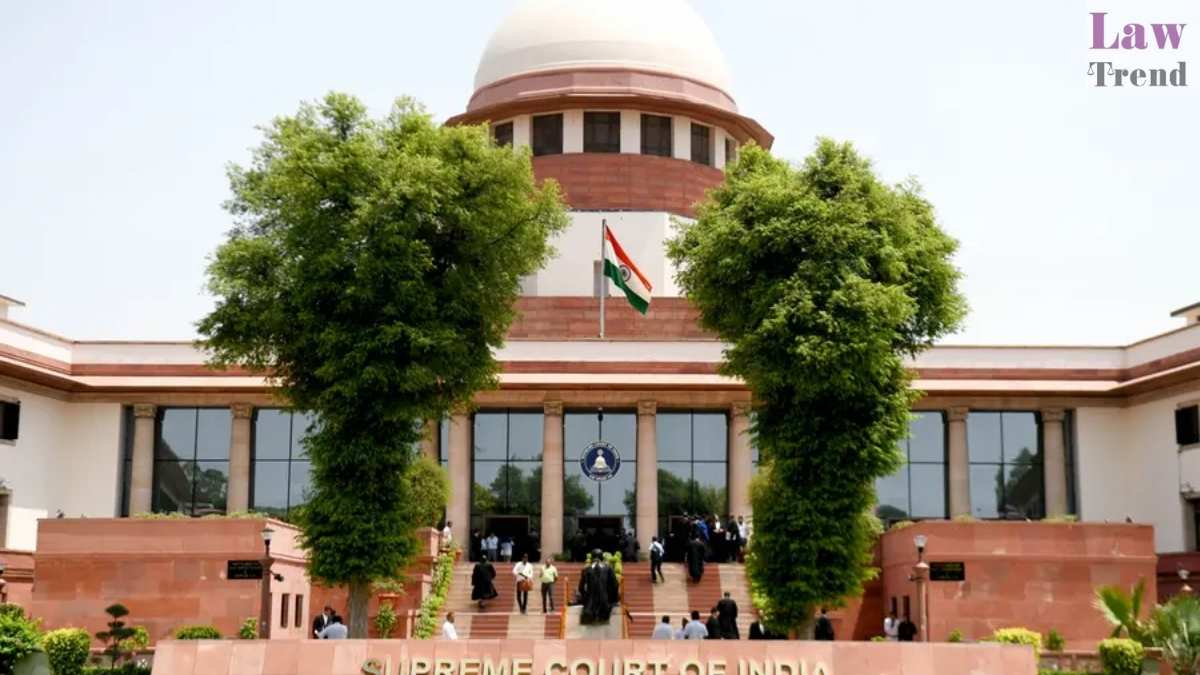
The Supreme Court on Thursday, by a 5:4 majority, modified the test for determining what constitutes an “industry” under Section 2(j) of the Industrial Disputes Act, 1947, refining the framework laid down nearly five decades ago in Bangalore Water Supply and Sewerage Board v. A. Rajappa.
A nine-judge Constitution Bench comprising Chief Justice of India Surya Kant and Justices BV Nagarathna, PS Narasimha, Dipankar Datta, Ujjal Bhuyan, Satish Chandra Sharma, Joymalya Bagchi, Alok Aradhe and Vipul M Pancholi delivered the verdict.
The majority concluded that while the essential framework evolved in the 1978 Bangalore Water Supply ruling had stood the test of time, some elements of its triple test and accompanying guidelines required reformulation to better reflect the scope of Section 2(j).
The ruling will operate prospectively. The Court made it clear that pending proceedings before courts, tribunals, labour authorities and other fora under the Industrial Disputes Act can continue to be decided on the basis of the triple test laid down in Bangalore Water Supply.
The Bench also refrained from examining the definition of “industry” under the Industrial Relations Code, 2020.
Four Judges Dissent From Majority
Justices BV Nagarathna, Dipankar Datta, Ujjal Bhuyan and Joymalya Bagchi dissented from the majority view.
Justice Nagarathna held that there was no need to revisit the interpretation adopted in Bangalore Water Supply and said the issue need not have been referred to a larger Bench in 2005. According to her, the definition of “industry” under Section 2(j) required a broad interpretation.
She also disagreed with excluding an activity merely because it was performed by the State. Justice Nagarathna said social welfare activities, schemes and other enterprises undertaken by government departments or instrumentalities could constitute industrial activities depending on their nature.
Justice Datta, with Justice Bhuyan, held that the reference made in State of Uttar Pradesh v. Jai Bir Singh was unnecessary and served no practical, jurisprudential or doctrinal purpose. He stressed the importance of finality in law and said there was no compelling justification to reopen a legal position that had operated for nearly half a century.
Justice Bagchi agreed that the reference was maintainable but differed from the majority on the merits. He concurred with Justices Nagarathna and Datta that the Bangalore Water Supply triple test correctly determined the scope of “industry” under the 1947 Act.
Justice Bagchi observed that the test extended the beneficial object of labour law to employer-employee disputes involving organised and systematic activities akin to trade and commerce for producing goods and services to satisfy human needs, without limiting its operation only to activities run on commercial lines.
He also rejected the criticism that the test brought every organised human activity within the meaning of industry, noting that it excluded casual and non-systematic activities such as domestic service, individual professions and small and unorganised clubs, associations or persons.
1978 Ruling Had Given ‘Industry’ A Wide Meaning
The reference before the nine-judge Bench concerned the correctness of the seven-judge decision in Bangalore Water Supply, which gave “industry” a wide interpretation and formulated what became known as the triple test.
Under that test, an activity would ordinarily qualify as an industry when there is systematic activity, organised cooperation between employer and employee, and production or distribution of goods or services intended to satisfy human wants and wishes.
The 1978 judgment treated profit motive and capital investment as largely irrelevant for determining whether an activity fell within Section 2(j), resulting in a broad application of the provision.
Questions over the correctness of that interpretation later arose in State of Uttar Pradesh v. Jai Bir Singh. In 2005, a five-judge Constitution Bench expressed reservations about the wide interpretation in Bangalore Water Supply and referred the issue to a larger Bench.
The reference remained pending for more than two decades. The nine-judge Bench eventually heard arguments for three consecutive days before reserving its judgment on March 19.
Union Sought More Differentiated Approach
During the hearing, Attorney General R Venkataramani, appearing for the Union, maintained that the triple test and the “dominant nature test” were sound in themselves, but their application had expanded too far and led to indiscriminate inclusion of activities within the definition of industry.
He argued that governmental and welfare functions, particularly those connected with sovereignty, required a more differentiated approach.
Senior Advocate Indira Jaising opposed reopening the 1978 precedent, arguing that no case had been established for reconsidering a judgment that had governed labour jurisprudence for decades.
She submitted that the Industrial Disputes Act was beneficial legislation providing workers remedies unavailable in ordinary civil proceedings, including reinstatement and scrutiny by industrial adjudicators of the proportionality of punishment.
Jaising also opposed treating commercial motive as a threshold requirement and argued for a narrow understanding of sovereign functions, pointing out that several services traditionally regarded as governmental are now also performed by private actors.