

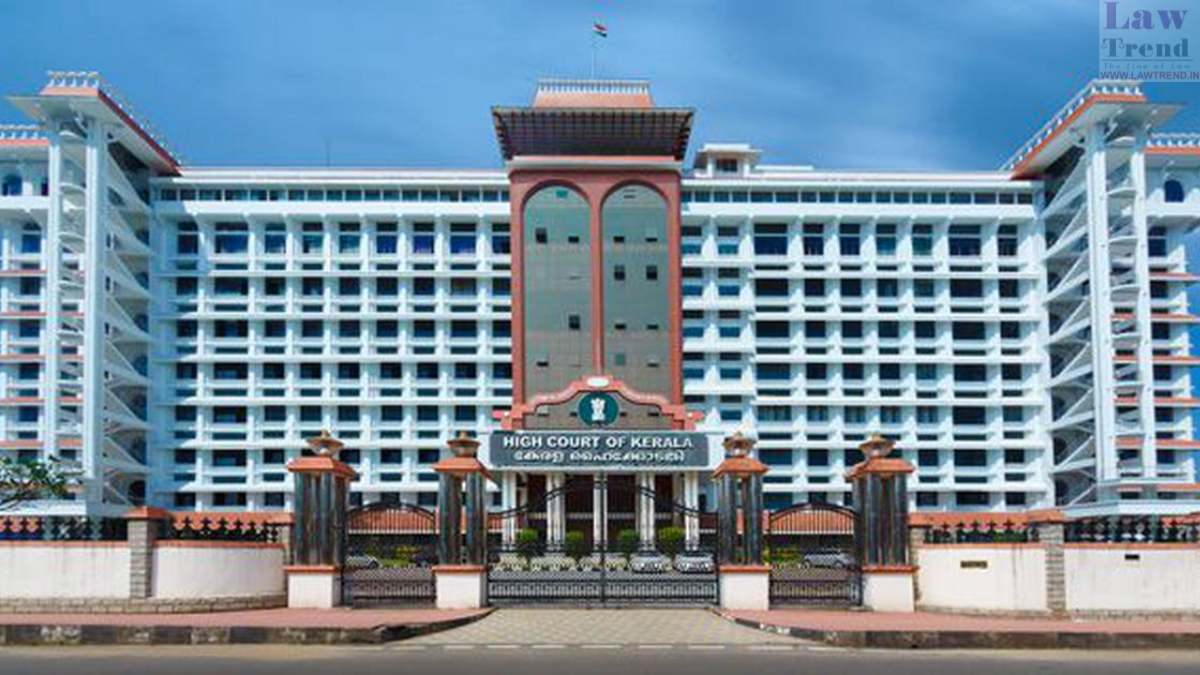
Christian prayer halls run by the Brethren denomination qualify as churches under Kerala’s liquor licensing regulations, the Kerala High Court has ruled, sustaining prohibitions that prevent a nearby hotel from opening a bar.
A division bench comprising Justice K Natarajan and Justice Johnson John issued the ruling on August 17, rejecting an appeal filed by M/s Hotel Palace Inn and its managing partner. The appellants had challenged a September 10, 2025 single-judge verdict that recognized the Angamaly Town Brethren Assembly hall as a church under state liquor laws.
The High Court affirmed that because Christian prayers are routinely conducted at the assembly hall, the location fulfills the requirements set out in Rule 13(3) of the Kerala Foreign Liquor Rules, 1953.
Statutory Framework and Distance Mandates
Under Rule 13(3) of the 1953 regulations, a church is defined as a public location where Christians gather for prayer. The statute establishes mandatory distance buffer zones between alcohol-serving establishments and specific institutions, including places of worship, schools, temples, mosques, and burial grounds.
State rules prescribe a minimum separation distance of 200 metres for three-star hotels and 50 metres for four-star, five-star, five-star deluxe, and designated heritage hotels. The court decision did not outline the specific star classification or licence category of Hotel Palace Inn.
The High Court emphasized that the fundamental intent behind distance restrictions is to shield educational institutions and religious gatherings from potential disruption caused by nearby bar operations.
Longstanding Legal Dispute
The dispute originated in 2008 when representatives of the Town Brethren Assembly discovered that Hotel Palace Inn planned to establish a bar hotel approximately 80 metres from their assembly hall. The religious group lodged a formal objection with state excise authorities, arguing that operating a bar at that location would breach distance rules.
Following the complaint, the state excise commissioner determined on December 7, 2008, that the Brethren Assembly Hall met the criteria of a church under the governing rules, subsequently turning down the hotel’s application for a liquor licence. The hotel later filed a revision petition, initiating a protracted legal contest.
Interpretation of Public Worship Spaces
In its appeal, the hotel argued that the assembly hall did not constitute a public place because it served multiple organizational purposes for the Brethren mission rather than functioning solely as a worship center. The hotel also highlighted that while general Christian prayers were open to the public, participation in the holy sacrament was confined to followers of the Brethren faith.
The High Court dismissed these arguments, noting it was uncontested that the group represents a Christian religious congregation actively holding prayer services. The bench pointed to regular activities conducted at the site, including worship, Bible study classes, Sunday school, and dedicated prayer groups for men and women.
Addressing the definition of a public venue, the bench cited the Supreme Court precedent in Gaurav Jain vs Union of India, highlighting that a property does not need to be publicly owned to be considered a public place. It is sufficient that the facility is accessible to members of the public. The judges clarified that the statutory wording requiring a public place where Christians offer prayers must be interpreted as a unified concept.
Court Dismisses Arguments on Parity and Standing
The hotel further contended that the assembly had not raised objections to another bar operating within 200 metres or a toddy shop situated within 400 metres of the hall. The High Court rejected this argument, stating that the existence of other alcohol vendors had no legal bearing on whether the assembly hall qualified as a church, adding that the hotel could not claim a licence based on parity.
Additionally, the hotel argued that the Town Brethren Assembly lacked legal standing to pursue the writ petition because it was not a registered society and had failed to submit its constitution or organizational regulations.
The court stated that this issue had already been resolved by a 2023 division bench decision, which had directed the single judge specifically to determine whether the facility met the definition of a church under Rule 13(3). Because that 2023 ruling was never appealed and had become final, the court concluded that examining the assembly’s legal structure, ownership, or property rights was unnecessary. The sole determining factor was whether the hall served as a public space where Christians offer prayers, which the court concluded was amply supported by the evidence.




