

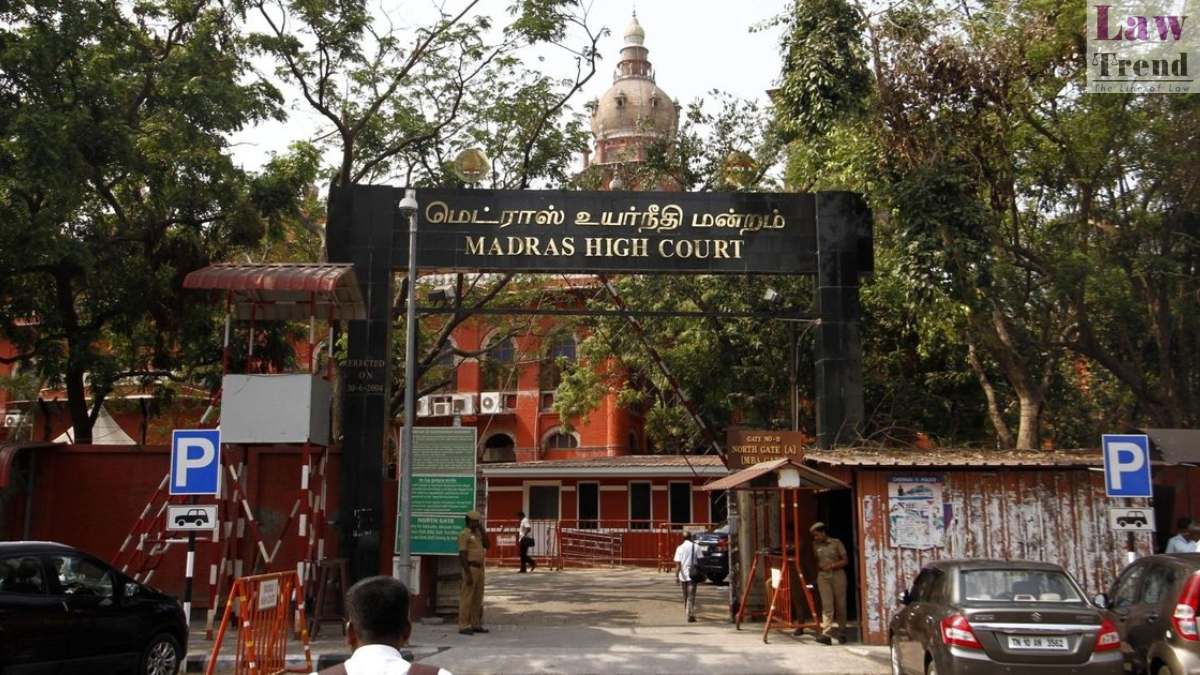
The Madras High Court has disposed of a public interest litigation alleging discriminatory practices against non-Brahmin devotees at a prominent Kanchipuram temple, following formal undertakings by temple management that all worshippers are treated equally during rituals and services.
A division bench comprising Justice G. Jayachandran and Justice E. Manoharan cited Chapter 9, Verse 29 of the Bhagavad Gita to underline that divine devotion transcends social divisions and that places of worship must be entirely free from discrimination. The bench noted that God maintains equal disposition toward all living beings without partiality. The court closed the proceedings after recording assurances from temple representatives that no section of the public would face unequal treatment or be restricted from devotional activities.
Allegations Of Differential Access
The legal proceedings stemmed from a petition filed by a Thenkalai Vaishnavite devotee of the Arulmigu Devaraja Swamigal Temple in Kanchipuram. Represented by advocates S. Shanmugasundaram and S. Senthilnathan, the petitioner alleged that non-Brahmin devotees faced systematic segregation across the temple complex.
According to the petition, non-Brahmin worshippers were required to enter the Sri Manavala Mamunigal shrine through a side door while Brahmin devotees were allowed through the main entrance. The plea further alleged that non-Brahmins were prohibited from reciting devotional hymns within shrines, forced to stand outside while receiving Prasadam and Theertham, and subjected to differential treatment during various temple rituals. Prior representations to authorities had yielded assurances of strict action against discrimination, prompting the petitioner to seek formal court orders against these practices.
Temple Management Cites Spatial Limitations
Refuting the allegations, Special Government Pleader R. Bharanidharan submitted that the temple administration maintains equal treatment for all visitors and does not discriminate against any section of the public.
Addressing the restrictions inside sub-shrines, Bharanidharan explained that the structures are exceptionally small, making it physically impossible to accommodate the general public indoors during service periods. He noted that even official temple reciters and scholars frequently cannot fit inside these compact areas, requiring members of the public to remain outside regardless of their background.
Recitation Rights And Final Order
Regarding the recitation of hymns and Prabandham, the court clarified that apart from ‘Adhyabaga Misari’—a specific ritual service historically reserved for the Thenkalai sect—no devotee or group would be barred from reciting hymns across the temple’s various shrines.
The bench observed that the petitioner had no intention to disrupt traditional rituals and held that the operational arrangements described by state counsel allow all worshippers an opportunity to participate in hymn recitations. Concluding that these assurances resolved the core grievances raised in the petition, the court disposed of the matter in its August 17 order without issuing additional directives.




