

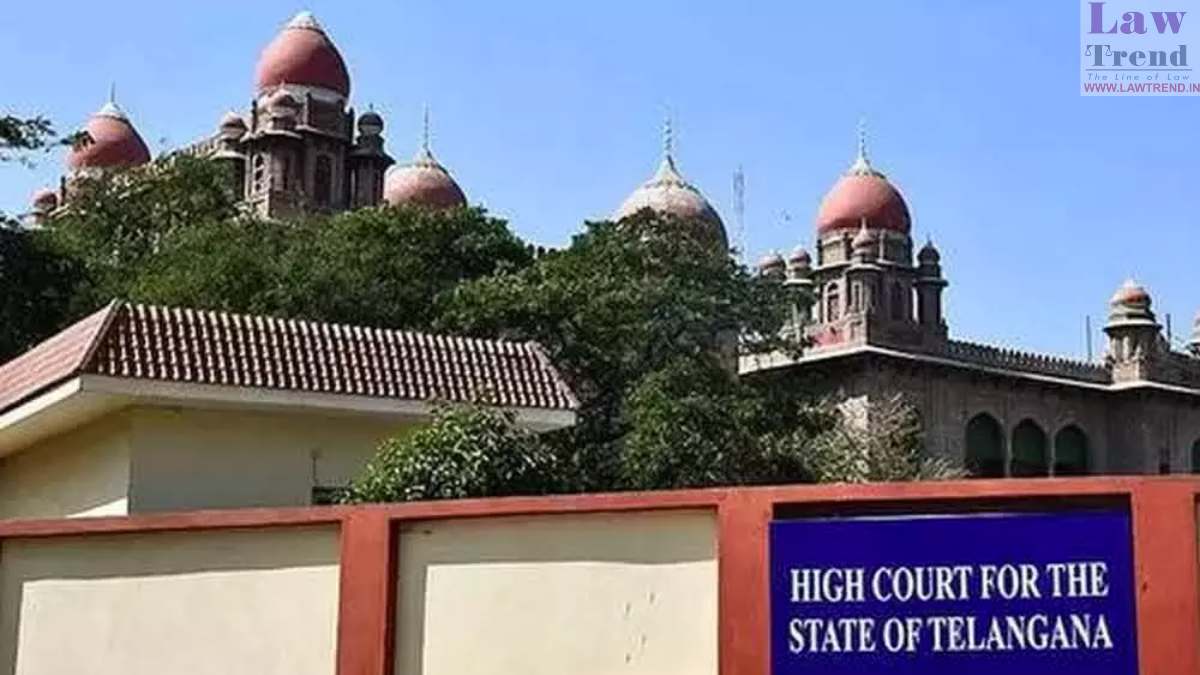
The Telangana High Court on Friday voiced strong concern over the financial pressure placed on public finances by broad welfare programs and the distribution of subsidies to ineligible beneficiaries, warning that unchecked social spending significantly depletes funds needed for core state operations.
The observations were made by Justice Nagesh Bheemapaka during a contempt hearing involving Telangana Finance Principal Secretary Sandeep Kumar Sultania. The senior official appeared before the bench following a bailable warrant issued on July 10 after state authorities failed to file a counter-affidavit or present an exemption application in an ongoing financial dispute with the Secunderabad Cantonment Board.
Impact of Welfare Spending on State Treasury
During the proceedings, the court noted that state revenues shrink substantially after accounting for essential liabilities, including civil servant salaries, debt servicing, and various social assistance initiatives. Pointing to specific welfare measures, the judge questioned the practice of extending agricultural investment subsidies under the Rythu Bandhu scheme to affluent individuals, emphasizing the heavy financial strain such blanket benefits impose on the exchequer.
The court further remarked that the extensive allocation of benefits—including the widespread distribution of Public Distribution System (PDS) ration cards meant for families below the poverty line—creates an unsustainable fiscal trajectory. The judge cautioned that even immense financial resources could eventually be exhausted if non-targeted welfare spending and payouts to ineligible recipients continue at current levels.
Shift in Civic Mindset and Labor Trends
Reflecting on broader societal changes, the court pointed to a shift in public attitudes, noting that while earlier generations inspired by national freedom fighters sought to contribute to the country, current trends lean toward demanding direct individual payouts from the government. The judge added that political sensitivities make policy corrections difficult, noting that even removing a single ineligible beneficiary from ration rolls can spark public controversy.
The bench also drew attention to agricultural challenges in rural Telangana, where a shortage of local farm workers has forced reliance on migrant laborers from states such as Bihar, Chhattisgarh, and Madhya Pradesh. Clarifying that these remarks were not intended as political criticism or a targeted attack on the administration, the judge stressed that the underlying financial and administrative issues require careful deliberation.
Background of the Contempt Proceedings
The contempt case stems from a petition filed by a member of the Secunderabad Cantonment Board who alleged willful non-compliance with a 2024 court directive. That order had instructed the state government to evaluate a representation concerning the release of over Rs 33 crore in pending funds to the board. The court was informed during previous proceedings that Rs 25 crore of the amount has been disbursed.
Sultania’s personal appearance was ordered after the court turned down a government plea for additional time during the July 10 hearing. Recognizing the practical administrative challenges involved, the court noted that summoning senior officials was regrettable but necessary under the circumstances.
The High Court has scheduled the next hearing in the matter for August 19.




