

High Courts Should Not Relegate Litigants to Civil Suit After Years of Writ Proceedings If It Would Leave Them Remediless: Supreme Court
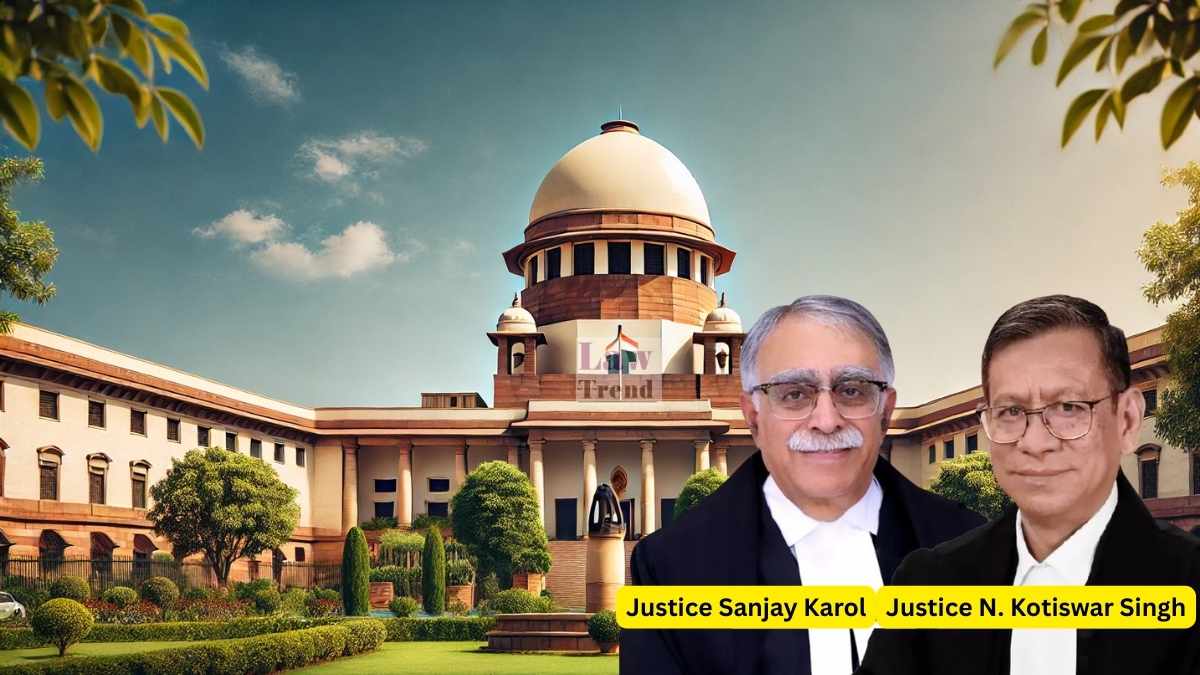

The Supreme Court of India, comprising Justice Sanjay Karol and Justice N. Kotiswar Singh, held that High Courts should not relegate litigants to approach a civil court after years of writ proceedings if doing so would leave them remediless due to the sheer efflux of time. Setting aside a Division Bench judgment of the High Court of Punjab and Haryana that had dismissed a writ petition seeking compensation for a fatal stray bull attack on grounds of “disputed questions of fact,” the apex court awarded Rs 15 lakh compensation to the victim’s widow and issued comprehensive directives to Centre and State Governments regarding stray cattle management.

Background of the Case

The incident occurred on September 21, 2007, when Vijay Kumar was struck by a stray bull while walking on a road in Sangrur, Punjab, sustaining severe head injuries that rendered him unconscious. The incident was recorded in a Daily Diary Register (DDR) at the local police station.

On March 2, 2010, Vijay applied to the Deputy Commissioner, Sangrur, claiming Rs 1 crore in compensation. The authority rejected the request solely because it did not receive funds for compensating such incidents, without questioning or denying the occurrence. Subsequent legal notices yielded no response, leading Vijay to file a writ petition before the High Court of Punjab and Haryana in 2010. Following Vijay’s death during the litigation, his widow, Nisha, pursued the case.

On May 27, 2019, a Single Judge of the High Court allowed the petition, awarding Rs 29,32,000 with 6% interest per annum by applying principles under the Motor Vehicles Act, 1988. However, on November 12, 2025, a Division Bench quashed the Single Judge’s order, holding that writ jurisdiction under Article 226 could not resolve “disputed questions of fact” and granted liberty to the family to approach a competent Civil Court. Nisha then appealed to the Supreme Court.

Arguments of the Parties

The counsel for the appellant submitted that the incident occurred in 2007 and directing the family to approach a civil court after nearly two decades would be unjust, unfair, and inequitable. It was further submitted that no disputed questions of fact existed, as the incident was documented in police records and never disputed by the respondents.

READ ALSO  What is the status of vacancies in various Tribunals across the country? asks Supreme Court

The respondents argued that the appellant failed to establish the facts necessary to prove municipal liability and asserted that principles governing compensation under the Motor Vehicles Act, 1988 could not legally be applied to non-vehicular stray animal incidents.

Court’s Analysis and Cited Precedents

Addressing the maintainability of the writ petition, the Supreme Court noted that the matter remained pending before the High Court from 2010 to 2019, with the intra-court appeal decided in 2025. The court observed that asking the claimants to start afresh before a civil court after such a lengthy period leaves them remediless due to the efflux of time alone. The bench held that all essential facts were undisputed since a DDR entry was lodged, official representations were submitted, and the municipality never denied the incident.

Highlighting the public safety hazard and constitutional framework, the bench referenced Article 48 and fundamental duties under Article 51-A(g) of the Constitution. The Court cited the Seven-Judge Bench decision in State of Gujarat v. Mirzapur Moti Kureshi Kassab Jamat (2005) regarding the duty to show compassion to living creatures. The bench also referred to Animal Welfare Board of India v. A. Nagaraja (2014) and the Constitution Bench judgment in Animal Welfare Board of India v. Union of India (2023), acknowledging human obligations to prevent unnecessary pain and suffering to animals.

Commenting on public road hazards caused by roaming cattle, the bench observed:

READ ALSO  CJI Launches ‘E-Filing 2.0’, Says Service Will Be Available Round the Clock

“After all, they are not meant to be natural speed breakers, placed willy-nilly on the National Highways, roads and streets.”

Examining the abandonment of utility animals, the Court referred to the Constitution Bench decision in Mohd. Hanif Quareshi v. State of Bihar (1958) regarding uneconomic cattle, noting:

“In a perfect world, this would not be the case. All those who have chosen to bring an animal home shall see to it that they are looked after for their whole life. But the reality is that we live in a deeply flawed, human world. Perhaps it is a feature of this flawed world that, on the one end, we let them roam about without caring for their safety, and, on the other, find it deeply offensive if an individual uses them to secure a full stomach for himself or his family.”

The Court added:

“Most of these animals that end up roaming on the streets/roads/National Highways are of the latter kind, i.e., animals are reared for a particular purpose. Once that purpose is achieved, or the output of the animal towards that purpose gets reduced, they are let go.”

Evaluating statutory provisions, including the Cattle Trespass Act, 1871 and the Prevention of Cruelty to Animals Act, 1960, the bench noted that the Punjab Municipal (Registration and Proper Control of Stray Animals) Bye-Laws, 2006 established a compensation fund without quantifying payouts, whereas rules introduced in 2020 and 2023 capped compensation at Rs 5 lakh for death and Rs 2 lakh for permanent disability.

READ ALSO  Supreme Court Mandates Exclusion of 'Creamy Layer' from SC, ST Reservations

The Decision and Directions

The Supreme Court held that while Motor Vehicles Act principles cannot be mechanically applied as a standard rule in all non-vehicular stray animal cases, pre-2020 claims with unquantified compensation must be determined based on their specific facts. Considering the long-pending litigation and the victim’s suffering prior to death, the Court awarded a lump sum compensation of Rs 15 lakh to the appellant, payable within four weeks.

To address systemic issues, the Supreme Court issued the following suggestions to the Centre and State Governments:

  1. Strict Implementation of Laws: All States with existing cattle preservation and stray management laws must ensure complete implementation in letter and spirit.
  2. Compensation Framework: Competent authorities should formulate necessary rules or amendments establishing clear compensation mechanisms for victims of bovine-related incidents, whether pedestrian or vehicular.
  3. Mandatory Tagging: Mandatory ear-tagging of all animals to track health, vaccinations, and ownership.
  4. Owner Responsibility and Transfer: Owners deciding to part with utility animals must safely transfer them to authorized shelters. Shelters must issue transfer receipts and update the tagging database.
  5. Nodal Officers: Municipal Corporations and departments should designate specific Nodal Officers to supervise animal tagging, record digitization, and shelter management.

The Court directed copies of the judgment to be circulated to all State Chief Secretaries, Union Territory Administrators, and Member Secretaries of State Legal Services Authorities for appropriate action.

Case Title: Nisha v. Municipal Council Sangrur & Ors.
Case No.: Civil Appeal No(s). OF 2026 (Arising out of SLP(C) No(s). 4663 of 2026)
Bench: Justice Sanjay Karol and Justice N. Kotiswar Singh
Date: July 31, 2026

Law Trend
Law Trendhttps://lawtrend.in/
Legal News Website Providing Latest Judgments of Supreme Court and High Court

Related Articles

Latest Articles

