

Prior Finding On Abscondence Mandatory To Rely On Prior Witness Testimony Under Section 299 CrPC: Supreme Court Acquits Murder Accused
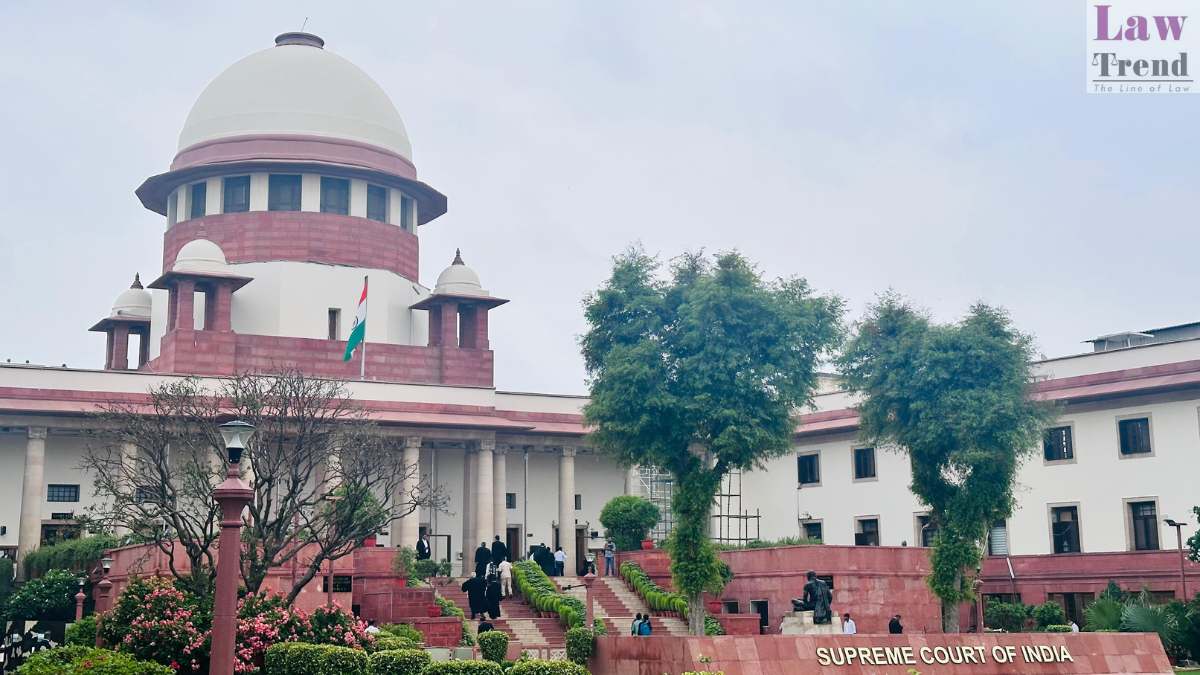

The Supreme Court of India, in a bench comprising Justice J. B. Pardiwala and Justice K. Vinod Chandran, has held that evidence recorded against a co-accused during a trial cannot be used against an absconding accused in a fresh trial under Section 299 of the Code of Criminal Procedure, 1973 (CrPC) unless the court formally records a satisfaction of the necessary jurisdictional facts at the initial stage. Allowing the appeal filed by an accused who had been arrested 18 years after the alleged crime, the court set aside his conviction and ordered his acquittal as no order under Section 299 CrPC had been passed during the earlier trial.

Background of the Case

The case pertains to an incident that occurred on April 1, 1999, where two individuals were charged with murder. According to the prosecution, witnesses returning from a fair saw the appellant, Mahendra Singh, assaulting a person, sitting on his chest, and strangulating him, while the co-accused exhorted the assault and threatened passersby. Frightened by the threats, the witnesses fled the scene.

Following the incident, the appellant absconded, leading to a split-up of the case. The co-accused was tried separately and acquitted. The appellant remained absconding for over 18 years until he was apprehended on September 11, 2017, and subsequently put on trial for murder.

Arguments and Trial Findings

During the appellant’s trial after his 2017 arrest, the prosecution faced evidential challenges due to the passage of time. Crucial witness PW1 had passed away and was unavailable to testify. Other eyewitnesses turned hostile, while PW2, who recounted witnessing the assault, failed to identify the appellant because he was not produced from judicial custody. Cross-examination of PW2 also revealed that there were two individuals named Mahendra Singh in the village.

Despite these issues, the trial court and the High Court convicted the appellant by relying on the earlier testimony of PW1 recorded during the initial trial of the co-accused. The prosecution maintained that such testimony was admissible under Section 299 CrPC given the appellant’s prolonged period of absconding.

READ ALSO  Finding of Irretrievable Breakdown Requires Determination of Fault; SC Sets Aside Divorce Decree for Lack of Evidence on Desertion

Supreme Court’s Analysis and Legal Precedents

Examining the scope of Section 299 CrPC, the Supreme Court emphasized that the right to cross-examine a witness under Section 33 of the Indian Evidence Act, 1872 is an indefeasible right available to an accused. Section 299 CrPC acts as an exception, but its invocation requires strict adherence to statutory conditions.

Justice K. Vinod Chandran, writing for the bench, detailed that Section 299 CrPC contains two distinct parts requiring proof of jurisdictional facts:

“Invocation of Section 299 hence is possible only when two jurisdictional facts are established which leads to two consequences, one in praesenti and the other in futuro. The proof of jurisdictional facts required for invocation of Section 299 are on two aspects, one that the accused is absconding and the other that there is no immediate prospect of arresting him.”

The court highlighted the rationale behind the rule, observing:

READ ALSO  Arbitrators, Not Courts, Should Decide on 'Accord and Satisfaction' in Disputes: Supreme Court

“The very intention of the provision is to ensure that, by deliberately taking flight, the accused does not frustrate the prosecution and thus puts in jeopardy the very criminal justice delivery system. It is also founded on the principle that an accused who deliberately goes undercover, attempting to frustrate the investigation and the trial, cannot claim the right of cross examining every witness, as provided under Section 33 which though a valuable right available to the accused, would not be available, if by his own actions, the accused remains absconding.”

Reviewing precedent, the bench referred to Nirmal Singh v. State of Haryana (2000) 4 SCC 41, which established that:

“… In other words, before recording the statement of the witnesses produced by the prosecution, the court must be satisfied that the accused has absconded or that there is no immediate prospect of arresting him, as provided under the first part of Section 299(1) of the Code of Criminal Procedure…”

The court further cited Jayendra Vishnu Thakur v. State of Maharashtra & Another (2009) 7 SCC 104, reiterating that both conditions under the first part of Section 299 CrPC must be satisfied together:

“Indisputably both the conditions contained in the first part of Section 299 of the Code must be read conjunctively and not disjunctively. Satisfaction of one of the requirements should be not sufficient.”

The bench also noted the principles affirmed in Sukhpal Singh v. NCT of Delhi 2024 SCC OnLine SC 800, emphasizing that an explicit finding proving both jurisdictional facts must be recorded by the court at the committal or trial stage when the accused is found absconding.

READ ALSO  Supreme Court Directs High Court to Prioritize Interim Relief for IIT Bombay Student with Vision Disability

Decision of the Court

Applying these principles to the facts at hand, the Supreme Court found that no order under Section 299 CrPC had been passed by the court in 1999—neither at the committal stage nor at the start of the trial against the co-accused—finding proof of the appellant’s abscondence and the impossibility of his immediate arrest.

Without such a judicial order passed at the earlier stage, the testimony of PW1 recorded in 1999 could not lawfully be relied upon against the appellant in his subsequent trial. As the remaining witnesses had turned hostile or failed to establish identity, the prosecution case against the appellant could not stand.

The Supreme Court allowed the appeal, set aside the conviction, and acquitted Mahendra Singh of all charges, directing his immediate release if in custody or the cancellation of his bail bonds if released on bail.

Case Details:

Case Title: Mahendra Singh v. The State of Chhattisgarh

Case No.: Criminal Appeal No. 3566 of 2026 (@ Special Leave Petition (Crl.) No. 6741 of 2026)

Bench: Justice J. B. Pardiwala and Justice K. Vinod Chandran

Date: July 31, 2026

Law Trend
Law Trendhttps://lawtrend.in/
Legal News Website Providing Latest Judgments of Supreme Court and High Court

Related Articles

Latest Articles

