

Chhattisgarh High Court Grants Bail to Theft Accused Citing Lack of Criminal Antecedents and Prolonged Incarceration
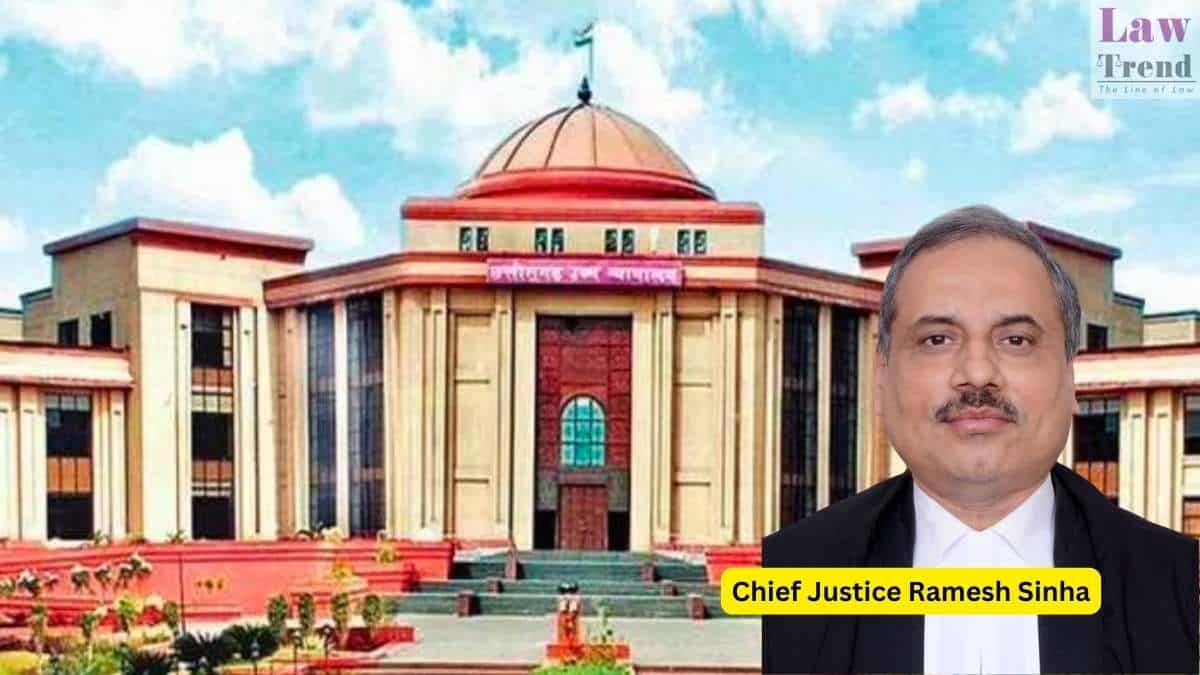
The High Court of Chhattisgarh at Bilaspur, presided over by Chief Justice Ramesh Sinha, has granted regular bail to a 23-year-old man accused in a house trespass and theft case. The Court allowed the bail application after taking into consideration that the applicant had no prior criminal record, no stolen property was seized directly from him, and he had been in custody since February 2026 while the trial was expected to take time.

Background of the Case

The matter stems from Crime No. 591/2025 registered at Police Station D.D. Nagar, District Raipur, Chhattisgarh. According to the prosecution, the complainant lodged a report alleging that unknown persons had unlawfully entered his house and stolen gold and silver ornaments.

Following the registration of a case against unknown persons, the police conducted an investigation and subsequently arrested the applicant, Sagar Shrivas, a resident of R.D.A. Colony, Indraprasth, Raipur. Offences were registered under Sections 331 (4), 305 (a), and 3 (5) of the Bharatiya Nyaya Sanhita (BNS). The applicant was taken into judicial custody on February 16, 2026, leading to the filing of his first bail application under Section 483 of the Bharatiya Nagarik Suraksha Sanhita, 2023 (BNSS).

Submissions of the Parties

Appearing for the applicant, Advocate C.R. Sahu submitted that his client was innocent and had been falsely implicated in the crime. He argued that the police did not recover or seize any stolen property or incriminating article from the possession of the applicant. It was contended that the arrest was made merely on suspicion and on the basis of memorandum statements given by other co-accused persons. The counsel further highlighted that the applicant has no prior criminal antecedents, has been in jail since February 16, 2026, and that the trial is likely to take a considerable amount of time to conclude.

On the other hand, Panel Lawyer Ms. Palak Dwivedi, representing the State of Chhattisgarh, opposed the bail plea. She argued that the applicant was actively involved in committing theft alongside other co-accused persons, and therefore, was not entitled to be released on bail.

READ ALSO  Is It Necessary for the Legislature to Introduce a Law Dealing with “Liability in Tort”? Supreme Court

Court’s Analysis and Key Observations

Upon hearing the arguments from both sides and reviewing all the documents available on record, Chief Justice Ramesh Sinha decided to exercise judicial discretion in favor of granting bail to the applicant.

Evaluating the overall circumstances and facts of the case, the Court observed:

“Taking into consideration the facts and circumstances of the case, nature of allegation and for the fact that the applicant has no criminal antecedents, the applicant is in jail since 16.02.2026 and conclusion of the trial is likely to take some time, therefore, without commenting anything on the merits of the case, I am inclined to allow this application.”

Decision and Conditions Imposed

The High Court allowed the first bail application and ordered that the applicant, Sagar Shrivas, be released on regular bail upon executing a personal bond with two sureties of equal amount to the satisfaction of the trial court.

READ ALSO  अगर पत्नी इस कारण घर छोड़ती है क्यूँकि पति दूसरी महिला को घर ले आया है तो वह परित्याग की श्रेणी में नहीं आता है- जानिए हाई कोर्ट का निर्णय

To ensure proper compliance during the trial, the High Court directed the release subject to the following mandatory conditions:

  1. The applicant must file an undertaking promising not to seek any adjournment on dates fixed for evidence when witnesses are present in court. Any default may be treated by the trial court as an abuse of the liberty of bail and dealt with in accordance with law.
  2. The applicant must appear before the trial court on every fixed date, either in person or through counsel. Absence without sufficient cause may invite proceedings under Section 269 of the Bharatiya Nyaya Sanhita.
  3. If the applicant misuses the bail liberty and proclamation under Section 84 of the BNSS is issued to secure his presence, failure to appear on the specified date will lead to proceedings under Section 209 of the Bharatiya Nyaya Sanhita.
  4. The applicant must personally appear before the trial court on dates set for the opening of the case, framing of charges, and recording of statement under Section 351 of the BNSS. Deliberate absence may be treated as abuse of bail liberty.
READ ALSO  भारी मात्रा में नशीले पदार्थों की तस्करी से जुड़ी साजिश में भूमिका स्पष्ट न कर पाना अभियुक्त के लिए घातक हो सकता है: छत्तीसगढ़ हाईकोर्ट

Case Title: Sagar Shrivas v. State of Chhattisgarh

Case No.: MCRC No. 5831 of 2026

Bench: Chief Justice Ramesh Sinha

Date: July 23, 2026

Law Trend
Law Trendhttps://lawtrend.in/
Legal News Website Providing Latest Judgments of Supreme Court and High Court

Related Articles

Latest Articles
