

No Railway Liability For Cargo Shortage In Unsupervised ‘Owner’s Risk’ Consignments: Supreme Court
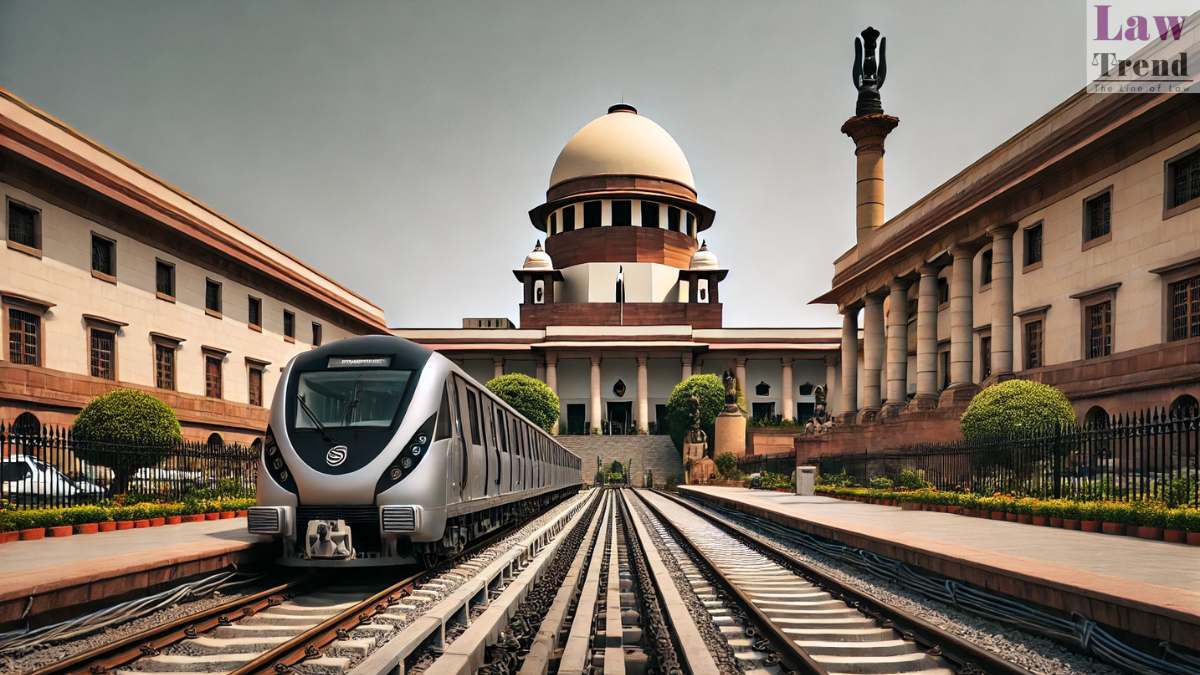

The Supreme Court of India, comprising a bench of Justice Sanjay Karol and Justice Vipul M. Pancholi, has dismissed an appeal filed by M/S Bajaj Trading Company against the Union of India. The Court ruled that when goods are transported under the “owner’s risk” category and loading is executed without the supervision of railway staff, the railway administration cannot be held liable for any transit shortage unless the consignor proves negligence or misconduct on the part of the railway or its employees. The ruling reinforces that the burden of proving the actual quantity of cargo loaded lies strictly on the consignor when the railway receipt carries a “said to contain” remark.

Background of the Case

The dispute dates back to November 10, 2009, when the appellant, M/S Bajaj Trading Company, entrusted the shipment of 40,444 bags of salt from Chirai Junction in Gujarat to Dharmanagar in Assam. Upon arrival at the destination, the recorded delivery consisted of only 38,702 bags, indicating a shortage of 1,742 bags.

The respondent Railway Authorities issued a shortage certificate on March 19, 2010. Consequently, the appellant issued a claim notice on April 6, 2010, seeking compensation of Rs. 3,48,400 calculated at the rate of Rs. 200 per bag.

However, the claim was rejected by the Railway Claims Tribunal, Guwahati Bench, on September 3, 2012. The appellant then filed a statutory appeal under Section 23 of the Railway Claims Tribunal Act, 1987, before the Gauhati High Court. The High Court dismissed the appeal on December 17, 2024, noting that the goods were loaded directly from trucks to the wagons by the consignor’s employees without supervision from any railway staff. The High Court also highlighted that the sender’s weight was accepted, packing conditions were non-compliant, and the railway receipt contained a “said to contain” remark. Aggrieved by these concurrent rejections, the appellant approached the Supreme Court.

Arguments of the Parties

The appellant contended that despite the booking being made at “owner’s risk,” the general carrier obligations imposed on the Railway Authorities under Section 93 of the Railways Act, 1989, could not be completely bypassed. They argued that Rule 1512 of the Indian Railway Commercial Manual mandates that the loading of goods must be supervised by a Goods Clerk, and any failure of the railway staff to do so should not prejudice the consignor. Additionally, they submitted that “said to contain” bookings are meant only for “private sidings” and not “railway sidings.” Since a specific quantity was recorded on the receipt, they argued that Section 97 of the Railways Act makes the railway administration liable for negligence even under owner’s risk.

READ ALSO  Once Land is Vested, Compensation Cannot be Denied: Allahabad High Court Orders NHAI to Pay Compensation in Land Acquisition Case

On the other hand, the respondent Railway Authorities argued that issuing a shortage certificate does not amount to an admission of liability. They relied on Section 65(2) of the Railways Act, 1989, which places the burden of proof regarding the number and quantity of a consignment on the consignor if a railway clerk did not check or verify the goods. The respondents further submitted that Section 93 does not address “shortage” and Section 97 limits the railway’s liability strictly to cases where negligence or misconduct on its part is proven.

The Court’s Analysis and Interpretation of ‘Owner’s Risk’

The Supreme Court examined the interplay between Section 65(2), Section 93, Section 97, and Section 99 of the Railways Act, 1989.

The Court first analyzed the effect of the non-obstante clause at the beginning of Section 97. Referring to the precedent in Mohd. Abdul Samad v. State of Telangana (2025), where Justice B.V. Nagarathna observed that a non-obstante clause is a legislative device designed to give overriding effect to an enacting part of a section in case of conflict, the Court sought to determine the legislative intent. Citing A.G. Varadarajulu v. State of T.N. (1998)—which referred to the observations of Justice Patanjali Sastri and Justice Hidayatullah—and Chandavarkar Sita Ratna Rao v. Ashalata S. Guram (1986), the Court held that the scope of such a clause must be determined strictly.

Applying these statutory principles to the present case, the Bench observed:

READ ALSO  Supreme Court Quashes Mid-Stream Modification of Sports Quota Criteria in Punjab MBBS Admissions; Cites 'Undisclosed Conflict of Interest' and Arbitrariness

“In view of the above discussion, the non obstante clause contained in Section 97 would exclude the general obligations cast on the Railway by Section 93. Since, in the present case the goods were booked at ‘owner’s risk’, if liability is to be fastened on the authorities, it can only be done if negligence or misconduct on its part or its employees.”

To address the allegations regarding broken wagon seals and open carriages, the Court thoroughly examined the legal definitions of “negligence.” It referred to judicial definitions of the concept outlined by the Supreme Court in Poonam Verma v. Ashwin Patel (1996), Rajkot Municipal Corpn. v. Manjulben Jayantilal Nakum (1997), and Jay Laxmi Salt Works (P) Ltd. v. State of Gujarat (1994).

The Bench noted that under the proviso to Section 65(2) of the Act, when consignment particulars are not verified by railway employees, the burden of proving the actual weight or number of packages lies entirely on the consignor. On the duty of care, the Court observed:

“For it to be established that the Railway authorities were negligent, it has to be shown that they had a duty of care. Had they, at any stage been involved in the noting, counting or weighing of goods, thereby being actively aware of the amount being transported by them, then, it could be said that they had duty to ensure that the total amount that they have counted or weighed, was the amount they ought to safely transit to the end destination. This was not the case.”

The Court agreed with the High Court that the appellant failed to produce any corroborative documents, such as procurement and processing records, to prove that the exact quantity of 40,444 bags was loaded in the first place. Therefore, the appellant failed to discharge the burden of proof required under Section 65(2).

The Court remarked:

READ ALSO  सुप्रीम कोर्ट ने याचिकाकर्ताओं को गाजियाबाद में 'धर्म संसद' मामले की तत्काल सुनवाई के लिए ईमेल भेजने का निर्देश दिया

“Once this burden had been discharged, only then could we come to the question of there being any negligence/misconduct on part of the Railways or its employees if liability was to be fastened upon them despite the fact that the same had been booked in the “owner’s risk” category.”

The Decision

Finding no merit in the appellant’s submissions, the Supreme Court dismissed the appeal and disposed of all pending applications, upholding the decisions of the Gauhati High Court and the Railway Claims Tribunal.

Case Details:

  • Case Title: M/S Bajaj Trading Company v. Union of India
  • Case No.: Civil Appeal No. of 2026 (Arising out of Special Leave Petition (C) No. 22748 of 2025)
  • Bench: Justice Sanjay Karol, Justice Vipul M. Pancholi
  • Date: July 16, 2026

Law Trend
Law Trendhttps://lawtrend.in/
Legal News Website Providing Latest Judgments of Supreme Court and High Court

Related Articles

Latest Articles

