

Section 14 SARFAESI Proceedings Are Purely Ministerial, DMs And CJMs Cannot Adjudicate On Property Titles Or Land Laws: Jharkhand High Court
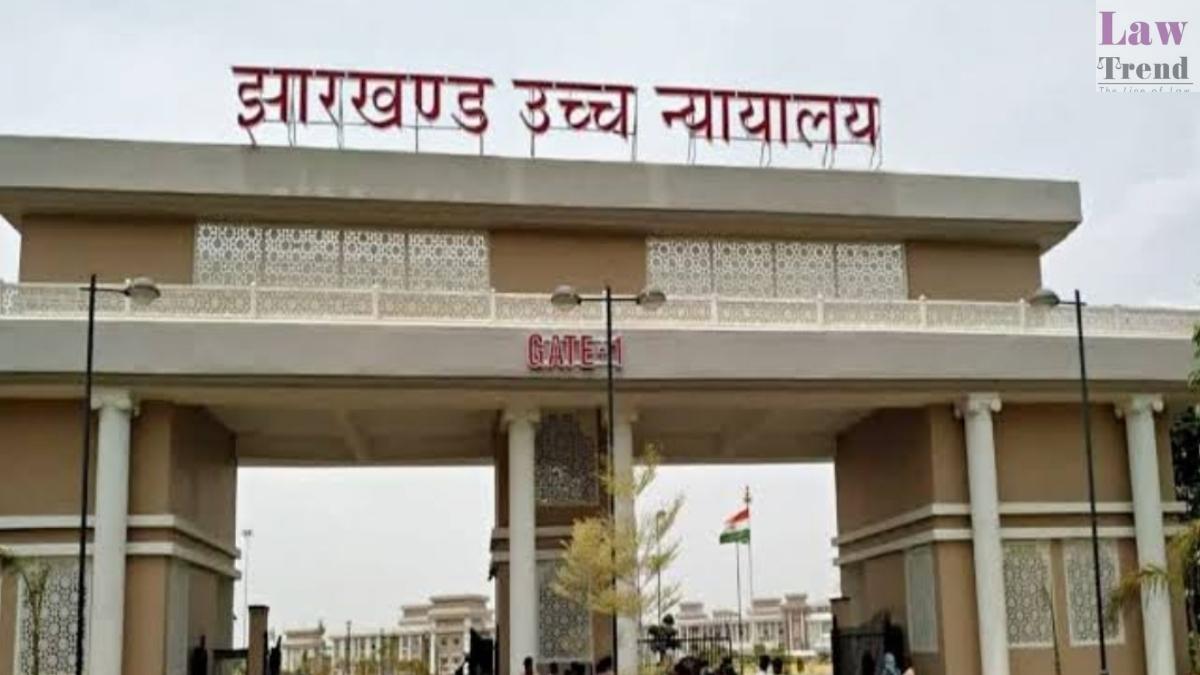

The Jharkhand High Court has ruled that the powers exercised by District Magistrates and Chief Judicial Magistrates under Section 14 of the SARFAESI Act are strictly ministerial and do not involve any adjudicatory process. Deciding a batch of writ petitions, Justice Ananda Sen directed the state authorities to immediately clear the alarming backlog of pending applications within strict timelines, emphasizing that banks act as trustees of public funds and the recovery of public dues cannot be delayed by unauthorized inquiries.

Background of the Case

The ruling came during the hearing of a batch of writ petitions led by Jharkhand Gramin Bank, along with other financial institutions including Canara Bank, UCO Bank, Jana Small Finance Bank, and HDFC Bank. The petitioners approached the High Court seeking a mandamus to compel District Magistrates (DMs), Deputy Commissioners, and Chief Judicial Magistrates (CJMs) across Jharkhand to expeditiously dispose of their pending applications under Section 14 of the Securitisation and Reconstruction of Financial Assets and Enforcement of Security Interest Act, 2002 (SARFAESI Act).

The financial institutions argued that despite having the legal right to take physical possession of secured assets from defaulting borrowers, their applications under Section 14 were kept pending indefinitely by the statutory authorities well beyond the statutory timelines. This chronic delay, they argued, created severe obstacles in the recovery of bad loans.

Arguments of the Parties

The petitioner banks argued that once a borrower defaults and a security interest is enforced, the DM or CJM is legally mandated to assist the secured creditor in taking physical possession of the property. They asserted that these authorities have no power to keep applications pending indefinitely and must follow the statutory timelines to facilitate the prompt auctioning of properties.

On behalf of the State, the Advocate General Rohitashya Roy argued that Deputy Commissioners and District Magistrates are heavily overburdened with developmental, administrative, and revenue works, which naturally causes delays. The State further contended that when an application under Section 14 is filed, the DM must verify the title and possession of the property to determine if the mortgage violated any local laws. Specifically, the State pointed out that under the Chota Nagpur Tenancy Act (CNT Act), the District Magistrate acts as the guardian of tribal lands and must ensure that no unauthorized transfers occur. Finally, the State argued that the timelines prescribed under Section 14 of the SARFAESI Act are directory in nature, meaning officers cannot be strictly forced to decide applications within the literal statutory timeframe.

READ ALSO  Requirement of Impleading the Company Arises When the Accused Is Vicariously Held Liable for the Acts of the Company: Jharkhand HC

The Court’s Analysis

Upon examining the official reports, the Court highlighted an “alarming” pendency across the state, noting that 308 applications were pending in Dhanbad, 203 in East Singhbhum, 146 in Ranchi, 65 in Bokaro, and 64 in Hazaribagh, alongside 59 cases pending before the CJM Jamshedpur.

Justice Sen analyzed the foundational objectives of the SARFAESI Act, noting that it was specifically enacted to bypass court interventions and allow banks to take quick possession of securities to reduce mounting levels of non-performing assets. The Court emphasized that banks are trustees of public funds, and public interest cannot be compromised to benefit private defaulting individuals.

Addressing the scope of Section 14, the Court cited the Supreme Court of India’s judgments in Balkrishna Rama Tarle v. Phoenix Arc Private Limited (2023) and R.D. Jain & Co. v. Capital First Ltd., clarifying that the duties of the DM or CJM under Section 14 are strictly ministerial and do not involve any judicial or adjudicatory process. The Court observed:

“time is the essence and is the spirit of special enactment”

The Court also evaluated the statutory timelines of 30 days (extendable up to 60 days in aggregate). Citing the landmark Supreme Court decision in C. Bright v. District Collector (2021), the Court confirmed that while the timeline is directory—meaning the authority does not lose its jurisdiction (functus officio) after 60 days—the authority is still legally bound to make an earnest effort to deliver possession at the earliest.

Crucially, the Court rejected the State’s argument that DMs can conduct roving inquiries into property titles or CNT Act violations under Section 14. The Court observed:

READ ALSO  बाल तस्करी के मामलों पर झारखंड हाईकोर्ट सख्त: राज्य सरकार को बाहरी व्यक्तियों की पहचान के लिए दिशा-निर्देश बनाने का निर्देश

“any type of adjudication is beyond the purview and scope of Section 14 of the SARFAESI Act and also beyond the jurisdiction of the authority.”

Addressing the CNT Act argument directly, the Court ruled:

“He cannot assume the adjudicatory power vested in him under the CNT Act while exercising jurisdiction under the SARFAESI Act. Both operates on different jurisdiction, not to be mixed up.”

To further counter the State’s CNT Act argument, the Court observed that Section 14 grants concurrent jurisdiction to both the District Magistrate and the Chief Judicial Magistrate. Since a CJM is not the guardian of tribal land and does not possess powers under the CNT Act, accepting the State’s argument would create an impermissible legal anomaly where a DM would exercise greater powers than a CJM under concurrent jurisdiction. The Court supported this with the Supreme Court ruling in Uco Bank v. Dipak Debbarma (2017).

Finally, the Court criticized the practice of CJMs registering Section 14 applications as judicial “Criminal Miscellaneous” cases and conducting formal hearings. It ruled that since the act is purely ministerial, CJMs must deal with these applications on the administrative side rather than treating them as judicial proceedings.

The Decision

The High Court accepted the personal undertakings of the virtual-appearing Deputy Commissioners and directed them to dispose of all pending applications within the following timelines:

  • Ranchi: Within 6 weeks
  • Hazaribagh and Bokaro: Within 4 weeks
  • Dhanbad and Jamshedpur: Within 8 weeks
  • All other districts (with single-digit pendency): Within 3 weeks
READ ALSO  Section 148 NI Act | Allahabad High Court Rules, Appellate Court has Discretion to Waive the Deposit Requirement Only in Exceptional Circumstances

For the judicial authorities, the Court directed the CJM Jamshedpur to clear pending cases within 60 days, the CJM Dhanbad within 30 days, and all other CJMs within 15 days. The Principal District Judges of Jamshedpur and Dhanbad were ordered to monitor the compliance.

To ensure long-term systemic transparency and accountability, the Court ordered all DMs and CJMs in Jharkhand to maintain a dedicated, physically trackable register containing the filing, consideration, disposal, and execution dates of all Section 14 applications. DMs must assign a specific officer to update the register, which must be placed before the DM fortnightly for countersigning. Similarly, CJMs must have their registers placed before them every 15 days, and before the Principal District Judge once a month. The Court declared that extracts of these registers must be accessible to the public under the Right to Information Act to maintain absolute transparency.

All the writ petitions were accordingly disposed of.

Case Details

Case Title: Jharkhand Gramin Bank v. State of Jharkhand (with connected matters)
Case No.: W.P.(C) No. 4270 of 2026
Bench: Justice Ananda Sen
Date: July 15, 2026

Law Trend
Law Trendhttps://lawtrend.in/
Legal News Website Providing Latest Judgments of Supreme Court and High Court

Related Articles

Latest Articles

