

Filing Perjury Application At Judgment Stage Does Not Oblige Court To Defer Maintenance Decision: Allahabad High Court
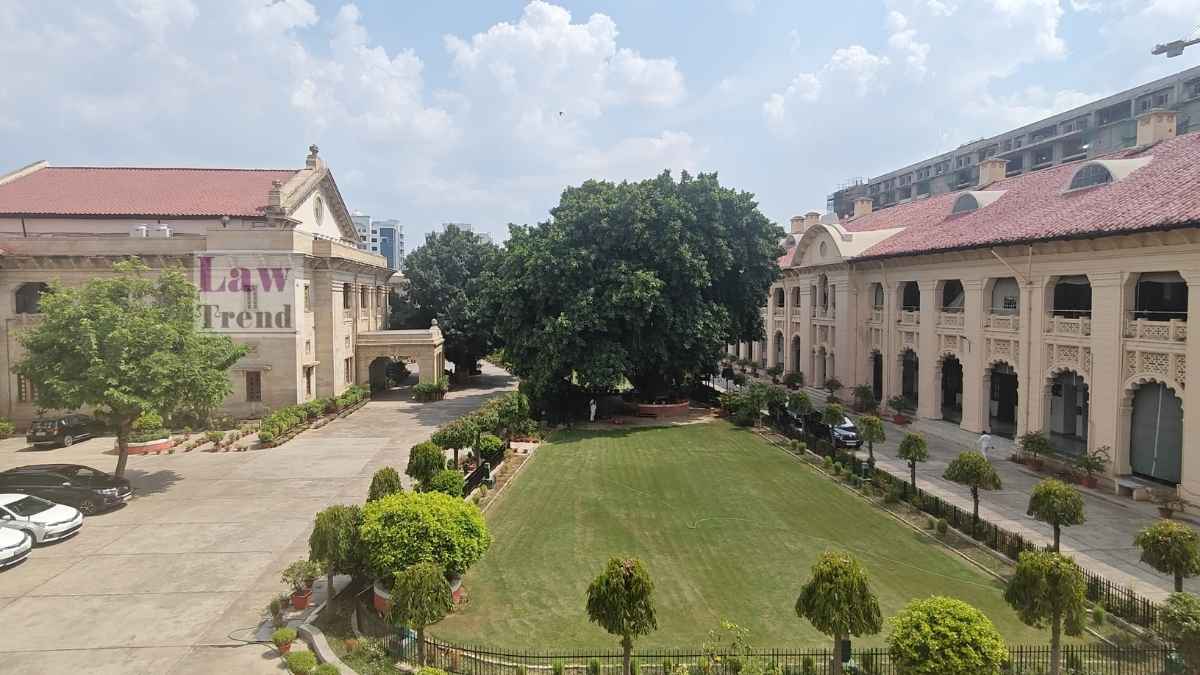

The Allahabad High Court has ruled that a trial court is not obligated to defer its final decision in a maintenance dispute under Section 125 of the Code of Criminal Procedure (Cr.P.C.) simply because an application alleging perjury under Section 340 of the Cr.P.C. is filed at the final judgment stage. Justice Lakshmi Kant Shukla dismissed a criminal revision petition filed by a husband challenging a family court’s maintenance order, noting that proceedings under Section 340 are independent and should not be used as a tool to stall the final adjudication of maintenance.

Background of the Case

The dispute arose from a maintenance application filed by the wife against her husband under Section 125 of the Cr.P.C. (Criminal Misc. Case No. 84 of 2020) before the Principal Judge, Family Court, Sonbhadra. On July 30, 2025, the trial court partly allowed the wife’s application, directing the husband to pay her maintenance at the rate of Rs. 15,000 per month from the date the application was instituted until July 30, 2025, and Rs. 20,000 per month from the date of the order onwards.

The revisionist, aggrieved by this decision, filed a criminal revision before the High Court. He contended that the maintenance amount was excessive and disproportionate to his actual income, and that the trial court committed a material irregularity by failing to decide his pending application under Section 340 of the Cr.P.C. before pronouncing the final maintenance order.

Arguments of the Parties

The counsel for the revisionist argued that the trial court failed to correctly appreciate his financial status, noting that his basic pay is Rs. 50,000 per month and his total declared monthly income is approximately Rs. 60,000. It was argued that directing a payment of Rs. 20,000 per month was excessive.

Furthermore, the revisionist relied heavily on the High Court’s ruling in Amit Bajpai v. State of U.P. and another (Criminal Revision No. 3760 of 2023), asserting that the trial court should have first decided his Section 340 application before concluding the maintenance proceedings. The revisionist alleged that his wife had fabricated documents. He also pointed out that according to her disclosure affidavit filed under the Supreme Court’s guidelines in Rajnesh v. Neha ((2020) 13 SCC 454), she was an MBA graduate who had voluntarily resigned from her employment to claim maintenance despite being capable of maintaining herself.

READ ALSO  Government Cannot Disbelieve Apostille Documents Issued by Countries Signatory to the Apostille Convention: Allahabad HC

Conversely, the State’s Additional Government Advocate (A.G.A.) and the counsel for the wife defended the trial court’s order. They highlighted that the husband had admitted to being employed as a Divisional Engineer in the Railways with a basic monthly pay of Rs. 50,000 and an admitted monthly salary of Rs. 74,513. Given his earnings and potential increments, they argued that the Rs. 20,000 maintenance was fully justified.

Regarding the Section 340 application, they submitted that the revisionist only filed the application after the evidence had concluded and final arguments were completed. They argued that the application was a delayed attempt to stall the judgment and that the decision in Amit Bajpai was completely inapplicable to these facts.

READ ALSO  Delhi HC Quashes Penalty on Officer Denied Child Care Leave; Rules Denial "Mechanical" and Disciplinary Process Vitiated

The Court’s Analysis and Observations

Upon reviewing the records, the High Court observed that the revisionist’s reliance on Amit Bajpai was “wholly misconceived.” The Court pointed out that in the Amit Bajpai case, the Section 340 application had been registered and pending for over a year before the Section 125 order was passed.

In contrast, the facts of the present case were entirely different. The Section 340 application was filed on July 22, 2025, after final arguments had already concluded and the matter was reserved for judgment. This was supported by endorsements on the application itself, showing strong objections about its submission after the completion of arguments.

Addressing the relationship between the two legal provisions, the High Court held:

“proceedings contemplated under Section 340 Cr.P.C. are independent in nature and are not connected with the adjudication of proceedings under Section 125 Cr.P.C.”

The Court further clarified:

“Merely because an application under Section 340 Cr.P.C. is filed at the stage when the matter has already been reserved for judgment would not ipso facto oblige the Trial Court to defer pronouncement of judgment.”

The High Court added that it remains open for any concerned party to pursue their Section 340 Cr.P.C. proceedings independently in accordance with the law.

On the issue of the maintenance quantum, the High Court observed that the trial court had properly considered the admitted income of the revisionist, the material on record, and the financial status of both parties. The Court did not find the Rs. 20,000 per month maintenance to be arbitrary, unreasonable, or excessive.

READ ALSO  S.15 HMA | Second Marriage Barred Until Divorce Appeal Concludes: Madhya Pradesh High Court

The Court’s Decision

The High Court concluded that the trial court’s order was free from any procedural or jurisdictional defects, stating:

“impugned judgment and order does not suffer from any jurisdictional error, manifest illegality or material irregularity warranting interference by this Court.”

Accordingly, the High Court dismissed the criminal revision, finding it devoid of merit.

Case Details

Case Title: Umesh Vidyarthi v. Madhubala And Another
Case No.: Criminal Revision No. 5330 of 2025
Bench: Justice Lakshmi Kant Shukla
Date: July 13, 2026

Law Trend
Law Trendhttps://lawtrend.in/
Legal News Website Providing Latest Judgments of Supreme Court and High Court

Related Articles

Latest Articles

