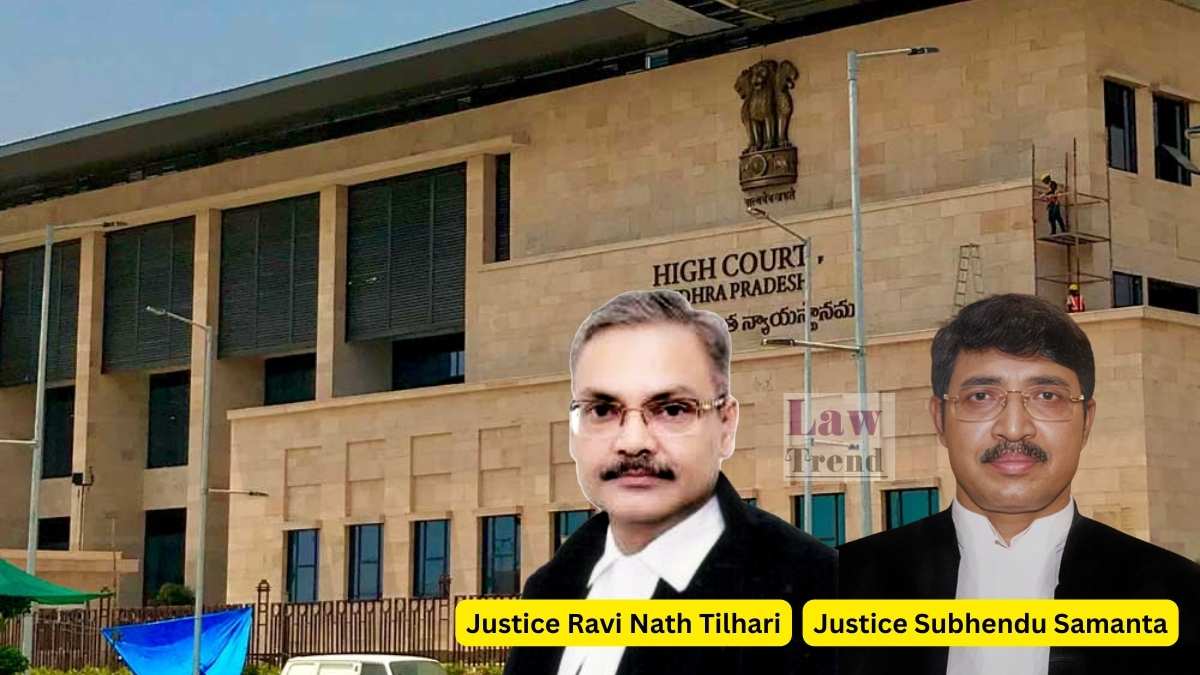
The High Court of Andhra Pradesh has ruled that any unexplained delay by the government in deciding a detenu’s representation violates the constitutional mandate under Article 22(5) of the Constitution of India, rendering their continued preventive detention illegal. A division bench comprising Justice Ravi Nath Tilhari and Justice Subhendu Samanta allowed a Habeas Corpus petition filed by the wife of a detenu, setting aside the preventive detention order and directing his immediate release due to an unconstitutional 32-day delay in processing his representation.
Background of the Case
The detenu, Cheemparthi Fakruddin, was preventively detained under the Andhra Pradesh Prevention of Dangerous Activities of Bootleggers, Dacoits, Drug Offenders, Goondas, Immoral Traffic Offenders and Land Grabbers Act, 1986. The detention order was passed by the Collector & District Magistrate of YSR Kadapa District on September 2, 2025, taking into consideration eight pending criminal cases against him.
The State Government approved the detention order on September 11, 2025. Following a report from the Advisory Board on September 26, 2025, confirming sufficient cause for detention, the State Government confirmed the detention order on October 24, 2025, for a period of twelve months.
While the detenu did not submit any representation before the confirmation order was issued, he submitted a representation to the government on October 27, 2025, seeking his release and requesting that the detention order be set aside. During the pendency of the writ petition, the State Government rejected the representation on January 6, 2026. The petitioner subsequently filed a Habeas Corpus petition to challenge the detention.
Arguments of the Parties
The learned counsel for the petitioner, Sri D. Purna Chandra Reddy, challenged the detention on two primary grounds. First, he argued that the detenu’s representation, submitted on October 27, 2025, was rejected after an inordinate and unexplained delay on January 6, 2026. He contended that the consideration of such representation must be prompt and expeditious under the law. Second, he argued that the detenu was in judicial custody in connection with a separate criminal case at the time the detention order was issued, yet the District Collector recorded no satisfaction that there was a likelihood of the detenu being released on bail.
Opposing the petition, the learned Government Pleader, Sri Kirthi Teja Kondaveeti, appearing for the respondents, submitted the timeline of the representation. The representation dated October 27, 2025, was forwarded to the District Collector on November 6, 2025, to furnish remarks. The remarks were received on December 3, 2025, and the representation was rejected on January 6, 2026.
The Government Pleader admitted that neither the rejection order nor the counter-affidavit provided any explanation for the delay between these dates. However, he argued that even if there was unexplained delay in deciding the representation, it would not invalidate the original order of detention itself, but would only render the continued detention illegal.
The Court’s Analysis
The court focused its analysis on the constitutional right to have representations considered expeditiously. Citing the Supreme Court Constitution Bench ruling in K.M. Abdulla Kunhi and B.L. Abdul Khader v. Union of India, the court noted that Article 22(5) casts a legal obligation on the government to consider the representation as early as possible.
The bench highlighted the observations of the Supreme Court in that case:
“The representation relates to the liberty of the individual, the highly cherished right enshrined in Article 21 of our Constitution. Clause (5) of Article 22 therefore, casts a legal obligation on the government to consider the representation as early as possible. It is a constitutional mandate commanding the concerned authority to whom the detenu submits his representation to consider the representation and dispose of the same as expeditiously as possible.”
The court further noted that:
“Any unexplained delay in the disposal of representation would be a breach of the constitutional imperative and it would render the continued detention impermissible and illegal.”
Reviewing other precedent judgments, the High Court discussed the rulings in Rajammal v. State of Tamilnadu, Pabitra N. Rana v. Union of India, and Rashid Kapadia v. Medha Gadgil, all of which established that unreasonable and unexplained delay in deciding representations is fatal to continued preventive detention.
The court also cited Abdul Nasar Adam Ismail v. State of Maharashtra, where the Supreme Court held that while post-detention delays in deciding representations do not vitiate the validity of the initial detention order, they render further continued detention illegal.
Applying these principles to the present case, the High Court observed that there was a delay of 32 days from the date the Collector’s remarks were received (December 3, 2025) to the date the rejection order was passed (January 6, 2026). The court noted that taking such a long time in a matter involving personal liberty is highly unreasonable. Since the State failed to provide any reasonable explanation for this delay in the counter-affidavit or the rejection order, the court held that the continued detention of the detenu was unconstitutional.
The Decision
As the petition was allowed on the ground of unexplained delay in deciding the representation, the court stated that it did not need to examine the second ground concerning the detenu’s judicial custody and the likelihood of bail.
The High Court allowed the writ petition and set aside the preventive detention order dated September 2, 2025, along with the confirmation order dated October 24, 2025. It directed that the detenu, Shaik Simpathi @ Cheemparthi Fakruddin @ Goresab Fakruddin @ Pongodu @ Bongodu @ Thellodu, be released and set free forthwith, subject to any existing judicial custody orders in other pending cases.
Case Title: Cheemparthi Shaheen v. The State of Andhra Pradesh and three others
Case No.: Writ Petition No. 34357 of 2025
Bench: Justice Ravi Nath Tilhari and Justice Subhendu Samanta
Date: July 1, 2026