

Separation of 36 Years Renders Marriage ‘Dead Wood’ Justifying Divorce; Jharkhand High Court Directs Husband to Pay Rs 40 Lakh Permanent Alimony
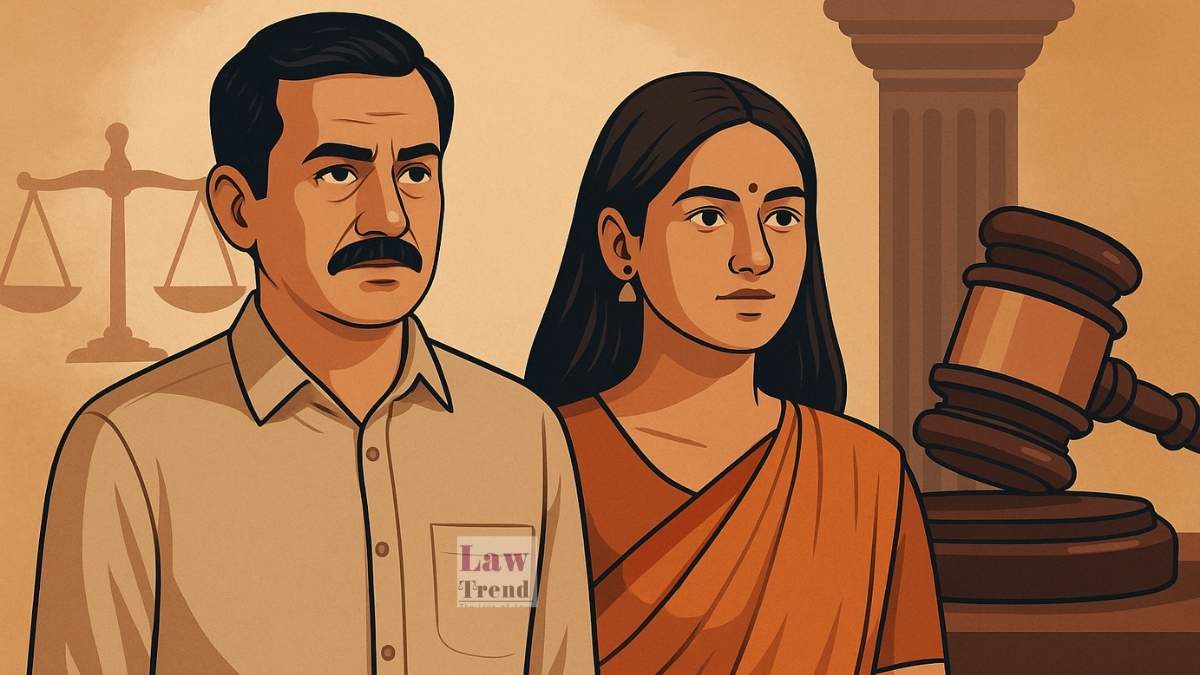

A division bench of the High Court of Jharkhand, comprising Justice Sujit Narayan Prasad and Justice Sanjay Prasad, has affirmed a decree of divorce dissolving a decades-old marriage on the grounds that a 36-year separation had reduced the matrimonial bond to a “dead wood marriage.” While upholding the dissolution, the Court modified the lower court’s order to significantly enhance the permanent alimony awarded to the wife, directing the husband to pay Rs 40 lakh as a one-time lump-sum payment instead of the Rs 10 lakh originally ordered.

Background of the Case

The appellant-wife and the respondent-husband were married on May 29, 1984, according to Hindu rites and customs. Following their marriage, they resided together, and a daughter was born of the wedlock. According to the facts recorded in the judgment, the couple last resided together in 1990.

The respondent-husband contended that from the very beginning of their matrimonial life, the appellant-wife was unwilling to reside in a village setting and frequently returned to her parental home without his consent. In 1990, she permanently left the matrimonial home with their minor daughter. Despite efforts by the respondent-husband and his family to bring her back, she refused to return.

In 1992, the appellant-wife filed a criminal case under Section 498A of the Indian Penal Code against the respondent-husband and his parents, which was later resolved through a compromise wherein she agreed to return but failed to keep her promise. In 2010, she filed a maintenance case, which was compromised in 2013, with the respondent-husband agreeing to pay Rs 5,000 per month (subsequently increased to Rs 6,000 per month).

In 2019, the respondent-husband filed a suit seeking a decree of divorce on the grounds of cruelty and desertion. The Family Court allowed the petition on September 1, 2022, dissolving the marriage and directing the respondent-husband to pay a lump sum of Rs 10 lakh as permanent alimony. The appellant-wife challenged this decision before the High Court.

READ ALSO  Order 2 Rule 2 CPC | Dismissal of Earlier Suit For Technical Reasons Doesn’t Attract Res Judicata, Rules Supreme Court

Arguments of the Parties

Appearing for the appellant-wife, the advocates argued that the Family Court erred by failing to properly appreciate the evidence. They contended that it was the respondent-husband who treated the appellant-wife with cruelty and deserted her, alleging that he was living with another woman, which made cohabitation impossible. They further argued that the permanent alimony of Rs 10 lakh was meagre given that the respondent-husband is a Central Government employee working in the Railways, earning a handsome monthly salary of Rs 81,689, and was due to retire soon with significant retiral benefits.

Conversely, representing the respondent-husband, the advocates submitted that the Family Court’s judgment was free of error. They argued that the appellant-wife had deserted the respondent-husband in 1990 without any valid ground and that the allegations concerning another woman were false. They emphasized that the parties had been living separately for 36 years, demonstrating that the marriage had broken down irretrievably.

The Court’s Analysis

The High Court examined the evidence and noted that the parties had indeed lived separately since 1990. Addressing the nature of their current relationship, the Court observed:

“In the aforesaid circumstances, the considered view of this Court is that now the marital relation between the parties has become “dead wood marriage” and marital relation has become lifeless and without emotional or practical value. It is settled proposition of law that when a marriage is deemed a dead wood situation, the Courts may consider it a valid reason to grant a divorce, recognizing that forcing a couple to remain in such a relationship only prolongs their suffering and no purpose will be served in sailing the dead wood.”

To support this finding, the Court cited the Supreme Court judgments in Durga Prasanna Tripathy v. Arundhati Tripathy (2005) and Sujata Uday Patil v. Uday Madhukar Patil (2007), which establish that when a marriage has crossed the point of no return and a reunion is impossible, the courts must adopt a pragmatic approach rather than forcing the parties to remain bound.

Turning to the issue of permanent alimony under Section 25 of the Hindu Marriage Act, 1955, the Court reviewed several precedent authorities, including Kalyan Dey Chowdhury v. Rita Dey Chowdhury Nee Nandy (2017), Vinny Parmvir Parmar v. Parmvir Parmar (2011), U. Sree v. U. Srinivas (2013), Rajnesh v. Neha & Anr. (2021), and the recent decision in Rakhi Sadhukhan v. Raja Sadhukhan (2025). The Court emphasized that there is no mathematical formula for permanent alimony; it must be reasonable, realistic, and determined based on the husband’s financial capacity, the parties’ status, and their social needs.

To determine the respondent-husband’s true financial status, the Court had impleaded the General Manager of Chittaranjan Locomotive Works (CLW) as a party. An affidavit submitted by CLW confirmed that the respondent-husband, a Senior Technician (M.V. Driver), was earning a salary of Rs 81,689 per month and was scheduled to retire on August 31, 2026. The affidavit detailed his expected retiral benefits:

  • Commutation value of Pension: Rs 11,52,405
  • Retirement Gratuity: Rs 15,27,702
  • Encashment of Leave Salary: Rs 9,25,880
  • Group Insurance: Rs 63,790
  • Provident Fund: Rs 1,45,542
  • Basic Pension: Rs 29,300 per month (plus Dearness Relief)
READ ALSO  Bombay HC Advocates for Considerate Treatment of Women in the Workplace, Quashes AAI's Maternity Leave Denial

The Court observed that upon his retirement, the respondent-husband’s total lump-sum retiral benefits would amount to approximately Rs 38 lakh, and his monthly pension (inclusive of Dearness Relief at 60%) would approximate Rs 48,000. Noting that the appellant-wife is currently 55 years old and has a projected life expectancy of 72 years, she requires financial security for the next 17 years.

Balancing the financial requirements of both parties, the Court noted:

“Nevertheless, vis-à-vis such considerations, it remains his paramount duty to secure for the appellant-wife the standard of life which she was entitled to enjoy during the subsistence of the marriage, commensurate with his income and social status.”

The Decision

The High Court affirmed the Family Court’s judgment dated September 1, 2022, and the decree signed on September 9, 2022, dissolving the marriage between the parties.

However, the Court modified the order regarding permanent alimony. It held that the original sum of Rs 10 lakh was inadequate and fixed a one-time permanent alimony of Rs 40,00,000 (Rupees Forty Lakhs only) for the sustenance of the appellant-wife.

READ ALSO  बाल तस्करी के मामलों पर झारखंड हाईकोर्ट सख्त: राज्य सरकार को बाहरी व्यक्तियों की पहचान के लिए दिशा-निर्देश बनाने का निर्देश

The Court directed the respondent-husband to pay this amount in four equal installments within a period of 12 months. The first installment of Rs 10,00,000 must be paid within one month from the date of the order. The Court also granted liberty to the appellant-wife to approach the court of law in case of any default in payment.

Case Details:

Case Title: Sandhya Devi v. Rajesh Kumar Singh & Anr.
Case No.: First Appeal No. 126 of 2022
Bench: Justice Sujit Narayan Prasad, Justice Sanjay Prasad
Date: 19/06/2026

Law Trend
Law Trendhttps://lawtrend.in/
Legal News Website Providing Latest Judgments of Supreme Court and High Court

Related Articles

Latest Articles

