

Only Parliament Can Amend Scheduled Castes List; Castes Cannot Be Deemed Synonyms Without Legislation: Allahabad High Court
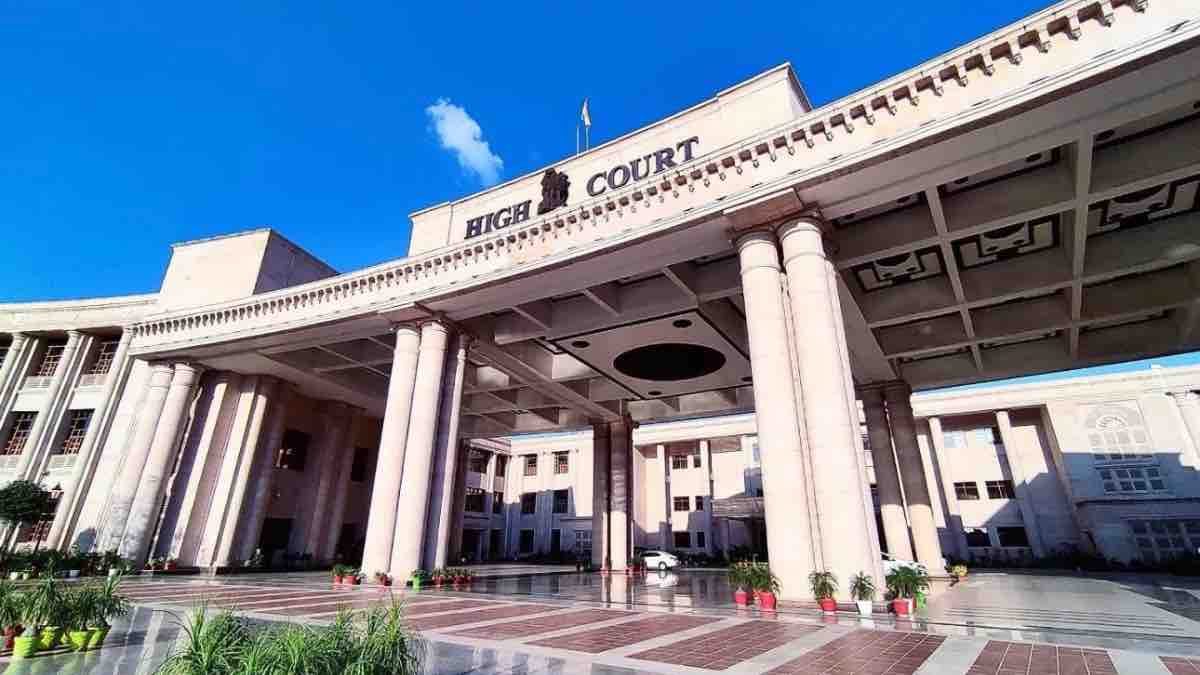

The Allahabad High Court has ruled that communities not specifically listed in the Constitution (Scheduled Castes) Order, 1950, cannot be legally recognized as Scheduled Castes by deeming them synonyms or sub-castes of already notified groups. A Division Bench comprising Justice Alok Mathur and Justice Amitabh Kumar Rai dismissed a petition seeking to treat the Nishad, Kashyap, Kewat, Mallah, and Bind communities as synonyms of the “Majhwar” caste, firmly stating that only Parliament possesses the legislative power to amend the Scheduled Castes list.

Background of the Case

The writ petition, filed by Chandra Shekhar Nishad in 2012, sought a mandamus directing the government to provide Scheduled Caste (SC) facilities to the Nishad, Kashyap, Kewat, Mallah, and Bind communities. The petitioner argued that these communities belong to the same professional group—boatmen—and should be treated as synonyms or generic names of the caste “Majhwar,” which is officially recognized as a Scheduled Caste at Entry No. 52 for Uttar Pradesh in the Constitution (Scheduled Castes) Order, 1950.

To support the claim, the petitioner relied on the 1961 Census manual, Hindi dictionaries, and a 2005 Uttar Pradesh State Government notification that had briefly granted SC benefits to these communities.

Arguments of the Parties

Senior Counsel representing the petitioner argued that courts could mold relief in the interest of justice. The petitioner heavily relied on Supreme Court judgments, including B. Basavalingappa v. D. Munichinnappa and State of Orissa v. Dasarathi Meher, where synonymous caste names or spelling discrepancies were reconciled to grant SC/ST status. The petitioner also cited the recent Constitution Bench judgment in State of Punjab v. Davinder Singh regarding the sub-classification of Scheduled Castes.

Conversely, the Standing Counsel for the State raised a preliminary objection, arguing that the relief sought amounted to a legislative enactment. Relying on the Supreme Court’s Constitution Bench judgment in State of Maharashtra v. Milind, the State contended that courts and state governments are barred from holding inquiries to add sub-castes or synonyms to the Presidential Order.

READ ALSO  Allahabad HC Grants Bail to PMLA Accused on Fulfilment of Twin Conditions

The Court’s Analysis

The Court conducted a detailed analysis of Articles 341 and 342 of the Constitution, which empower the President to notify Scheduled Castes and Scheduled Tribes. The bench observed that the primary object of these provisions is to avoid disputes regarding the constitutional status of a caste.

The Court unequivocally stated, “Orders once issued under clause (1) of Articles 341 and 342 cannot be varied by any subsequent order or notification, even by the President, except by a law made by Parliament.”

Addressing the attempt to categorize the petitioner’s communities as synonymous with “Majhwar,” the Court held, “No inquiry is permissible and no evidence can be led for establishing that a particular caste or part or group within a caste or tribe is included in the Presidential Order, if it is not expressly included therein.” The Court noted that whenever a caste has another recognized name, it is already mentioned in brackets within the official Schedules.

The bench dismissed the petitioner’s reliance on previous Supreme Court judgments as misconceived. It clarified that Davinder Singh dealt with the sub-classification of castes already notified under the Presidential Order, not the addition of new ones. Furthermore, the Court expressed disapproval of the petitioner’s reliance on the 2005 State Government notification, pointing out that the petitioner failed to disclose that the notification had been rescinded by the State in 2007.

READ ALSO  Stamp Duty Proceedings Invalid for Oral Gift Deed Under Muslim Personal Law: Allahabad High Court

The Decision

The Court concluded that the legal framework on this issue has been firmly settled by the Supreme Court in Milind. Because the Nishad, Kewat, Mallah, and Bind communities are explicitly recognized as Other Backward Classes (OBCs) under the U.P. Act of 1994, they cannot simply be merged into the SC category through judicial interpretation.

Summarizing its stance, the Court held, “The castes Kahar, Kashyap, Mallah, Nishad and Bind are recognized in the State of U.P. as Other Backward Classes and as such, cannot be included in the Constitution (Scheduled Castes) Order, 1950 along with the caste Majhwar by deeming them to be sub-castes, synonyms, or generics of the caste Majhwar except by a law made by Parliament.”

Finding the petition completely devoid of merit, the High Court dismissed the plea.

Case Title: Chandra Shekhar Nishad Versus Union of India
Case No.: WRIT-C No. 4422 of 2012
Bench: Justice Alok Mathur and Justice Amitabh Kumar Rai
Date: 22.06.2026

READ ALSO  No Adjournment Except in Rare Circumstances- Allahabad HC Issues Slew of Directions For Speedy Disposal of Trial Against MP/MLAs
Ad 20- WhatsApp Banner

Law Trend
Law Trendhttps://lawtrend.in/
Legal News Website Providing Latest Judgments of Supreme Court and High Court

Related Articles

Latest Articles

