

Blacklisting for Contractual Non-Performance During Extraordinary Circumstances Is Disproportionate Absent Fraud or Misconduct: Chhattisgarh High Court
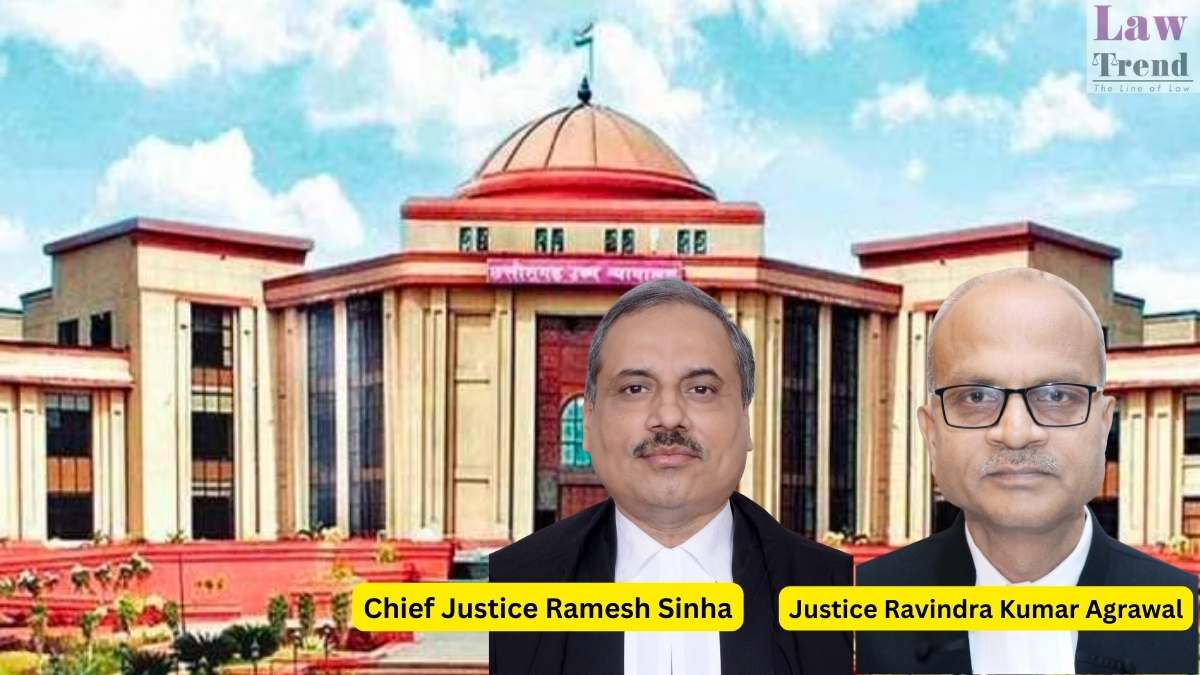

The High Court of Chhattisgarh has ruled that the extreme penalty of blacklisting and forfeiture of security deposit is unsustainable and disproportionate when contractual non-performance is caused by extraordinary circumstances, provided there is no evidence of fraud or misconduct. A Division Bench of Chief Justice Ramesh Sinha and Justice Ravindra Kumar Agrawal set aside a three-year product debarment and forfeiture order passed against pharmaceutical company Cipla Limited, holding that the state and its instrumentalities must meet the test of fairness and non-arbitrariness under Article 14 of the Constitution, even in contractual matters.

Background of the Case

On March 26, 2021, the Chhattisgarh Medical Services Corporation Limited (CGMSCL)—a state public sector undertaking under the Health and Family Welfare Department—floated an e-tender for the procurement of Remdesivir injections (100 mg) to meet emergency medical requirements during the COVID-19 pandemic. The tender document specified an “indicative quantity” of 5,000 vials, with a note that requirements could vary depending on demand from the concerned health authorities.

Cipla Limited participated in the tender process and, as the successful bidder, entered into a rate contract agreement with CGMSCL on March 31, 2021.

  • April 3, 2021: CGMSCL issued the first purchase order for 5,000 vials of Remdesivir, which Cipla fully supplied.
  • April 8, 2021: A second purchase order was issued for 6,000 vials. Cipla supplied 1,666 vials (~28%).
  • April 9, 2021: CGMSCL issued two additional purchase orders on the very same day, demanding 35,000 vials and 15,000 vials respectively.

Within a few days, Cipla’s supply mandate escalated from the initial indicative quantity of 5,000 vials to a total of approximately 61,000 vials, including 50,000 vials ordered in a single day. This sudden and massive escalation occurred during the peak of the devastating second wave of the COVID-19 pandemic. During this period, pharmaceutical manufacturers faced acute shortages of raw materials, supply chain disruptions, transport lockdowns, reduced workforce availability, and binding allocation directives from the Government of India restricting independent state-wise distribution.

Cipla sent a detailed communication on May 5, 2021, explaining these extraordinary constraints and requesting that no adverse action be taken. Nonetheless, CGMSCL issued a show-cause notice on September 6, 2021, and proceeded to pass an order on September 30, 2021, blacklisting Cipla’s Remdesivir injection (100 mg) for three years and forfeiting its security deposit. CGMSCL subsequently rejected Cipla’s review representation on November 27, 2021, leading to the filing of the writ petition.

READ ALSO  Chhattisgarh High Court Chief Justice Ramesh Sinha Lays Foundation Stone for New Civil Court Building and Residential Colony in Sukma

Arguments of the Parties

For the Petitioner (Cipla Limited): Senior Advocate Abhishek Sinha argued that abruptly expanding a demand to more than ten times the indicative tender quantity within a few days was beyond reasonable commercial expectation. The petitioner asserted that performance became impossible due to supervening nationwide events beyond its control, thereby attracting the doctrine of frustration under Section 56 of the Indian Contract Act. Cipla emphasized that it was bound by the Central Government’s allocation orders, which controlled nationwide Remdesivir distribution. Additionally, the petitioner argued that standard-form government contracts involve unequal bargaining power and economic duress under Sections 16 and 23 of the Contract Act, meaning penal clauses cannot be applied mechanically without assessing the surrounding context.

For the Respondents (CGMSCL & State of Chhattisgarh): Counsel for CGMSCL argued that the blacklisting was executed strictly in accordance with the tender’s rate contract terms, which Cipla had accepted without protest. They contended that the “indicative quantity” was explicitly subject to variation based on actual public health demands. Under the tender’s penal clause, if a supplier failed to execute at least 70% of the ordered quantity across three purchase orders of the same drug, the product was liable to be blacklisted for three years alongside forfeiture of the security deposit. The respondents asserted that Cipla committed an admitted breach by failing to supply the quantities in the last three purchase orders, and that the emergency situation of the pandemic necessitated strict enforcement to safeguard public health.

READ ALSO  गैरकानूनी सभा का हर सदस्य दोषी है: छत्तीसगढ़ हाईकोर्ट ने नक्सली मामले में दोषसिद्धि को बरकरार रखा

The Court’s Analysis

The High Court observed that the core issue was whether the respondents were justified in imposing the extreme penalty of blacklisting and security deposit forfeiture in the peculiar circumstances prevailing during the second wave of the pandemic.

The Court held that the phrase “indicative quantity” does not give a procuring agency unfettered authority to increase demand indefinitely and then impose severe civil consequences for a supplier’s inability to meet it. Administrative actions must remain fair and reasonable.

To evaluate the validity of the debarment, the Bench referred to established rulings of the Supreme Court of India:

  1. Erusian Equipment & Chemicals Ltd. v. State of West Bengal (1975): The High Court emphasized the severe stigma and disability caused by blacklisting, quoting: “Blacklisting has the effect of preventing a person from the privilege and advantage of entering into lawful relationship with the Government for purposes of gains. The fact that a disability is created by the order of blacklisting indicates that the relevant authority is to have an objective satisfaction. Fundamentals of fair play require that the person concerned should be given an opportunity to represent his case before he is put on the blacklist”
  2. Kulja Industries Ltd. v. Chief General Manager, Western Telecom Project BSNL (2014): The Court noted that state-level debarment is always subject to judicial review and the principles of proportionality: “The order itself being reasonable, fair and proportionate to the gravity of the offence is similarly examinable by a writ court.”

The Division Bench found that CGMSCL failed to objectively assess the genuine bottlenecks and external constraints cited by Cipla in its representations:

READ ALSO  Supreme Court Overturns Foreigner Tag, Declares Assam Man Indian Citizen

“The impugned order appears to proceed solely on the basis of contractual default without evaluating whether the default was deliberate, mala fide or attributable to circumstances beyond the control of the petitioner. Such non-consideration of relevant factors renders the decision-making process vulnerable to judicial review.”

Applying the doctrine of proportionality, the Court ruled that the harsh consequence of blacklisting for three years and forfeiture of the security deposit was excessive:

“…the imposition of the harsh consequence of blacklisting for three years and forfeiture of security deposit, resulting in exclusion of the petitioner from future government procurement processes relating to the product, appears excessive and disproportionate to the nature of the default, particularly when there is no allegation of fraud, misrepresentation, supply of substandard products or any conduct involving moral turpitude.”

The Decision

The High Court allowed the writ petition, quashing both the blacklisting order dated September 30, 2021, and the rejection communication dated November 27, 2021. The respondents were directed to immediately refund the security deposit forfeited from the petitioner-company.

Case Details

Case Title: Cipla Limited v. Chhattisgarh Medical Services Corporation Limited and Another
Case No.: WPC No. 181 of 2022
Bench: Chief Justice Ramesh Sinha and Justice Ravindra Kumar Agrawal
Date: June 15, 2026

Law Trend
Law Trendhttps://lawtrend.in/
Legal News Website Providing Latest Judgments of Supreme Court and High Court

Related Articles

Latest Articles

