

Supreme Court Mandates Tech-Driven Enforcement Against Uninsured Vehicles and Extends Mandatory Cover; Reaffirms Insurer’s Liability Under Comprehensive Policy
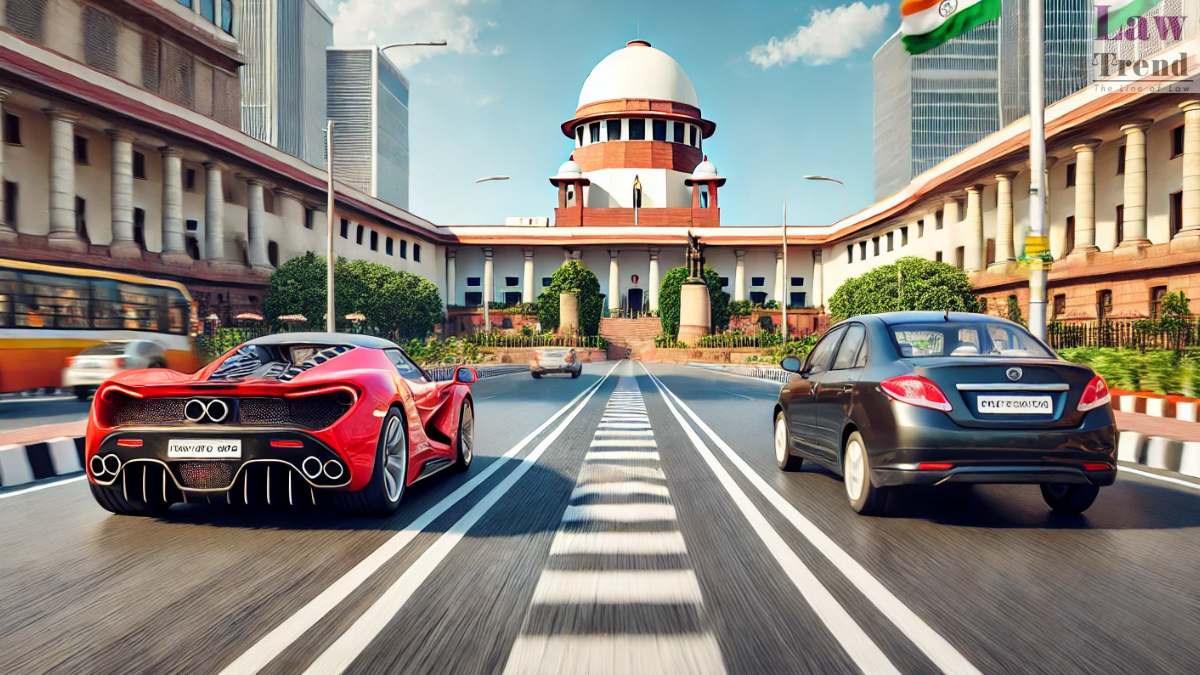

The Supreme Court of India, comprising Justice Sanjay Karol and Justice Prashant Kumar Mishra, addressed the widespread non-compliance with Section 146 of the Motor Vehicles Act, 1988, which mandates third-party insurance, alongside the need for a uniform motor vehicle policy structure covering vehicle occupants. Recognizing that nearly 56% of vehicles on Indian roads remain uninsured, the bench issued comprehensive nationwide directions—including integrating Automatic Number Plate Recognition (ANPR) cameras with VAHAN data, mandating a four-layer policy structure, extending mandatory third-party insurance periods for new vehicles, and initiating pilot projects to link fuel distribution with valid insurance status. Concurrently, the Court dismissed an appeal filed by National Insurance Company Limited, affirming that insurers remain liable to compensate occupants under a comprehensive policy.

Background of the Case

The genesis of the proceedings stems from a fatal road accident on July 13, 1996. The deceased, Mr. T. Ramu, was travelling from Tirupathi to his village Venkanur in a Maruti 800 car. At around 5:00 AM near Singarayakonda, an unknown, rashly driven lorry struck his vehicle from behind, causing fatal injuries. The legal representatives of the deceased filed a compensation claim for Rs. 10,00,000 under Section 166 (later amended to Section 163-A) of the Motor Vehicles Act, 1988, before the Motor Accident Claims Tribunal (MACT), L.B. Nagar, Hyderabad. They highlighted that the deceased earned at least Rs. 1,00,000 annually from a seafood business and was the sole breadwinner.

On December 8, 2009, the MACT dismissed the claim, observing that no extra premium had been paid to cover the personal risk of the owner’s vehicle. On appeal, the High Court of Telangana at Hyderabad reversed this finding on July 30, 2024, holding that the policy in question was a comprehensive policy covering the owner travelling as a passenger. Assessing the deceased’s monthly notional income at Rs. 4,500, the High Court awarded Rs. 10,00,500 with 7.5% interest per annum. The insurer, National Insurance Company Limited, challenged this judgment before the Supreme Court.

Given the systemic issues surrounding uninsured vehicles highlighted during hearings, the Supreme Court expanded the scope to public interest, impleading twenty-two insurance companies, the Insurance Regulatory and Development Authority of India (IRDA), the General Insurance Council of India (GIC), and the Ministry of Road Transport and Highways (MoRTH).

Submissions and Arguments of the Stakeholders

During discussions before the Court, several key facts and proposals were placed on record:

  • Extent of Non-Compliance: According to data from the Standing Committee on Finance (2024-25) and Lok Sabha responses, nearly 56% of vehicles plying in India (16.54 crore out of 30.48 crore) are uninsured. Furthermore, 22% of road accidents involve uninsured vehicles, as per e-DAR Accident Data.
  • Ministry of Road Transport and Highways (MoRTH): MoRTH submitted that a Standard Operating Procedure (SOP) for Electronic Monitoring and Enforcement had been issued to States, with e-detection initiated in seven states (Odisha, West Bengal, Rajasthan, Gujarat, Himachal Pradesh, Chhattisgarh, and Uttarakhand). It suggested integrating ANPR cameras with VAHAN data, impounding uninsured vehicles, flagging them as “not to be transacted with” on the VAHAN portal, and implementing barrier-less Multi-Lane Free Flow Tolling.
  • IRDA and General Insurance Council (GIC): The IRDA recommended using mParivahan, ANPR cameras, and handheld devices for traffic police to issue challans under Section 196 of the Act. For policies, IRDA proposed a mandatory “Customer Option Form” and a standard Information Sheet outlining mandatory and optional covers. Both IRDA and GIC advised against extending multi-year insurance tenures due to fluctuating premium revision cycles.
  • Claims Process (Submissions by Senior Counsel J.R. Midha): It was submitted that under Sections 159 and 166 of the MVA, police are required to submit Detailed Accident Reports (DAR) within 30 days. Directions were sought for strict compliance in respect of pending claims for accidents that occurred prior to March 31, 2022.
READ ALSO  धारा 311 ट्रायल कोर्ट को न्यायसंगत निर्णय पर पहुंचने के लिए गवाहों को समन करने का अधिकार देता है: सुप्रीम कोर्ट

Court’s Analysis and Observations

The Supreme Court expressed concern over the “stark gap between the statutory mandate and enforcement mechanism on the ground,” noting that the lack of insurance forces road accident victims and their families into prolonged litigation.

Highlighting the constitutional link between road safety and the fundamental right to life under Article 21, the bench cited its earlier ruling in In Re: Phalodi Accident v. National Highways Authority of India and Ors., reiterating:

“A road, particularly a high-speed Expressway, must not become a corridor of peril due to administrative lethargy or infrastructural gaps. The loss of even a single life to avoidable hazards like illegal parking or blackspots etc., represents a failure of the State’s protective umbrella. The ‘Right to Life’ enshrined under Article 21 of the Constitution of India is not merely a guarantee against the unlawful taking of life, but a positive mandate upon the State to ensure a safe environment where human life is preserved and valued. Therefore, recognizing the safety of the commuter as an integral facet of the right to live with dignity as a constitutional obligation under Article 21 of Constitution of India, it is necessary in the interest to address the systematic root causes that these interim directions are issued in exercise of powers under Article 142 of the Constitution of India. We reiterate that no pecuniary or administrative constraint can outweigh the sanctity of human life, and the strict timelines provided herein reflect the urgency of this constitutional obligation.”

The Court also referenced the judgment of the High Court of Judicature at Patna in Abhijeet Kumar Pandey v. State of Bihar, quoting:

“We hold, that a right to safe travel is inherent to the right to free movement under article 19(1)(d) and the right to life and liberty under Article 21 of the Constitution of India.”

Regarding the pending motor accident claims, the Court noted previous precedents including General Insurance Council v. State of Andhra Pradesh, Jai Prakash v. National Insurance Company, M.R. Krishna Murthi v. New India Assurance Company Limited, and Shishu Pal @ Shish Ram & Ors v. Surjeet & Ors, which highlighted that over 50% of motor accident claim cases remain pending for over four years.

READ ALSO  No Set Requirement for Convicts to Serve Half of Sentence Before Bail at Appellate Stage; Merits Can Justify Relief: Supreme Court

Evaluating the specific appeal, the Court cited Surekha and Ors. v. Santosh and Ors. to emphasize that courts should not adopt a hyper-technical approach in motor accident claims. Relying on an IRDA circular dated November 16, 2009, the Court reiterated that insurance companies are liable to compensate any occupant in a vehicle covered under a comprehensive/package policy.

Decisions and Nationwide Directions

The Supreme Court dismissed the appeal filed by National Insurance Company Limited regarding its liability, upholding the Telangana High Court’s award of Rs. 10,00,500 with 7.5% interest.

In the public interest, the Court issued the following major binding directions to MoRTH and IRDA:

  1. ANPR Integration: ANPR cameras deployed on highways and roads must be integrated with the Insurance Information Bureau and VAHAN portals for automatic e-challan issuance to uninsured vehicles.
  2. Handheld Devices for Traffic Police: State Police must be supplied with handheld devices or downloadable apps linked to VAHAN and Insurance Information Bureau data to verify insurance status in real time.
  3. Four-Layer Policy Structure: IRDA must implement a clear four-layer structure for private vehicle policies:
    • Layer I: Mandatory Third-Party Only Policy (Base policy under Section 146 MVA).
    • Layer II: Optional Legal Liability Cover for occupants/pillion riders (excluding owner, driver, and family).
    • Layer III: Personal Accident Cover for owner, driver, and occupants/pillion riders.
    • Layer IV: Own Damage Cover for loss or damage to the vehicle itself. Every purchaser must be provided a standardized “Customer Option Form” (online or offline) and a consumer-friendly customer information sheet.
  4. Extension of Mandatory Multi-Year Third-Party Cover: Modifying its 2018 order in S. Rajaseekaran v. Union of India, the Court directed that third-party insurance at the time of purchasing new vehicles be extended to four years for new cars (up from three) and six years for new two-wheelers (up from five).
  5. Pilot Projects for Public Verification & Fuel Restriction:
    • A pilot project must be implemented to allow citizens to verify real-time insurance status of vehicles.
    • IRDA, in consultation with MoRTH, must evolve a pilot project linking fuel dispensing with valid insurance status using ANPR cameras, where vehicles without valid insurance will be refused fuel at petrol pumps.
    • Barrier-less tolling (Multi-Lane Free Flow Tolling) pilot projects must be implemented on designated highway corridors to prevent congestion.
  6. Expeditious Disposal of Old MACT Cases: For accidents prior to March 31, 2022, State Police are directed to promptly submit Detailed Accident Reports (DAR) with essential documents (FIR, MLC, post-mortem, insurance policies) and assist in producing witnesses to ensure speedy disposal.
READ ALSO  Eloping Married Couples in Live-In Relationships Infringe on Parents' Dignity: Punjab and Haryana High Court

All stakeholders have been ordered to comply and file responses by August 14, 2026, with the matter scheduled for compliance review on August 18, 2026.

Case Title: National Insurance Co. Ltd. v. Smt. Thungala Dhana Laxmi & Ors.
Case No.: Civil Appeal No. 14369 of 2025
Bench: Justice Sanjay Karol, Justice Prashant Kumar Mishra
Date: August 04, 2026

Law Trend
Law Trendhttps://lawtrend.in/
Legal News Website Providing Latest Judgments of Supreme Court and High Court

Related Articles

Latest Articles

