

Sanyasi’s Right to Claim Land Compensation Cannot Be Denied Solely Due to Renunciation: Supreme Court 
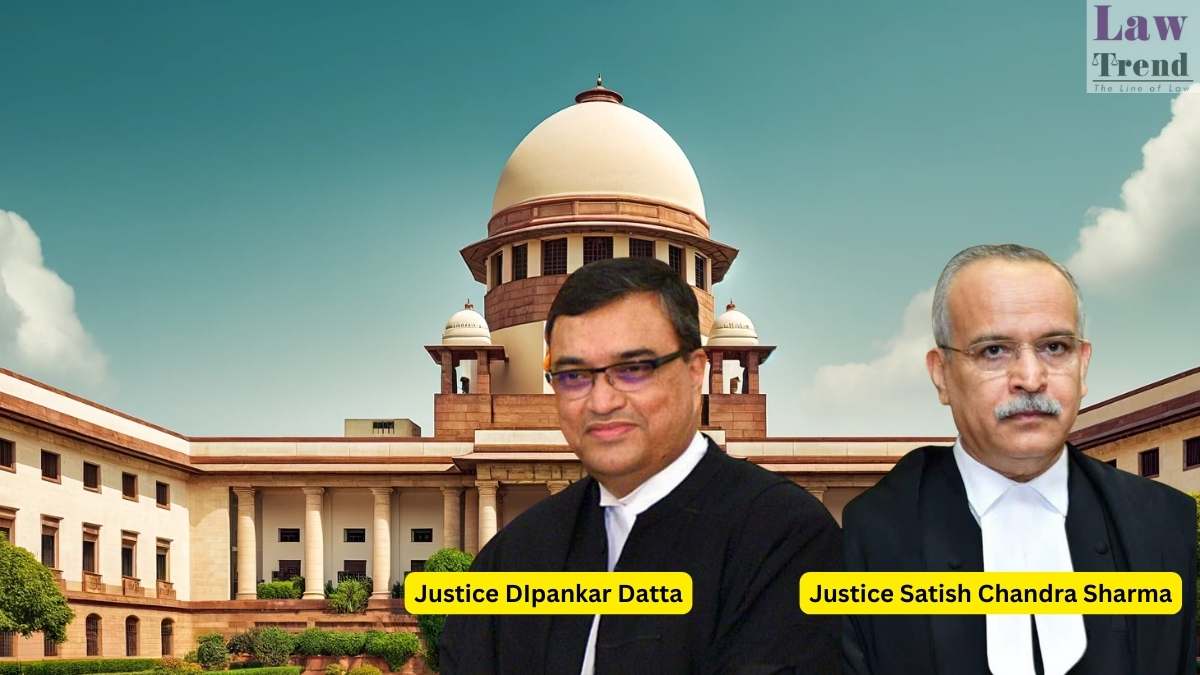
The Supreme Court has held that a person’s claim to land and monetary compensation cannot be rejected merely because he claims to be a Sanyasi. However, the Court dismissed a miscellaneous application filed by Satya Narayan Shukla, observing that his grievance regarding allotment of alternative land and payment of compensation had already been fully remedied and that he had repeatedly approached courts despite the issue having attained finality. The judgment was delivered by a Bench of Justice Dipankar Datta and Justice Satish Chandra Sharma.

Background of the Case

The applicant claimed to be a Sanyasi and challenged proceedings relating to land allegedly encroached upon by the State Government in 2002. While noting his claim of having renounced worldly life, the Court clarified that such status by itself could not extinguish his legal rights.

The Court observed:

“His right to claim land and compensation cannot be brushed aside only because of the fact that he is claiming to be a Sanyasi.”

The dispute traces back to proceedings concerning land over which a public road had been constructed. The applicant had earlier challenged the matter before the Allahabad High Court and subsequently before the Supreme Court through SLP (C) No. 9085 of 2016.

Earlier Proceedings Before the Supreme Court

In July 2021, while dismissing the special leave petition, the Supreme Court recorded the State’s submission that apart from compensation payable under the impugned judgments, the applicant had already been allotted 0.202 hectares of land in Village Malauli in 2005. On that basis, the Court declined to interfere.

The applicant thereafter filed a recall application, which was dismissed in September 2021.

READ ALSO  Supreme Court Directs Guruvayur Temple to Hold ‘Udayasthamana Pooja’ on December 1 as per Tradition

Proceedings Before the Allahabad High Court

The applicant later approached the Allahabad High Court through a writ petition, contending that despite the undertaking recorded before the Supreme Court, he had not been provided the allotted land. The High Court held that the Supreme Court had already rejected his claim for further compensation and observed that if the order had been obtained on an incorrect statement, the appropriate remedy would lie before the Supreme Court itself. The writ petition was disposed of with that liberty.

Subsequent Litigation

Following the High Court proceedings, the applicant filed a contempt petition before the Supreme Court, which was dismissed as withdrawn. He also filed a review petition challenging the earlier Supreme Court order, but the review petition was dismissed on September 25, 2024.

State’s Stand and Compensation Details

The Supreme Court noted that the dispute concerning allotment of land and compensation had already reached finality. According to the record placed before the Court, the applicant’s original land measured approximately 11,000 square feet, whereas the alternative land allotted to him measured around 21,000 square feet. In addition, monetary compensation amounting to approximately ₹7.58 lakh had been paid.

The chronology placed before the Court showed that:

  • A public road was constructed over the applicant’s land in 2002.
  • Compensation totalling ₹7,58,575 was paid through different instalments between 2005 and 2023.
  • On March 22, 2005, the applicant was allotted 0.202 hectares of agricultural land in Village Malauli, Barabanki district.
  • The applicant constructed an Ashram and Temple on the allotted land.
  • An official inspection in 2026 confirmed that he was exercising full ownership rights over the allotted property and had utilized it for construction of the Ashram and Temple.
READ ALSO  Cases Triable by the Magistrate Can’t be allocated to the Sessions Court, Rules Supreme Court

Court’s Analysis

The Court recorded that the State had furnished complete details regarding compensation and allotment of land. It further noted that the applicant himself did not dispute the allotment, possession, or construction of the Ashram on the allotted land.

Despite these facts, the applicant continued filing miscellaneous applications and pursuing further litigation.

The Bench observed that repeated filings amounted to a waste of judicial time and stated that the present application deserved dismissal. While the Court considered imposing heavy costs, it refrained from doing so because the applicant was appearing in person and had become a Sanyasi.

Supreme Court’s Decision

Dismissing the application, the Court held that the applicant’s grievance had been addressed long ago and that continued litigation on the same issue was unwarranted.

READ ALSO  Breaking: Supreme Court Overturns Haryana Government's 5-Marks Reservation in Employment Exams as Unconstitutional

In a significant direction, the Court held:

“No litigation in respect of the present subject matter shall be entertained by any Court in future as the grievance of the applicant has been remedied long back and the applicant has become a chronic litigant merely because indulgence has been shown to the applicant by this Court on earlier occasions.”

Accordingly, the miscellaneous application was dismissed without costs, and all pending applications were also disposed of.

Case Details

Case Title: Satya Narayan Shukla v. The State of Uttar Pradesh & Ors.

Case No.: Miscellaneous Application No. 1666 of 2026 (@ M.A. Diary No. 68849 of 2025 in SLP (C) No. 30380 of 2024)

Bench: Justice Dipankar Datta and Justice Satish Chandra Sharma

Date: May 26, 2026

Law Trend
Law Trendhttps://lawtrend.in/
Legal News Website Providing Latest Judgments of Supreme Court and High Court

Related Articles

Latest Articles
