

Mere Recovery Of Firearm Without Proof Of Conscious Possession And Dominion Insufficient For Arms Act Conviction: Supreme Court
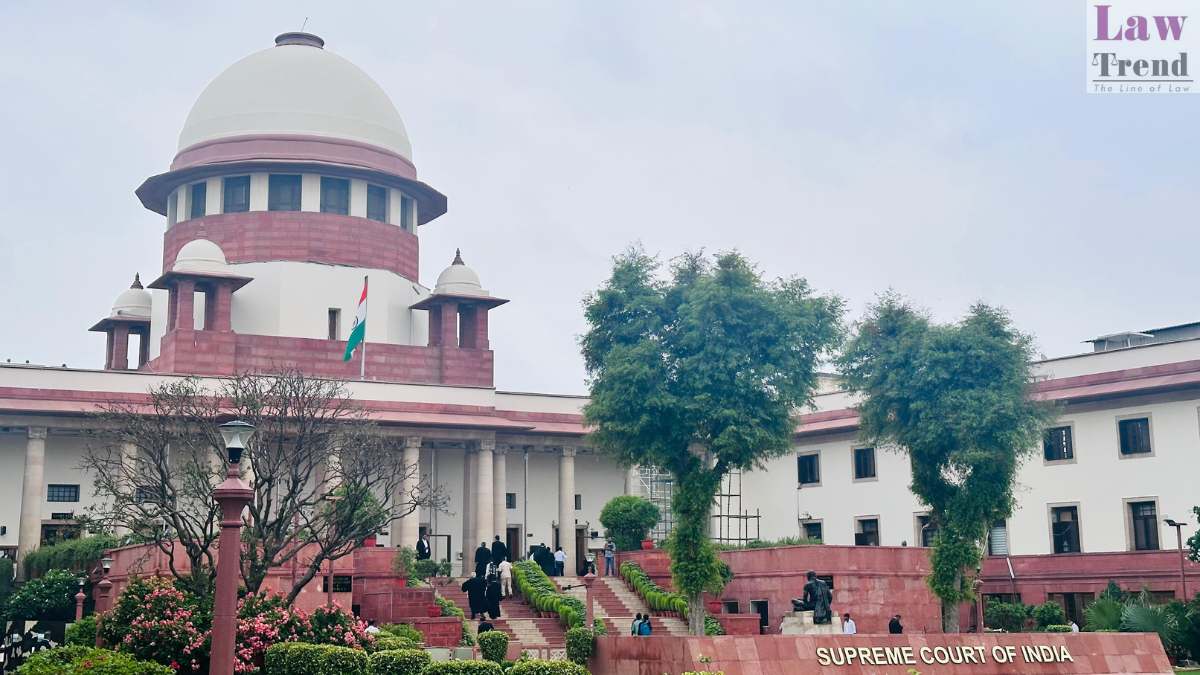

The Supreme Court of India has ruled that the mere recovery of an unlicensed weapon from a person’s house is insufficient to ground a conviction under the Arms Act, 1959, unless the prosecution can prove that the accused had “conscious possession” and control over the weapon. Dismissing an appeal filed by the State of Jharkhand, a bench comprising Justice Sanjay Karol and Justice Prasanna B. Varale upheld the acquittal of a homeowner who was coerced into providing temporary shelter to armed extremists under threat of life. The court observed that possession under grave fear or threat to life cannot be characterized as conscious possession.

Background of the Case

The case originates from an incident on August 12, 2001, when the Officer-in-charge of Senha Police Station, Chetnanad Sinha, led a joint raid with the Central Reserve Police Force (CRPF) in village Torar to apprehend extremists. Upon receiving secret information that the extremists had fled village Torar and taken shelter in village Dora at the house of the respondent, Jagdish Lakra, the police force cordoned off Lakra’s house.

As the police closed in, four extremists attempted to escape. One of them, Birendra Oraon, was apprehended at the spot, while three others—identified as Area Commander Nakuljee, Shiv Kumar Sahu, and Umesh Kumar—successfully fled. Both Birendra Oraon and the homeowner, Jagdish Lakra, stated to the police that the escaping extremists had arrived at the house at 4:00 a.m. and left behind their belongings, including money bags, uniforms, medicines, and a country-made stein gun, upon hearing the police vehicles arrive. A subsequent search of Lakra’s residence in the presence of independent witnesses yielded these incriminating articles.

Following an investigation, charges were framed against Jagdish Lakra and others under Sections 25(1-B)a, 26, and 35 of the Arms Act, Section 116 of the Indian Penal Code (I.P.C.), and Section 17(i) of the Criminal Law Amendment Act. The Trial Court and the Appellate Court concurrently found Lakra guilty, sentencing him to three years of rigorous imprisonment under Section 25(1-B)a and one year of rigorous imprisonment under Section 26 of the Arms Act. Lakra challenged this conviction before the High Court of Jharkhand. On May 9, 2023, the High Court set aside the conviction, ruling that the lower courts’ findings of guilt were perverse. Aggrieved by the acquittal, the State of Jharkhand appealed to the Supreme Court.

Arguments of the Parties

Representing the State of Jharkhand, counsel Mr. Shantanu Sagar argued that the High Court failed to properly appreciate consistent and reliable evidence concerning the raid, arrest, and seizure. He contended that the testimony of the official witnesses and the Investigating Officer fully corroborated each other. He further argued that the recovery of the country-made stein gun and live cartridges was duly recorded in a seizure memo and produced as material exhibits. Addressing the fact that several independent witnesses had turned hostile, the appellant’s counsel maintained that recovery should not be disbelieved on this count alone, particularly in regions prone to extremist activities where local witnesses are often reluctant to testify due to prevailing fear and intimidation. He submitted that the High Court erred in reversing the concurrent findings of two lower courts without cogent reasons.

READ ALSO  Whether Certified Copy of a Registered Sale Deed is an Acceptable Substitute for Original Documents When Attempting to Compare Signatures in a Loan Guarantee Dispute? Telangana HC Answers

On behalf of the respondent, counsel Mr. Paramanand Gaur argued that members of the banned extremist organization, the Maoist Communist Centre (MCC), had forcibly taken shelter in Lakra’s house, and the respondent played no voluntary role in harbouring them. He submitted that the recovered stein gun belonged entirely to the fleeing extremists and was never under the conscious possession or control of Lakra. Highlighting the social realities in Jharkhand, the counsel argued that villagers are frequently subjected to coercion by extremists who forcibly occupy their homes for food and shelter, and any resistance would expose the residents to grave danger.

The Court’s Analysis

The Supreme Court examined the timeline of the incident, noting that the extremists arrived at Jagdish Lakra’s house at 4:00 a.m., and the police raided the premises at 6:00 a.m., meaning the extremists were only present for approximately two hours.

READ ALSO  It will be Folly To Treat Every Breach of Promise to Marry as Rape- SC Upholds Discharge Order of Trial Court

The bench found merit in Lakra’s explanation that the incriminating items were left in his house under extreme duress. Crucially, the court pointed out that the appellant State’s own argument—that local witnesses frequently turn hostile due to the atmosphere of fear and intimidation—actually supported the respondent’s defense.

The court held that if incriminating material is kept in a house due to grave fear or threat to life, such possession cannot be deemed “conscious possession.” Coercive possession under threat of life cannot serve as the sole basis for establishing guilt.

READ ALSO  सुप्रीम कोर्ट ने अपराध की गंभीरता के अनुपात में सजा को संविधान के अनुच्छेद 14 का उल्लंघन बताया है

To define the legal boundaries of possession, the court relied on the precedent established in Francis Xavier Salemao vs. State Through Public Prosecutor (2007 SCC Online Bom 1261), reiterating:

“the possession of firearm must have an element of consciousness or knowledge of that possession and where he is not in actual physical possession, he has nonetheless a power or control over that weapon so that his possession thereof continues despite physical possession being in someone else. In any disputed question of possession specific facts admitted or proved will alone establish the existence of the factual relation of control or the dominion of the person over it necessary to determine whether that person was not in possession of the thing in question”

Decision of the Court

The Supreme Court concluded that the High Court of Jharkhand had properly appreciated the evidence and adopted a plausible view in reversing the conviction. Finding no illegality or perversity in the impugned judgment, the bench dismissed the appeal filed by the State of Jharkhand.

Case Details

Case Title: The State of Jharkhand v. Jagdish Lakra
Case No.: Criminal Appeal No. of 2026 (@Special Leave Petition (Crl.) No. 4978 of 2024)
Bench: Justice Sanjay Karol, Justice Prasanna B. Varale
Date: July 13, 2026

Law Trend
Law Trendhttps://lawtrend.in/
Legal News Website Providing Latest Judgments of Supreme Court and High Court

Related Articles

Latest Articles

