

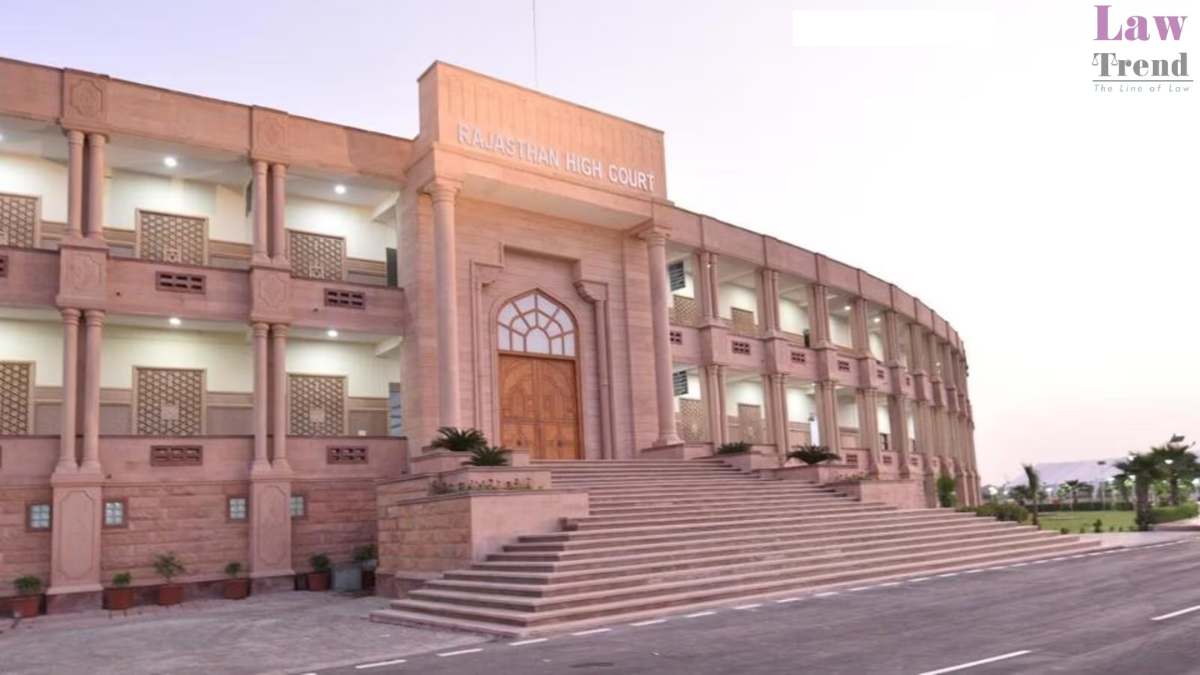
The Rajasthan High Court on Monday declined to halt legal proceedings against several mosques, madrassas, and dargahs located within 50 kilometers of the India-Pakistan border that have been issued official notices. Instead, the court instructed the state government to set up a specialized committee to evaluate each case individually before proposing any further legal actions, such as eviction or demolition.
Justice Sameer Jain dismissed a series of petitions led by the Peer Mohammad Shah Jilani Dargah Samiti. These petitions challenged notices served to religious structures situated across the border districts of Jaisalmer, Barmer, and Bikaner. The court emphasized that the core matter involves regulatory compliance and national security rather than religious discrimination. It added that while natural justice is an important safeguard, it cannot be applied inflexibly if revealing sensitive information would harm national security.
Establishment Of Dedicated Review Committee
To ensure a structured evaluation, Justice Jain ordered the state to form a committee to examine each property on a case-by-case basis. The panel will include a representative from the Border Security Force, the local district collector, and the regional superintendent of police.
This committee is directed to review the specific facts of every case, factoring in security intelligence, land documents, and statutory rules before suggesting any subsequent measures, including demolition or eviction.
Unlicensed Structures And Strategic Security
The official notices issued to the religious institutions alleged that permanent structures had been built on agricultural or government land without the required statutory approvals. Authorities also stated that these sites were occupying land within a sensitive border zone without legal authorization, citing intelligence reports that indicated potential national security risks.
During the proceedings, the Advocate General, the Additional Solicitor General, and other government law officers argued that the court petitions were not maintainable. They cited unresolved disputes regarding ownership, land titles, construction legality, and the petitioners’ authority to represent the institutions.
Government representatives maintained that the notices were issued strictly within a legal framework that includes full adjudicatory and appellate options. They also noted that under the Rajasthan Religious Buildings and Places Act, establishing public religious structures requires mandatory prior permission from the district collector, which had not been obtained in these instances.
Petitioners Contest Enforcement Methods
Lawyers representing the religious institutions argued that the notices were part of a predetermined strategy following a June announcement by the federal government to clear unauthorized structures within 50 kilometers of the border for national security. They pointed out that several structures had already been demolished, raising fears of imminent action against their clients’ properties.
The petitioners claimed that authorities applied the Rajasthan Land Revenue Act and the Rajasthan Colonisation Act without providing a fair opportunity to be heard. They asserted that the notices bypassed laws allowing for the regularization of land use, disregarded principles of natural justice, and ran counter to Supreme Court guidelines on property demolitions. Additionally, they questioned the practice of serving notices by pinning them to walls, the short response deadlines, and what they described as inconsistent government positions on national security.
Court Finds Demolition Fears Speculative
In its decision to accept the government’s preliminary objections, the High Court noted that many of the petitioners failed to demonstrate legal standing or present documentation proving their authority to represent the affected religious bodies.
The court further clarified that the disputed notices only requested the recipients to clarify their legal position before competent authorities and did not mandate immediate demolitions. Because no enforcement or coercive measures have been carried out so far, the court ruled that any apprehension of immediate demolition remains speculative.




