

Defendant Cannot Use Additional Written Statement to Introduce Inconsistent Defence and Bypass Order VI Rule 17 CPC: Supreme Court
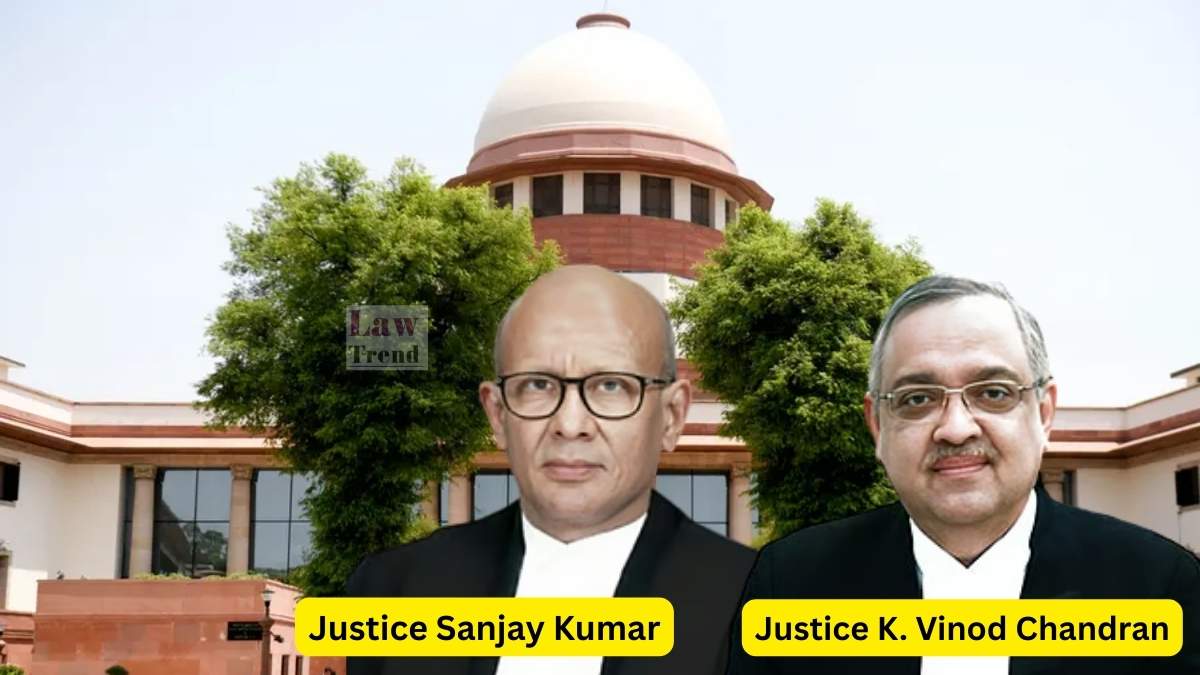

In a significant ruling on civil procedure, the Supreme Court of India has held that a defendant cannot be permitted to file an additional written statement at an advanced stage of a trial to introduce a completely inconsistent and contradictory defence, particularly when such an attempt is a “ploy” to bypass the statutory restrictions of the Code of Civil Procedure, 1908 (CPC).

A Division Bench comprising Justice Sanjay Kumar and Justice K. Vinod Chandran set aside a judgment of the Calcutta High Court which had permitted the defendant to file an additional written statement on payment of costs. The Supreme Court restored the order of the City Civil Court at Calcutta, which had initially rejected the defendant’s application under Order VIII Rule 9 of the CPC.

Background of the Dispute

The dispute arose from Title Suit No. 1527 of 2022, which was filed by the plaintiff, Mondira Ghosh, before the learned Xth Judge, City Civil Court at Calcutta, West Bengal. The plaintiff sought a declaration that the defendant, Chaitali Ghosh, was in unlawful possession of the suit premises and prayed for her eviction, along with damages and costs.

In response, the defendant filed her original written statement in the suit on December 8, 2022. In this pleading, the defendant denied the plaintiff’s claim and asserted that she was a “bonafide co-sharer of the suit premises,” seeking the dismissal of the suit with costs.

On May 17, 2023, the Trial Court framed the issues, and the trial formally commenced. The plaintiff’s first witness (PW-1) was examined and cross-examined at length across multiple dates, specifically on December 18, 2023, March 18, 2024, and July 24, 2024.

The Application Under Order VIII Rule 9 and Trial Court’s Rejection

At this advanced stage of the trial, the defendant filed an application under Order VIII Rule 9 of the CPC, seeking leave to file an additional written statement along with a counter-claim.

In the proposed additional written statement, the defendant set up a new defence, claiming that she was a tenant under the plaintiff. This directly contradicted her original stance where she claimed to be a bonafide co-sharer.

READ ALSO  SC Notice to Centre, UGC on Plea Challenging Lyngdoh Committee Recommendation

By Order No. 18 dated June 17, 2025, the Trial Court rejected the application. The Trial Court made the following crucial observations:

  • The defendant had earlier claimed to be a bonafide co-sharer but was now claiming to be a tenant under the plaintiff.
  • Issues had been framed as far back as May 17, 2023, and the trial had already commenced.
  • Relying on Order VI Rule 7 of the CPC, the Trial Court observed that “a defendant in a suit could not be allowed to retract from the stand taken in the original written statement and bring in an altogether inconsistent case.” Accordingly, the Trial Court dismissed the defendant’s application with costs.

Proceedings Before the Calcutta High Court

Aggrieved by the Trial Court’s rejection, the defendant filed a revisional application, C.O. No. 3172 of 2025, before the Calcutta High Court under Article 227 of the Constitution of India.

By an order dated September 3, 2025, a learned single Judge of the High Court partially allowed the application:

  1. With Respect to the Counter-Claim: The High Court held that while a counter-claim can be allowed after the framing of issues in exceptional cases, it cannot be allowed once the trial has commenced. Since the counter-claim was sought to be introduced after the cross-examination of the plaintiff’s first witness, the High Court held that the counter-claim could not be taken on board.
  2. With Respect to the Additional Written Statement: The single Judge noted the argument of the plaintiff that leave under Order VIII Rule 9 CPC should not be granted if its object is to bypass the embargo on amendments after the commencement of trial as stipulated in the proviso to Order VI Rule 17 CPC.

However, despite acknowledging this legal position, the High Court Judge permitted the additional written statement to be filed within a specific time frame upon the payment of costs amounting to ₹15,000/-. The High Court reasoned that:

  • The proposed additional written statement brought forth facts necessary to decide the real controversy.
  • A party should not suffer if certain facts had been “inadvertently” omitted in the earlier written statement, provided they are relevant.
  • The delay in seeking leave was satisfactorily explained by the defendant.
READ ALSO  Allahabad HC Imposes Rs 20 Lakh Cost on UP State for "High-Handed" Demolition and Arbitrary Revenue Record Correction; Orders Recovery from Officials

The plaintiff subsequently appealed the High Court’s decision before the Supreme Court, which granted a stay on further proceedings in the suit on December 2, 2025.

Supreme Court’s Analysis and Legal Observations

Delivering the judgment, Justice Sanjay Kumar observed that the central grievance in the appeal was the defendant’s change of stand through an additional written statement filed at an advanced stage of the suit.

The Supreme Court rejected the High Court’s view that the defendant had omitted facts due to inadvertence. Analysing the provisions of Order VIII Rule 9 of the CPC, the Court pointed out that the provision ordinarily bars any pleading after the filing of a written statement (except for set-offs or counter-claims) and permits an additional written statement only when required by the Court.

The Court observed:

“This was not a case of a fact not having been stated in the written statement and that void being sought to be filled up by way of an additional written statement. On the other hand, the defendant wanted to completely change her stand with regard to her status and claim for being in possession.”

The Bench highlighted that the defendant attempted a “complete volte-face” by transitioning her claim from being a “bonafide co-sharer” to being a “tenant of the plaintiff.” The Court held:

“This retraction of her earlier stand and introduction of a totally inconsistent and contradictory stand by the defendant, in the guise of filing an additional written statement, was contrary to the mandate of Order 6 Rule 7 CPC.”

Furthermore, the Supreme Court severely criticised the timing and nature of the application, terming it an abuse of judicial process:

“Further, the very filing of such an application by the defendant, having failed to seek amendment of her written statement at the appropriate stage and after the trial in the suit had already commenced, was clearly an abuse of process. As noted by the learned Judge himself, this ploy was adopted to get over the hurdle raised by the proviso to Order 6 Rule 17 CPC, which would not have permitted the defendant to seek amendment of her written statement.”

Order VI Rule 7 of the CPC explicitly prohibits any pleading from raising new grounds of claim or containing allegations of fact inconsistent with previous pleadings, except by way of amendment. Similarly, the proviso to Order VI Rule 17 CPC restricts amendments to pleadings after the commencement of a trial unless the party demonstrates due diligence. The Supreme Court concluded that the defendant’s application under Order VIII Rule 9 CPC was a procedural detour to avoid these strict statutory bars.

READ ALSO  Supreme Court Explains Distinction Between Transfer of Govt Employee in Public Interest and Those Made at One’s Own Request

The Decision

The Supreme Court concluded that the Trial Court’s decision was fully justified on both facts and law, and that the Calcutta High Court had erred in reversing it regarding the additional written statement.

Accordingly, the Supreme Court:

  • Allowed the appeal.
  • Set aside the Calcutta High Court’s order dated September 3, 2025, in C.O. No. 3172 of 2025.
  • Restored Order No. 18 dated June 17, 2025, passed by the Xth Judge, City Civil Court at Calcutta in Title Suit No. 1527 of 2022, thereby rejecting the additional written statement.
  • Ordered that the parties shall bear their own costs.
  • Disposed of any pending applications.

Case Details

  • Case Title: Mondira Ghosh v. Chaitali Ghosh
  • Case No.: Civil Appeal No. 8195 of 2026 (Arising out of Special Leave Petition (C) No. 34411 of 2025)
  • Bench: Justice Sanjay Kumar and Justice K. Vinod Chandran
  • Date: May 26, 2026

Law Trend
Law Trendhttps://lawtrend.in/
Legal News Website Providing Latest Judgments of Supreme Court and High Court

Related Articles

Latest Articles

