

Mandatory NDPS Safeguards Must Be Strictly Complied With: Chhattisgarh High Court Acquits Five in 833 Kg Ganja Seizure Case
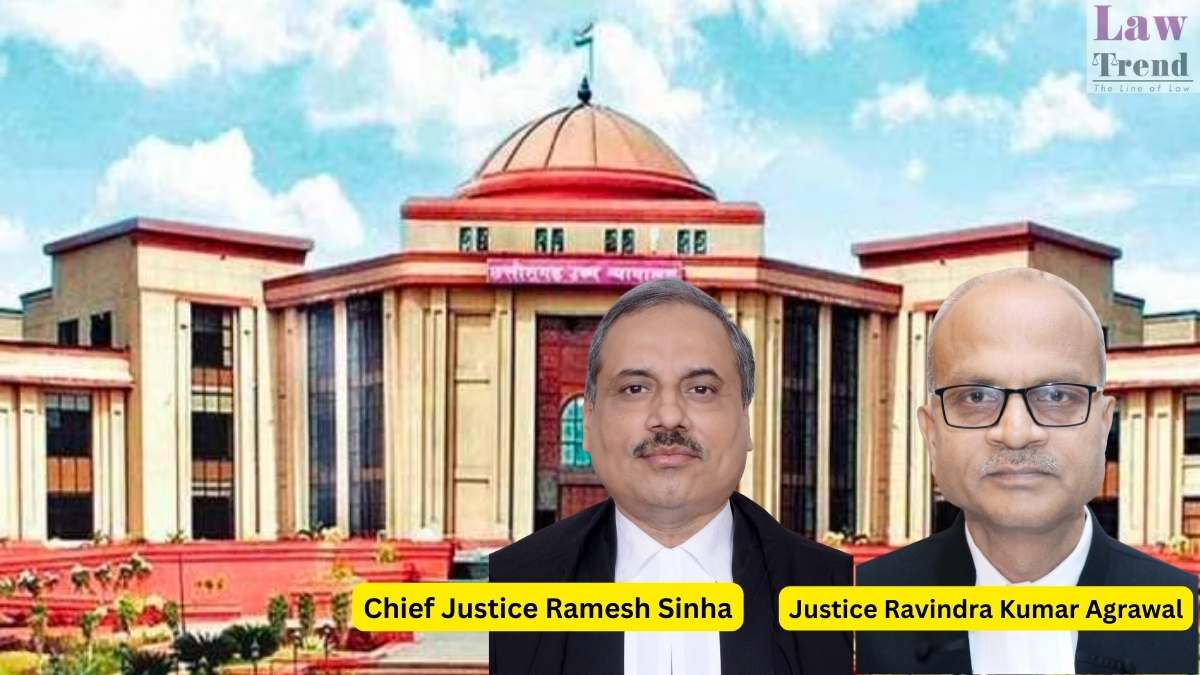

The High Court of Chhattisgarh at Bilaspur has acquitted five individuals accused of transporting 833.271 kilograms of ganja, holding that mandatory procedural safeguards under the Narcotic Drugs and Psychotropic Substances (NDPS) Act, 1985 must be strictly enforced. A division bench of Chief Justice Ramesh Sinha and Justice Ravindra Kumar Agrawal set aside the trial court’s conviction orders, highlighting that systematic procedural lapses by the Directorate of Revenue Intelligence (DRI) fractured the chain of custody and fatally compromised the prosecution’s case.

Background of the Case

According to the prosecution, on October 3, 2021, DRI Intelligence Officer Gourav Pandey received secret information that a large shipment of ganja was being transported from Andhra Pradesh to Mathura, Uttar Pradesh, via Gariyaband, Chhattisgarh. The contraband was allegedly loaded in a container truck (registration number AP 39 TP 9706) and escorted by a black Mahindra XUV 300 (registration number UP 85 BU 2060) acting as a piloting vehicle.

A raiding party intercepted the truck at Tourenga Forest Post, Gariyaband. The truck’s occupants, driver Bandari Chandrashekhar and helper Bhupendra Singh, disclosed that the ganja was hidden underneath sacks of puffed rice. They also pointed out the black Mahindra XUV 300, which sped away when the officers tried to stop it.

The DRI officers did not conduct any search or prepare any documents at the Tourenga Forest Check Post, citing the dense forest terrain and potential public inconvenience. Instead, they drove the truck nearly 160 kilometers to the DRI Regional Unit in Raipur. A subsequent search in Raipur uncovered 156 packets containing 833.271 kilograms of ganja.

During the search proceedings on October 4, 2021, the driver, Bandari Chandrashekhar, successfully escaped from DRI custody and remains an absconder. Meanwhile, the Mahindra XUV was intercepted by Panduka police, and its occupants, Dorilal and Chandraveer, were detained. Another co-accused, Amit Kumar, was arrested later. The registered owner of the truck, Tummala Veketshwar Rao, was arrested on February 22, 2025, after the trial court had already convicted the other four accused on July 25, 2024.

The Special NDPS Court, Raipur, had sentenced Dorilal, Chandraveer, Amit Kumar, and Bhupendra Singh to 15 years of rigorous imprisonment and a fine of Rs. 1,50,000 each. Tummala Veketshwar Rao was subsequently tried and sentenced on November 17, 2025, to 15 years of rigorous imprisonment under Section 29 and 10 years under Section 25 of the NDPS Act.

Arguments of the Parties

The appellants argued that the prosecution’s case suffered from fundamental legal and factual gaps. They pointed out that no panchnama, seizure memo, or spot map was prepared at the spot of interception. They also argued that there was total non-compliance with the mandatory statutory provisions under Sections 42, 50, 52-A, and 57 of the NDPS Act.

READ ALSO  Adult Woman Has Right to Live With Person of Her Choice, Even if Married: Madhya Pradesh High Court

Furthermore, the defense asserted that statements recorded under Section 67 of the NDPS Act while the accused were in custody are legally inadmissible as confessions. They argued that the electronic evidence, such as call records and hotel emails, lacked the mandatory certificates under Section 65-B of the Indian Evidence Act. Truck owner Tummala Veketshwar Rao specifically contended that he was not present on the spot, had no knowledge of the contraband, and that his vehicle had been hired to transport genuine consignments of puffed rice.

The respondent, represented by the DRI, countered that the procedural deviations were minor and justified by the circumstances. They argued that the truck was shifted to Raipur with the consent of the occupants due to safety risks in the dense forest. The DRI argued that the call detail records proved that all the accused were closely connected throughout the journey, confirming a criminal conspiracy.

The Court’s Analysis

Upon evaluating the evidence, the High Court observed that the prosecution’s case was riddled with critical lapses. The seizure officer admitted that not a single document was prepared at the place of interception. The Court held that transporting the vehicle 160 kilometers away before conducting a search raised serious doubts about the integrity of the recovery.

The Court identified several fatal defects in the sampling, sealing, and preservation of the contraband:

  • The specimen seal was never deposited in the Malkhana, and the test memo sent to the Central Forensic Science Laboratory (CFSL) lacked a specimen seal impression.
  • The Malkhana Register contained unauthenticated overwriting and failed to record the reduced weight of the contraband after samples were drawn.
  • Under Section 52-A of the NDPS Act, the Executive Magistrate who certified the inventory was never examined as a witness to prove the proceedings.
  • Although 26 fresh samples were drawn during the inventory proceedings before the Magistrate, none of those samples were ever forwarded to the CFSL for chemical examination.
READ ALSO  केवल हथियार की बरामदगी से दोषी नहीं ठहराया जा सकता: छत्तीसगढ़ हाईकोर्ट ने हत्या के मामले में बरी किया

The Court further rejected the “piloting” theory, noting that according to the prosecution’s own facts, the XUV vehicle was traveling behind the truck, whereas a pilot vehicle is expected to lead. No contraband was recovered from the XUV, and the DRI failed to produce any official handing-over record from the Panduka police.

Addressing the legal precedents, the Court held that the prosecution failed to prove foundational facts. Citing the Supreme Court judgment in Noor Aga v. State of Punjab (2008), the bench observed:

“If the prosecution fails to prove the foundational facts so as to attract the rigours of Section 35 of the Act, the actus reus which is possession of contraband by the accused cannot be said to have been established.”

The Court also observed that the reverse burden of proof under Sections 35 and 54 of the NDPS Act only shifts to the accused after a lawful search, seizure, and conscious possession are established by the state. Citing the landmark judgment in State of Punjab v. Baldev Singh (1999), the bench highlighted:

“Conducting a search under Section 50, without intimating to the suspect that he has a right to be searched before a gazetted officer or a Magistrate, would be violative of the “reasonable, fair and just procedure” and the safeguard contained in Section 50 would be rendered illusory, otiose and meaningless.”

Crucially, the Court ruled that confessions made to DRI officers under Section 67 of the Act are inadmissible. Relying on the Constitution Bench judgment in Tofan Singh v. State of Tamil Nadu (2021) and its application in Balwinder Singh (Binda) v. Narcotics Control Bureau (2024), the Court observed that once the Section 67 statements are excluded, the link between the accused and the crime completely snaps.

Similarly, the Court held that the lack of Section 65-B certificates made the electronic evidence legally inadmissible. For the truck owner, the Court noted that under Section 25, ownership alone does not attract liability without proof of active knowledge or consent, citing Surepally Srinivas v. State of Andhra Pradesh (2025) and Karnail Singh v. State of Haryana (2009).

The Decision

The High Court allowed all the criminal appeals, setting aside the trial court’s judgments of conviction and sentences. It acquitted all five appellants—Dorilal, Chandraveer, Amit Kumar, Bhupendra Singh, and Tummala Veketshwar Rao—giving them the benefit of doubt. The Court ordered their immediate release, subject to furnishing personal bonds under the Bharatiya Nagarik Suraksha Sanhita, 2023.

READ ALSO  [Sec 482 CrPC] Accused Can Seek Discharge At Stage Of Commencement Of Trial Only If There Is Patent Miscarriage Of Justice: Kerala HC

Before parting with the case, the High Court expressed strong disapproval of the DRI’s conduct, noting:

“The record reveals not merely procedural irregularities but a systematic disregard of the mandatory safeguards incorporated under the NDPS Act. The investigation suffers from glaring lapses at every material stage, including failure to prepare proceedings at the place of interception, non-compliance with the statutory requirements under Sections 42, 52-A and 57 of the NDPS Act, serious deficiencies in the search, seizure, sampling and sealing process, failure to preserve the sanctity of the chain of custody, and preparation of documents which, in view of the evidence on record, have become highly doubtful.”

The bench was also shocked by the escape of the principal accused, Bandari Chandrashekhar, from DRI custody:

“If an accused allegedly involved in the trafficking of commercial quantity of narcotic drugs can escape from the premises of the investigating agency, it reflects a complete collapse of vigilance, supervision and institutional discipline within the agency.”

The High Court directed the Registry to forward a copy of the judgment to the Director General of the Directorate of Revenue Intelligence in New Delhi to initiate a comprehensive inquiry, fix accountability upon erring officials, and implement strict supervisory mechanisms.

Case Title: Dorilal and Others v. Directorate Of Revenue Intelligence
Case No.: CRA No. 1883 of 2024
Bench: Chief Justice Ramesh Sinha & Justice Ravindra Kumar Agrawal
Date: 01/07/2026

Law Trend
Law Trendhttps://lawtrend.in/
Legal News Website Providing Latest Judgments of Supreme Court and High Court

Related Articles

Latest Articles

