

Hearing Accused Prior to Cognizance Under Section 223(1) BNSS Proviso Is Mandatory; SC Sets Aside Cognizance Order in PMLA Case
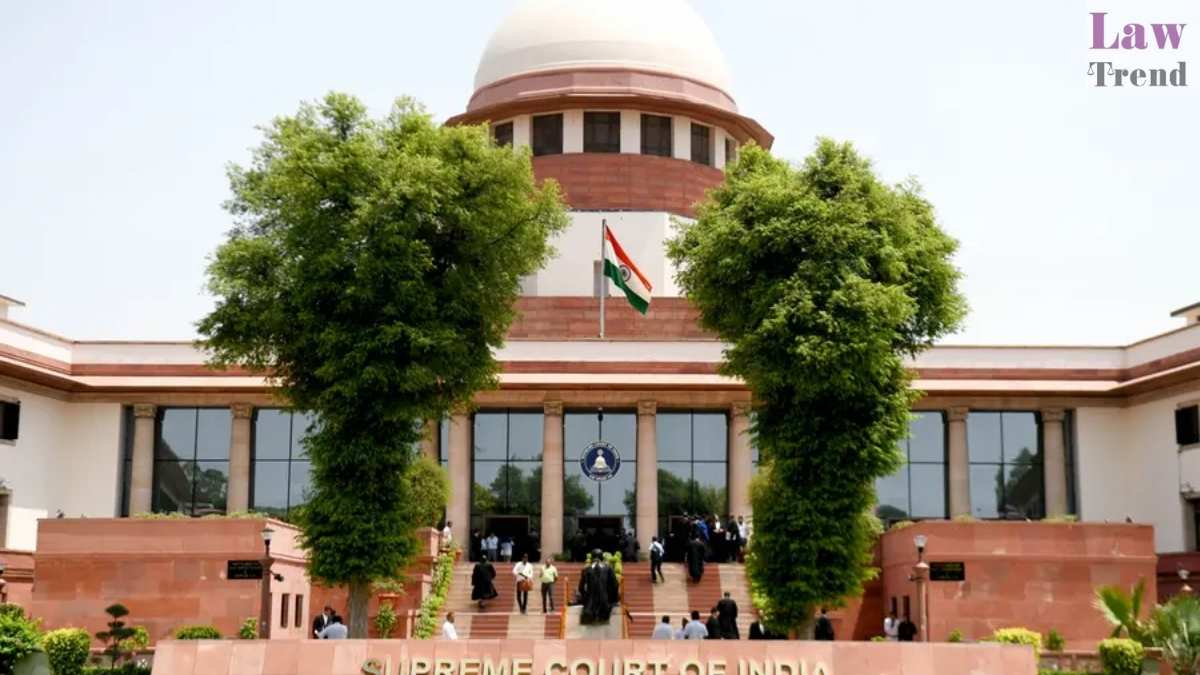

The Supreme Court of India has held that the first proviso to Section 223(1) of the Bharatiya Nagarik Suraksha Sanhita, 2023 (BNSS)—which mandates that no cognizance of an offence shall be taken by a Court without giving the accused an opportunity of being heard—is substantive and mandatory in nature. The Bench of Justices M. M. Sundresh and Nongmeikapam Kotiswar Singh ruled that taking cognizance without giving the accused a prior hearing is an illegality that renders the proceedings void ab initio.

Accordingly, the Supreme Court allowed the appeal of Parvinder Singh, setting aside a judgment dated May 19, 2025, of the High Court of Uttarakhand and the cognizance order passed by the Special Court on July 2, 2024, in a prosecution complaint filed by the Directorate of Enforcement (ED) under the Prevention of Money Laundering Act, 2002 (PMLA). The Special Court was directed to afford the appellant an opportunity of being heard, starting from the stage of taking cognizance.

Background of the Case

On July 24, 2023, the Enforcement Directorate (ED) registered an Enforcement Case Information Report (ECIR) being ECIR/DNSZO/04/2023 against the appellant, Parvinder Singh, who was subsequently arrested on April 27, 2024. Within two months of his arrest, on June 24, 2024, the ED filed a prosecution complaint invoking Sections 44 and 45 of the PMLA for offences under Section 3 read with Section 4 before the designated Special Court. On the same day, the Special Court directed the complaint to be registered as a miscellaneous case and scheduled a hearing on cognizance for June 28, 2024.

Since the Presiding Officer was on recess on June 28, the matter was rescheduled to July 2, 2024. In the interim, on July 1, 2024, the erstwhile Code of Criminal Procedure, 1973 (CrPC) was replaced by the BNSS. On July 2, 2024, the Special Court took cognizance of the offence in the presence of the Special Public Prosecutor, the ED’s legal advisor, and the appellant, who was produced through video conferencing from judicial custody. The case was re-registered as Special Sessions Trial No. 28 of 2024.

On December 24, 2024, the appellant filed an application before the Special Court to recall the cognizance order dated July 2, 2024. He argued that the Special Court had failed to comply with the first proviso to Section 223(1) of the BNSS, as he was not given an opportunity of being heard before cognizance was taken. The Special Court dismissed this application on March 22, 2025, calling it a “dilatory tactic” and stating that a Court cannot reconsider its own order once cognizance is taken. On the same day, the Special Court framed charges against the appellant.

The appellant challenged these developments before the High Court of Uttarakhand. He filed CRLR No. 218/2025 against the cognizance order and CRLR No. 183/2025 against the order dismissing his recall application. On May 19, 2025, the High Court dismissed CRLR No. 218/2025, holding that Section 223 of the BNSS did not apply because the PMLA proceedings were initiated before the BNSS commenced. The High Court relied on the savings clause under Section 531(2)(a) of the BNSS, which allows pending proceedings initiated under the CrPC to continue under the erstwhile Code. However, the High Court partly allowed CRLR No. 183/2025, quashing the charges framed on March 22, 2025, and remanding the matter back to the Special Court for a fresh hearing on the framing of charges. The appellant then approached the Supreme Court.

Arguments of the Parties

Submissions on behalf of the Appellant

The learned Senior Counsel representing the appellant argued that the appellant was admittedly not heard by the Special Court at the time it took cognizance of the PMLA complaint. He submitted that Sections 200 to 205 of the CrPC, which have been replicated under Sections 223 to 228 of the BNSS, are applicable to complaints under the PMLA as there is no inconsistency between these provisions. To support this contention, the appellant relied on the Supreme Court’s decisions in Kushal Kumar Agarwal v. Directorate of Enforcement (2025 SCC OnLine SC 1221), Yash Tuteja & Ors. v. Union of India ((2024) 8 SCC 465), and Tarsem Lal v. ED ((2024) 7 SCC 61).

READ ALSO  Trial Court Can Grant Maintenance From Date of Order For Reasons to be Recorded: Allahabad HC

Furthermore, the appellant argued that the Special Court’s administrative act of ordering the registration and numbering of the prosecution complaint on June 24, 2024, did not constitute an “inquiry” under Section 2(1)(k) of the BNSS. Consequently, the savings provision under Section 531(2)(a) of the BNSS could not be invoked to exclude the application of the BNSS to the cognizance proceedings that took place on July 2, 2024.

Submissions on behalf of the Respondent (ED)

The learned Additional Solicitor General (ASG), Mr. S.V. Raju, appearing for the ED, contended that the PMLA is a standalone enactment and, therefore, the provisions of the BNSS do not apply to PMLA proceedings. He argued that since no committal is involved under the PMLA, the Special Court, as a court of original jurisdiction, is not bound by the general criminal procedures detailed in Chapters XIV to XVII of the BNSS. He also requested the Supreme Court to reconsider the decision in Kushal Kumar Agarwal (supra).

Alternatively, the ASG argued that since the complaint was filed before the BNSS came into force and the Special Court had passed initial orders prior to July 1, 2024, an “inquiry” had already commenced. Relying on the decision in Hardeep Singh vs. State of Punjab ((2014) 3 SCC 92), the ASG claimed that under Section 531(2)(a) of the BNSS, the provisions of the erstwhile CrPC must apply. Lastly, the ASG argued that the appellant had failed to demonstrate any prejudice caused to him due to the lack of a hearing at the stage of taking cognizance.

Court’s Analysis

The Supreme Court analyzed the interplay between the provisions of the PMLA and the BNSS.

READ ALSO  Mere Rejection of Plea U/Sec 482 CrPC Will Not be a Ground for Rejecting Anticipatory Bail Application: Allahabad HC

Applicability of BNSS to PMLA

The Court referred to Sections 43, 44, 46, 65, and 71 of the PMLA, along with Sections 4 and 5 of the BNSS. It reiterated that under Section 44(1)(d) and Section 46 of the PMLA, the procedural framework of the general criminal code (now the BNSS) is extended to proceedings before the Special Court, except where inconsistent with the PMLA.

The Court explicitly rejected the ASG’s plea to refer the decision in Kushal Kumar Agarwal to a larger Bench, noting:

“Taking away the applicability of the provisions governing a complaint under Sections 200 to 205 of the CrPC (now Sections 223 to 228 of the BNSS) to the proceedings under the PMLA, including the one that has a serious bearing not only on the right of the accused but also on the power of the Court, would lead to disastrous consequences.”

The Court explained that without these provisions, the Special Court under the PMLA would lack the jurisdiction to dismiss a complaint for lack of evidence, postpone process, issue process, or dispense with the personal appearance of an accused under Sections 225 to 228 of the BNSS. It reaffirmed the legal positions established in Tarsem Lal (supra), Yash Tuteja (supra), and Kushal Kumar Agarwal (supra), holding that Sections 223 to 228 of the BNSS are fully applicable to PMLA proceedings.

Substantive Nature of Section 223(1) Proviso

Examining the first proviso to Section 223(1) of the BNSS, which mandates a prior hearing for the accused before taking cognizance, the Court observed:

“Though Chapter XVI of the BNSS lays down the procedural law dealing with complaints made to a Magistrate, we hold that the aforesaid proviso is substantive in nature, as it does not merely regulate the manner in which the proceedings are to be conducted, rather it confers a right upon the accused to be heard before taking cognizance which forms a part of the right of an accused to a fair trial enshrined under Article 21 of the Constitution of India, 1950.”

The Court ruled that the word “shall” in the proviso is mandatory and:

“Resultantly, cognizance of an offence taken by a Court without due compliance of the aforestated proviso would be void ab initio.”

Interpretation of “Inquiry” and Section 531(2)(a) Savings Clause

Addressing the ED’s argument that an “inquiry” had already commenced under the CrPC prior to July 1, 2024, the Court defined the initiation of an inquiry:

“A mere ministerial act cannot be termed as an ‘inquiry’ under Section 2(1)(k) of the BNSS. Taking cognizance is nothing but an application of judicial mind. So long as the application of the judicial mind is not exercised, an inquiry cannot commence.”

The Court reviewed previous jurisprudence on this point, noting that in Raghubans Dubey v. State of Bihar (AIR 1967 SC 1167), it was held that the summoning of additional accused is part of the proceedings initiated by taking cognizance. It also noted that while State of U.P. v. Lakshmi Brahman ((1983) 2 SCC 372) held that the stage from filing a charge-sheet to ensuring compliance under Section 207 was an inquiry, that view was held to be per incuriam in Raj Kishore Prasad v. State of Bihar ((1996) 4 SCC 495).

Relying on Hardeep Singh (supra), the Supreme Court noted that even ensuring compliance with Sections 207 to 209 of the CrPC does not constitute an “inquiry” as there is no application of judicial mind. Consequently, the Special Court’s June 24, 2024 order directing the complaint to be numbered and posted for a future date was a ministerial act, not an “inquiry”. Since the judicial application of mind (cognizance) occurred on July 2, 2024—after the BNSS came into force—the provisions of the BNSS applied, and the savings clause under Section 531(2)(a) could not rescue the order.

READ ALSO  Supreme Court Round-Up for Wednesday

On the Question of Prejudice

Rejecting the ASG’s submission that the appellant had to prove he suffered prejudice from the lack of a hearing, the Court held:

“…the mandate of a legislation which ensures the right of an accused to a fair trial, whose liberty is at stake, cannot be dispensed with. Thus, the contention of the learned ASG that prejudice caused due to non-hearing at the stage of cognizance will have to be shown by the accused cannot be accepted, as it is not a mere irregularity that would attract either Section 506 or 511 of the BNSS, but is an illegality that would vitiate the very proceedings.”

Decision of the Court

The Supreme Court concluded that non-compliance with the first proviso to Section 223(1) of the BNSS completely vitiated the cognizance order. The Court remarked that while the allegations against the appellant were serious, the mandatory statutory safeguards of fair trial could not be bypassed.

The Court set aside the High Court’s judgment dated May 19, 2025, and the Special Court’s cognizance order dated July 2, 2024. It directed the Special Court to afford the appellant an opportunity of being heard by proceeding afresh from the stage of taking cognizance. The Court ordered this exercise to be completed within eight weeks from the receipt of the judgment. The appeal was accordingly allowed.

Case Details

  • Case Title: Parvinder Singh v. Directorate of Enforcement
  • Case No.: Criminal Appeal No. ______ of 2026 (Arising out of SLP (Crl.) No. 12055 of 2025)
  • Bench: Justices M. M. Sundresh and Nongmeikapam Kotiswar Singh
  • Date: May 19, 2026

Law Trend
Law Trendhttps://lawtrend.in/
Legal News Website Providing Latest Judgments of Supreme Court and High Court

Related Articles

Latest Articles

