

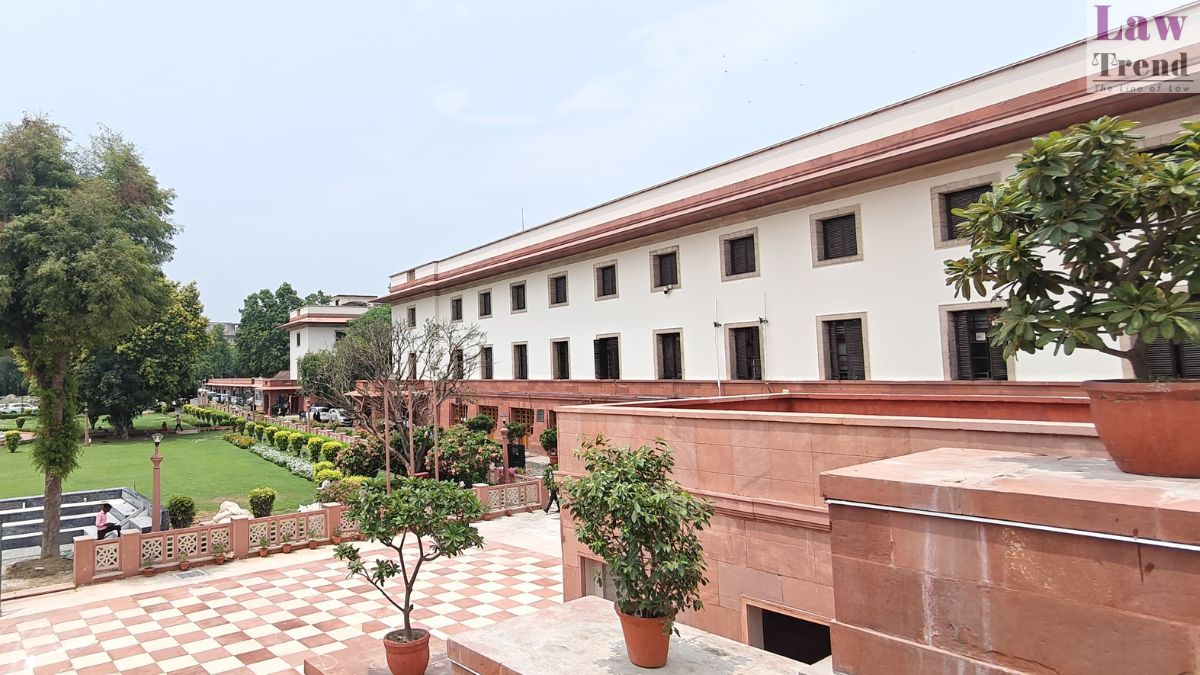
In a major development, the Supreme Court of India has revived a massive legal challenge against state laws that govern the administration of Hindu temples and religious endowments across southern India and Puducherry.
On Monday, a bench comprising Justices B V Nagarathna and S C Sharma recalled its previous April 2025 directive and announced it will begin hearing the batch of petitions afresh starting July 24. The decision marks a significant turn in a legal battle that has been pending before the apex court for over a decade.
The bench’s decision comes after it agreed to review its April 1, 2025, order, which had originally disposed of the petitions. In that previous ruling, the Supreme Court had directed the petitioners to approach the respective state High Courts first, arguing that local issues were involved and that the High Courts were better positioned to assess the specific dimensions of the state-level legislations.
The laws under challenge include:
- The Tamil Nadu Hindu Religious and Charitable Endowments Act, 1959
- The Puducherry Act of 1932
- The Andhra Pradesh Charitable and Hindu Religious Endowments Act, 1987
However, the petitioners filed a review petition in the lead matter—Dayananda Saraswati Swamiji (Dead) and Others Vs State of Tamil Nadu and Others—arguing that sending the case back to local courts after 13 years of pendency was a “manifest miscarriage” of justice.
Representing the petitioners, Advocate Suvidutt Sundaram pointed out what he termed a “fundamental error apparent on the face of the record” in the court’s April 2025 order. The court had previously assumed that the schemes of the three state laws “may” be distinct. The review petition strongly countered this assumption as incorrect, emphasizing that forcing the petitioners to restart their legal fight in multiple state courts was highly impractical.
According to the petition, sending the dispute back to the state level would force the petitioners to approach three different High Courts—the Madras High Court, the Andhra Pradesh High Court, and the Telangana High Court—to challenge virtually identical provisions of similar laws.
This, the petitioners argued, would create an unnecessary “multiplicity of proceedings over the same question.” Furthermore, because of the division of states, they would be forced to litigate the exact same Andhra Pradesh Act of 1987 before two separate bodies: the Telangana High Court and the Andhra Pradesh High Court.
The review petition also raised a critical constitutional point, arguing that the right to approach the Supreme Court is itself a fundamental right under Article 32 of the Constitution. By effectively dismissing the petitions and redirecting them to lower courts, the Supreme Court’s previous order had rendered this fundamental right “meaningless.”
The petitioners also highlighted the massive passage of time, noting that they “will never regain” the 13 years the case has already spent languishing in the apex court’s backlog. The very first petition in this batch was filed back in 2012 by the late spiritual leader Swami Dayanand Saraswati.
Acknowledging these arguments, the Supreme Court bench formally recalled its April 2025 order on Monday, paving the way for the top court to resolve the constitutional validity of these temple administration laws itself when hearings commence this July.




