

Absence of Valid Appointment Fails Quo Warranto Test: Chhattisgarh HC Rules Additional Charge of Pharmacy Registrar Is Not a Substantive Statutory Office
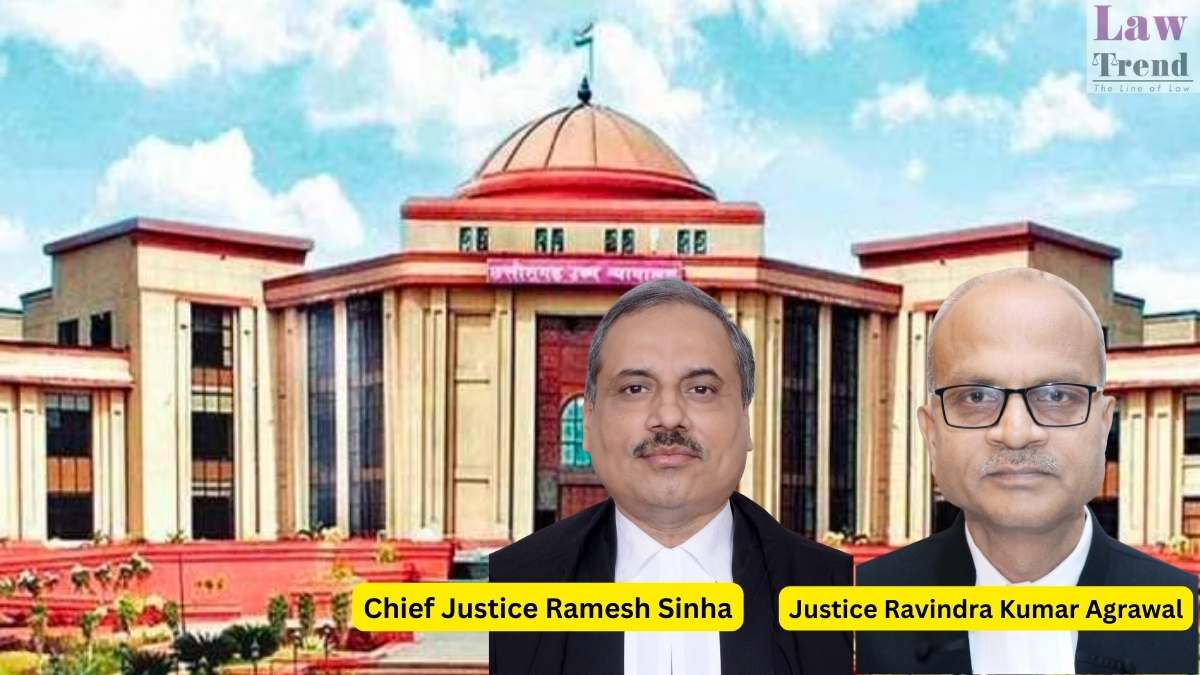

The High Court of Chhattisgarh has ruled that the mere entrustment of an additional charge of the Registrar under the Pharmacy Act, 1948, read with the Pharmacy Council Rules, 1978, pending regular appointment, does not amount to holding a substantive statutory office. A Division Bench comprising Chief Justice Ramesh Sinha and Judge Ravindra Kumar Agrawal held that in the absence of a valid appointment, the essential requirement for the issuance of a writ of quo warranto under Article 226 of the Constitution of India is not satisfied.

With this observation, the Division Bench set aside a Single Judge’s order which had quashed the temporary administrative arrangement entrusting the additional charge of Registrar to a Store Keeper-cum-Registrar of the Chhattisgarh State Pharmacy Council.

Factual Background

The appellant, Ashwani Gurdekar, was substantively serving on the post of Pharmacist at Dr. Bhimrao Ambedkar Memorial Hospital, Raipur. On March 14, 2024, an administrative order was issued entrusting him with the additional charge of the post of Registrar of the Chhattisgarh State Pharmacy Council (Respondent No. 3) as a temporary, stop-gap administrative arrangement.

Respondent No. 4, Dr. Rakesh Gupta, filed a writ petition (WPS No. 773 of 2025) before the High Court seeking a writ of quo warranto. He alleged that Gurdekar’s temporary placement violated Rule 96 of the Pharmacy Council Rules, 1978, which outlines the eligibility and qualifications for a full-time Registrar.

On March 3, 2026, a Single Judge of the High Court allowed the writ petition and quashed the arrangement, treating the temporary additional charge as a regular statutory “appointment.” Challenging this order, Gurdekar preferred an intra-court appeal (WA No. 392 of 2026) before the Division Bench.

Arguments of the Parties

For the Appellant

Counsel for the appellant, Mr. Sudeep Johri and Mr. J.K. Gupta, contended that the Single Judge’s order was legally and factually unsustainable. Their key submissions included:

  • No Substantive Appointment: The appellant was never substantively or permanently appointed as the Registrar. A writ of quo warranto lies only when an incumbent holds a substantive public office contrary to statutory provisions, which was not the case here.
  • Scope of Rules: Rule 96(1) and 96(2) of the Rules of 1978 govern regular, full-time appointments and do not apply to temporary arrangements made in administrative exigencies.
  • Process for Amendment: The competent authority had already constituted a sub-committee to update the recruitment rules. The amendment proposal, recommending that the post be filled by degree holders in Pharmacy, was approved and forwarded for publication in the Official Gazette on February 28, 2025. The additional charge was a bona fide interim measure to avoid an administrative vacuum during this transition.
  • Locus and Bona Fides: They argued that Respondent No. 4 was politically motivated and filed the petition to settle personal scores, having previously been removed from his position as a nominated member of the Council under Section 25(3) of the Pharmacy Act, 1948.
READ ALSO  38 साल, 100 रुपये और रिश्वत का दाग: छत्तीसगढ़ हाईकोर्ट ने किया आरोपी को बरी

For the Respondents

Mr. Shayam Sunder Lal Tekchandani, appearing on behalf of Respondent No. 4, defended the Single Judge’s decision, submitting that the impugned order quashing the arrangement did not suffer from any “illegality or perversity warranting interference.”

The State of Chhattisgarh was represented by Deputy Advocate General Mr. Prasun Bhaduri.

Court’s Analysis and Cited Precedents

The Division Bench focused on whether the temporary entrustment of an additional charge pending a regular appointment could be subjected to judicial interference under Article 226 through a writ in the nature of quo warranto.

To determine the legal boundaries of quo warranto, the Court analyzed several authoritative precedents:

  1. University of Mysore v. C.D. Govinda Rao (AIR 1965 SC 491): The Constitution Bench of the Supreme Court held that before a writ of quo warranto can be issued, the Court must satisfy itself that “the office in question is a substantive public office and that the incumbent is holding such office without legal authority.” The jurisdiction is meant to prevent the usurpation of public office, not to scrutinize stop-gap executive arrangements.
  2. B. Srinivasa Reddy v. Karnataka Urban Water Supply and Drainage Board Employees’ Association ((2006) 11 SCC 731): The Supreme Court established that quo warranto is maintainable only if there is a clear violation of mandatory statutory rules, and the High Court cannot turn its writ jurisdiction into a “roving enquiry regarding administrative decisions.”
  3. Anand Selot Vs. Chief Secretary, Government of Madhya Pradesh & Others (2010 ILR (MP) 1357) & Hari Bansh Lal v. Sahodar Prasad Mahto ((2010) 8 SCALE 623): These cases affirmed that the writ of quo warranto is restricted to substantive public appointments.
  4. Central Electricity Supply Utility of Odisha v. Dhobei Sahoo ((2014) 1 SCC 161): The Supreme Court reiterated that Courts exercising writ jurisdiction should refrain from interfering with temporary administrative arrangements unless “manifest arbitrariness, mala fides or clear statutory violation” is proven.
READ ALSO  धारा 354 आईपीसी अपराध के लिए शील भंग करने का इरादा साबित होना चाहिए- हाईकोर्ट ने सरपंच को महिला का हाथ पकड़ने के आरोप में बरी किया

Applying these principles, the Division Bench found that the Single Judge erred in equating the temporary arrangement with a regular statutory appointment. The Bench observed:

“Mere entrustment of additional charge, which is purely temporary in nature, cannot be equated with a substantive appointment to a public office.”

Addressing Section 26 of the Pharmacy Act, 1948, the Court explained that while it deals with the substantive appointment of a Registrar, it “does not exclude or prohibit interim administrative arrangements being made to ensure smooth functioning of the Council till regular appointment is undertaken.”

READ ALSO  Chhattisgarh High Court Chief Justice Ramesh Sinha Inaugurates New Residential Colony for Judicial Officers

The Court further clarified that Rule 96 of the Rules of 1978 “operates in the field of regular appointment and not in respect of interim arrangements made in administrative exigency.” Additionally, the Court noted that the rule of strict compliance under Nazir Ahmad Vs. King Emperor (1936 SCC OnLine PC 41) cannot be used to invalidate interim administrative setups that ensure institutional continuity.

The Decision

The Division Bench allowed the writ appeal, setting aside the Single Judge’s order dated March 3, 2026.

Recognizing that the post of Registrar of the Chhattisgarh State Pharmacy Council is a statutory post requiring a regular appointment, the Bench issued the following directives:

  1. Respondents No. 1 to 3 are directed to initiate and complete the process for a regular appointment to the post of Registrar strictly in accordance with the provisions of the Pharmacy Act, 1948, and the Rules of 1978, as expeditiously as possible, preferably within a period of eight weeks.
  2. Till such regular appointment is finalized, the appellant, Ashwani Gurdekar, shall continue to discharge the duties and functions of the Registrar post pursuant to the order dated March 14, 2024, subject to any further decision by the competent authority.
  3. The competent authority remains free to make alternative interim administrative arrangements as may be necessary for the smooth functioning of the Council.

The Court made no order as to costs.

Case Details

  • Case Title: Ashwani Gurdekar v. State of Chhattisgarh & Others
  • Case No.: WA No. 392 of 2026
  • Bench: Chief Justice Ramesh Sinha and Judge Ravindra Kumar Agrawal
  • Date: 15.05.2026

Law Trend
Law Trendhttps://lawtrend.in/
Legal News Website Providing Latest Judgments of Supreme Court and High Court

Related Articles

Latest Articles

