

Section 6(5) Hindu Succession Act Not a Bar to Partition Suit; Daughters’ Rights as Class I Heirs Independent of 2005 Amendment: Supreme Court
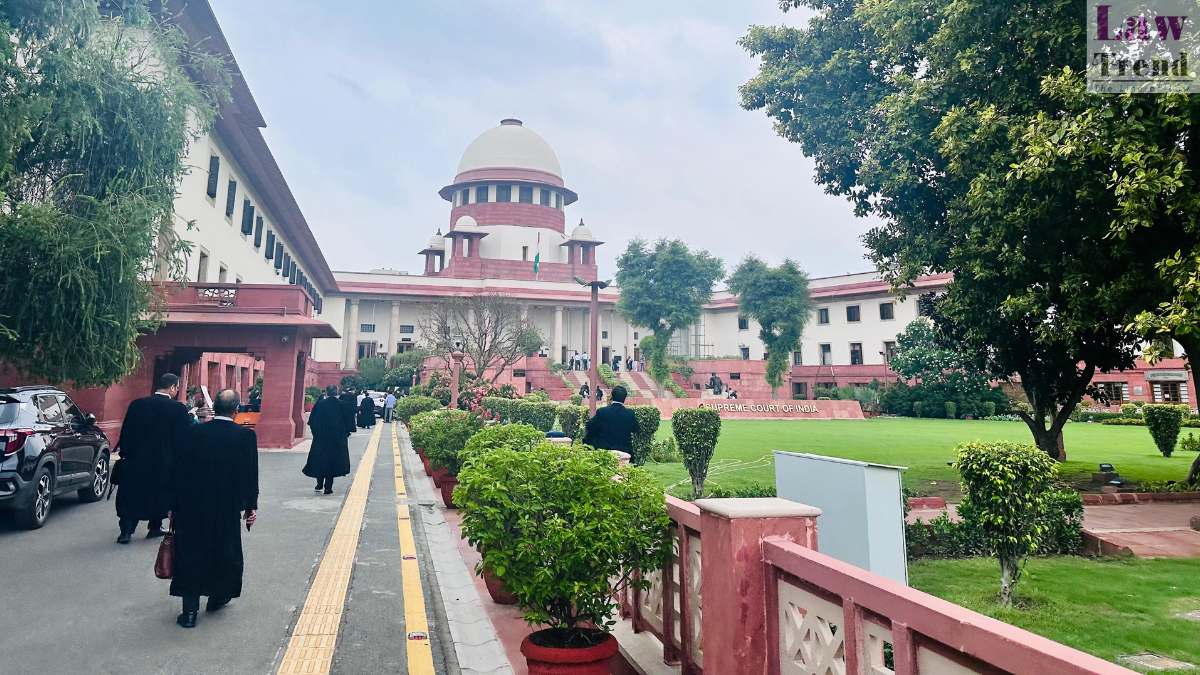

The Supreme Court of India has ruled that Section 6(5) of the Hindu Succession Act, 1956 is a narrow and strict saving clause that preserves completed partitions but does not operate as a jurisdictional bar to the institution of a partition suit. A division bench comprising Justice Sanjay Karol and Justice Augustine George Masih held that whether a valid partition under Section 6(5) has indeed been effected is a triable issue of fact and law that cannot be summarily dismissed at the threshold.

Furthermore, the Court declared that a second application under Order VII Rule 11 of the Code of Civil Procedure (CPC) seeking rejection of a plaint is barred by the principle of res judicata if an identical challenge was previously decided and attained finality. Setting aside the Karnataka High Court’s order which had rejected the partition suit, the Supreme Court restored the plaint for a full trial on merits.

Background of the Case

The dispute pertains to the properties of Sri B.M. Seenappa (the propositus), who died intestate on March 6, 1985. He was survived by his widow Smt. Lakshmidevamma (Defendant No. 1), four sons (including B.S. Ramesh, since deceased and represented by his legal heirs, Respondent Nos. 1 and 2), and three daughters (B.S. Lalitha, B.S. Vasanthi, and B.S. Jayanthi—the appellants).

According to the respondents, the properties were orally divided among the sons on September 6, 1985. They further claimed that in 1988, monetary compensation was paid to the three daughters, who signed a family partition document (Palupatti) as consenting witnesses. The daughters disputed the nature and validity of these transactions. Instead, they pointed to a registered Partition Deed executed on June 16, 2000, amongst the mother and the four sons, whereby the family properties were divided exclusively amongst themselves, completely excluding the daughters.

On July 11, 2007, the daughters filed O.S. No. 5352/2007 seeking partition of five suit schedule properties and allotment of a 1/8th share to each of the eight legal heirs.

In January 2008, three of the defendants filed an application (I.A. No. 2) under Order VII Rule 11(d) of the CPC to reject the plaint, asserting that the suit was barred because the daughters had married prior to the state amendment. Although the Trial Court initially allowed this application, the High Court of Karnataka in R.F.A. No. 168 of 2009 set aside the rejection on January 31, 2013, remanding the matter for trial. The High Court had reasoned that even assuming the daughters did not get a coparcenary share, they still had an independent right in the share of their father, who died intestate, under Section 8 of the Act. This 2013 order attained finality without challenge.

More than eight years later, on December 16, 2021, the legal representatives of Defendant No. 4 filed a second application (I.A. No. IV) under Order VII Rule 11(a), (b), and (d) of the CPC. They contended that a “change in law” had been brought about by the Supreme Court’s decision in Vineeta Sharma v. Rakesh Sharma and Others, which they argued operated as a complete bar to suits seeking to reopen partitions executed before December 20, 2004.

READ ALSO  Rights Can Be Assigned, But Obligations Need Consent: SC Directs Arbitration 

The Trial Court dismissed I.A. No. IV, holding that the High Court’s 2013 order operated as res judicata. However, in a revision petition (C.R.P. No. 144 of 2023), the Karnataka High Court reversed this, allowed the application, and rejected the plaint on August 29, 2024. The daughters subsequently appealed to the Supreme Court.

Arguments of the Parties

For the Appellants:

  • Res Judicata: The second Order VII Rule 11 application was barred by interlocutory res judicata since the identical issue of whether the plaint was maintainable despite the 2000 partition deed had been conclusively decided in 2013.
  • Common Interest: The High Court’s reasoning that res judicata does not apply because different defendants filed the applications is legally flawed. All defendants share a common interest and litigate under the same title under Explanation VI to Section 11 of the CPC.
  • No Change in Law: The Vineeta Sharma judgment did not alter the settled position that when a Hindu male dies intestate, his property devolves under Section 8 on all Class I heirs, including daughters.
  • Saving Clause vs. Jurisdictional Bar: Section 6(5) is merely a saving clause protecting valid completed transactions; it is not a jurisdictional bar. The validity of a partition executed behind the daughters’ backs is a triable question.
  • Independent Claims: The appellants’ rights in the father’s undivided share accrued upon his intestate death in 1985 under the unamended Act, wholly independent of the 2005 Amendment.

For the Respondents:

  • Protection of Partition: The registered Partition Deed dated June 16, 2000, was completed before December 20, 2004, and is fully saved under Section 6(5) of the Act.
  • Strict Applicability: The Vineeta Sharma ruling acts as a change in law that nullifies the effect of the 2013 order.
  • Different Applications: Res judicata does not apply because the previous application was filed by Defendant Nos. 1 to 3 under clause (d) only, whereas the current application was filed by the legal representatives of Defendant No. 4 under clauses (a), (b), and (d).
  • Estoppel and Pleadings: The oral partition of 1985 and the Palupatti of 1988 demonstrated relinquishment and estoppel. Moreover, the appellants failed to specifically invoke Section 8 in their plaint, relying instead on clever drafting.

Court’s Analysis and Observations

The Supreme Court examined three central questions: the bar of res judicata, the nature of Section 6(5), and the daughters’ independent rights under Section 8 of the Hindu Succession Act.

1. Bar of Res Judicata on the Repeated Application

The Supreme Court noted that the issue of whether the partition deed barred the suit at the threshold was identical to the one decided in the first round of litigation. Citing Satyadhyan Ghosal and Others v. Deorajin Debi (Smt) and Another, the Court reiterated:

“The principle of res judicata applies also as between two stages in the same litigation to this extent that a court, whether a trial court or a higher court having at an earlier stage decided a matter in one way will not allow the parties to re-agitate the matter again at a subsequent stage of the same proceedings.”

The Bench rejected the Karnataka High Court’s reasoning that res judicata was avoided because different defendants moved the applications. Applying Singhai Lal Chand Jain v. Rashtriya Swayamsewak Sangh, Panna and Others and Explanation VI to Section 11 of the CPC, the Court noted that all the defendants litigated under the same title to defend the same partition deed.

The Court further rejected the argument based on the invocation of different sub-clauses of Order VII Rule 11, observing:

READ ALSO  Supreme Court Grants Big Relief to Pensioners

“A party cannot circumvent the finality of an adverse order by re-framing the same challenge under a different procedural provision. The substance of the issue, whether the plaint should be rejected on the ground that the suit is barred by Section 6(5) of the H.S. Act, remains the same.”

Addressing the “change in law” exception outlined in Mathura Prasad Bajoo Jaiswal and Others v. Dossibai N.B. Jeejeebhoy, the Bench observed that Vineeta Sharma did not undermine the 2013 order’s legal basis. The foundation of the 2013 order was Section 8 of the Act, which remains undisturbed by the Vineeta Sharma ruling.

2. Section 6(5) is a Saving Clause, Not a Jurisdictional Bar

Analyzing Section 6(5) alongside Ganduri Koteshwaramma and Another v. Chakiri Yanadi and Another and Prasanta Kumar Sahoo and Others v. Charulata Sahu and Others, the Court laid down the distinction between a bar and a saving clause:

“Section 6(5) is a saving clause of narrow and strict application. It does not create a jurisdictional bar to the institution of a suit for partition. The distinction between a ‘bar’ and a ‘saving clause’ is legally significant. While a bar prevents the Court from entertaining the suit at all, but a saving clause on the other hand provides a defence on merits that must be proved by the party asserting it.”

The Court observed that the validity of the registered partition of 2000, allegedly executed behind the daughters’ backs without allotting them any share, is a contested question of fact. The Bench held:

“To treat Section 6(5) as foreclosing this inquiry at the threshold is to conflate the existence of a registered deed with the conclusion that the partition is valid and binding on all persons. That conflation is impermissible at the stage of Order VII Rule 11.”

3. Independent Rights Under Section 8

The Court emphasized the unamended scheme of devolution in force in 1985 when the propositus died. Under the proviso to the unamended Section 6 read with Section 8, the father’s undivided share devolved upon all Class I heirs, including his daughters, by intestate succession. The Court noted:

“This right of the daughters in the father’s share accrued in 1985, under the unamended Act. It is wholly independent of the 2005 Amendment and predates it by two decades.”

The Court made it clear that Section 6(5) does not affect pre-existing rights under Section 8:

“The words ‘nothing contained in this section’ refer to the substituted Section 6, that is, the new coparcenary rights conferred upon daughters by Section 6(1). Section 6(5) saves pre-2004 partitions from the retroactive reach of those new coparcenary rights. It does not, and on its plain language cannot, purport to extinguish the pre-existing rights of Class I heirs under Section 8…”

Furthermore, referencing Mayar (H.K.) Ltd., the Court rejected the objection regarding the lack of specific mention of Section 8 in the plaint, stating:

“The rights of the parties are to be determined by the Court on the basis of the facts pleaded, not on the nomenclature of the statutory provision invoked.”

4. Revisional Jurisdiction Under Section 115 CPC

The Supreme Court observed that the High Court exceeded its revisional powers under Section 115 CPC by conducting a de novo appraisal of the merits, the partition deed, and the rights of the parties at a preliminary stage.

The Decision

Allowing the appeal, the Supreme Court set aside the Karnataka High Court’s judgment dated August 29, 2024, and restored the Trial Court’s order of November 15, 2022, which dismissed the second Order VII Rule 11 application. The plaint in O.S. No. 5352/2007 was restored to the file of the Trial Court.

READ ALSO  केवल प्रमाणपत्र पर्याप्त नहीं होगा; वैध विवाह के लिए हिंदू विवाह अधिनियम के तहत अपेक्षित समारोह अनिवार्य रूप से किए जाने चाहिए: सुप्रीम कोर्ट

The Court directed that the status quo regarding the subject properties continue to remain in operation until further orders of the Trial Court. The Trial Court was directed to proceed with and conclude the trial expeditiously. The Court clarified that it expressed no opinion on the merits of the suit, which remain to be adjudicated upon evidence during the trial.

Case Details

  • Case Title: B.S. Lalitha and Others v. Bhuvanesh and Others
  • Case No.: Civil Appeal No. ______ of 2026 (Arising out of SLP (C) No. 23709 of 2024)
  • Bench: Justice Sanjay Karol and Justice Augustine George Masih
  • Date: May 15, 2026

Law Trend
Law Trendhttps://lawtrend.in/
Legal News Website Providing Latest Judgments of Supreme Court and High Court

Related Articles

Latest Articles

