The Supreme Court of India, in a significant judgment emphasizing the constitutional significance of language in education, has directed the State of Rajasthan to formulate a comprehensive policy for the effective implementation of mother tongue-based education. The Court, while setting aside a Rajasthan High Court order, underscored that the ability to understand and be understood in one’s own language is a matter of “existential rights.”
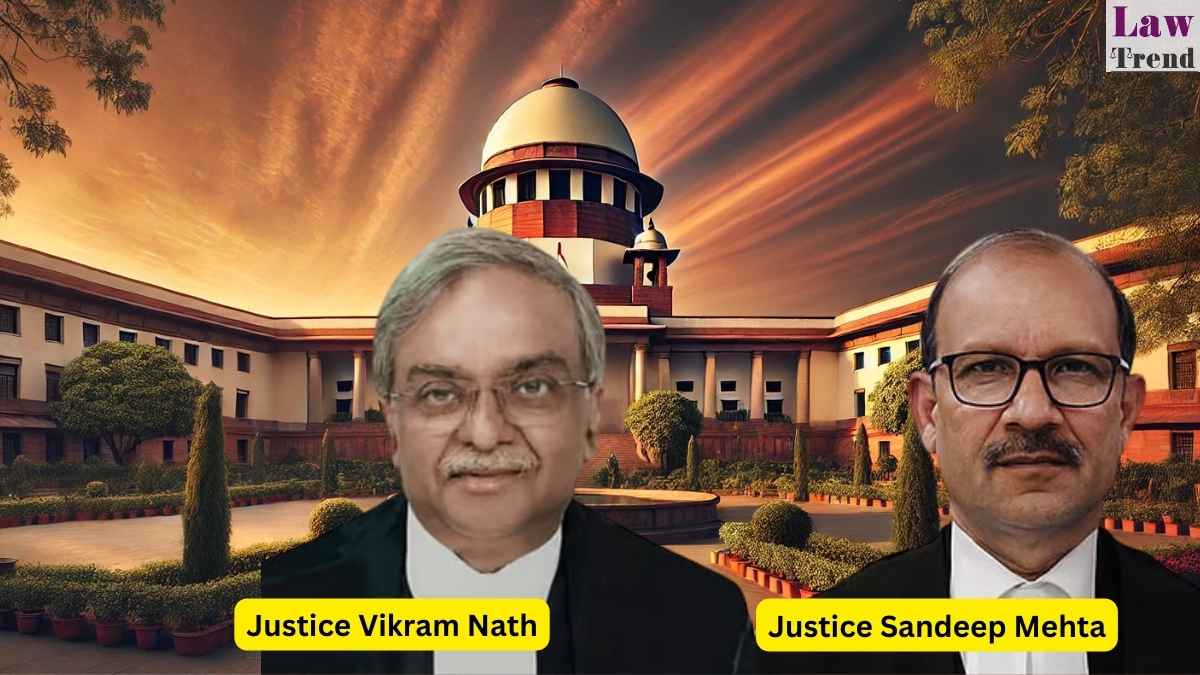
The appeal arose from a Rajasthan High Court decision that dismissed a Public Interest Litigation (PIL) seeking the inclusion of the Rajasthani language in the recruitment syllabus for Grade-III Teachers and its adoption as a medium of instruction. A Bench comprising Justice Vikram Nath and Justice Sandeep Mehta allowed the appeal, holding that the State’s inaction in promoting regional languages at the foundational level of education risks infringing fundamental rights under Part III of the Constitution.
Background of the Case
The appellants, Padam Mehta and another, filed a PIL before the High Court of Judicature for Rajasthan at Jodhpur. They sought directions for the respondents to include Rajasthani in the examination syllabus for the Rajasthan Eligibility Examination for Teachers, 2021 (REET, 2021) for both Level-I (Classes I to V) and Level-II (Classes VI to VIII). They further prayed for education to be imparted to children in Rajasthani or the relevant local language.
The High Court dismissed the petition on November 27, 2024, ruling that a writ of mandamus could only be issued if the petitioners established an enforceable legal right and a corresponding failure of statutory duty by the State. Aggrieved by this, the appellants approached the Supreme Court under Article 136 of the Constitution.
Arguments of the Parties
Appellants’ Submissions:
- Rajasthani speakers constitute a “linguistic minority” under Article 350A, given that Hindi is the principal official language of the State.
- The right to receive education in one’s mother tongue is implicit in Article 19(1)(a) (freedom of speech and expression) and Article 21A (right to education), ensuring that instruction is “intelligible and effective.”
- The State engaged in “hostile and invidious discrimination” by including Gujarati, Punjabi, and Sindhi in school curriculums while excluding Rajasthani.
- The National Education Policy (NEP), 2020, supports the use of home languages for teaching complex concepts.
Respondents’ Submissions:
- Recruitment and instruction are limited to languages formally recognized in the Eighth Schedule to the Constitution. As Rajasthani is not included, there is no administrative framework for its adoption.
- Rajasthani speakers do not constitute a linguistic minority in Rajasthan.
- Article 350A is “directory in character” and does not create justiciable or enforceable rights.
- NEP, 2020, is an executive policy statement without statutory force and does not mandate the medium of instruction.
The Court’s Analysis
The Supreme Court began by observing that while the specific relief regarding REET-2021 was infructuous due to the passage of time, the broader constitutional issues remained significant.
On the Essence of Language
The Court noted, “The ability to understand and be understood in one’s own language is not a matter of convenience, but a matter of existential rights, for comprehension must necessarily precede meaningful participation in the society and day to day life activities.”
Constitutional and Statutory Mandates
The Bench highlighted the interlinked nature of Articles 19(1)(a), 21, 21A, and 350A. It referred to Section 29(2)(f) of the RTE Act, 2009, which mandates that the medium of instruction shall, as far as practicable, be in the child’s mother tongue.
The Court cited State of U.P. v. Anand Kumar Yadav to emphasize that the “right to education is right to quality education.” It also relied on State of Karnataka v. Associated Management of English Medium Primary & Secondary Schools, affirming that Article 19(1)(a) includes the freedom of a child to receive primary education in a language of their choice.
Criticism of State’s Inertia
The Court found the State’s reliance on the Eighth Schedule to justify exclusion as “myopic” and a “pedantic approach.” It pointed out that Rajasthani is already taught as a subject at the University level (e.g., JNVU Jodhpur, MGSU Bikaner, and Rajasthan University).
“The absence of a policy is thus projected not as a shortcoming warranting prompt rectification, but as a ground to defend the existing inertia,” the Bench remarked, adding that constitutional guarantees cannot be permitted to remain “dormant for want of executive action.”
The Decision
The Supreme Court set aside the High Court’s order and issued the following directions:
- Policy Formulation: The State of Rajasthan must formulate a comprehensive policy to implement mother tongue-based education in line with the National Education Policy, 2020.
- Recognition: The State must recognize and accord due status to Rajasthani as a local/regional language for educational purposes.
- Phased Implementation: The State is directed to take affirmative and time-bound steps towards introducing and providing Rajasthani as a subject in all schools (government and private) and facilitate its adoption as a medium of instruction, starting from the foundational stage.
- Compliance: The State of Rajasthan is required to file a compliance affidavit by September 25, 2026.
The matter is scheduled for further hearing on September 30, 2026, to receive the compliance report.
Case Details
- Case Title: Padam Mehta and Another v. State of Rajasthan and Others
- Case No.: Civil Appeal @ SLP (C) No. 1425 of 2025
- Bench: Justice Vikram Nath and Justice Sandeep Mehta
- Date: May 12, 2026