

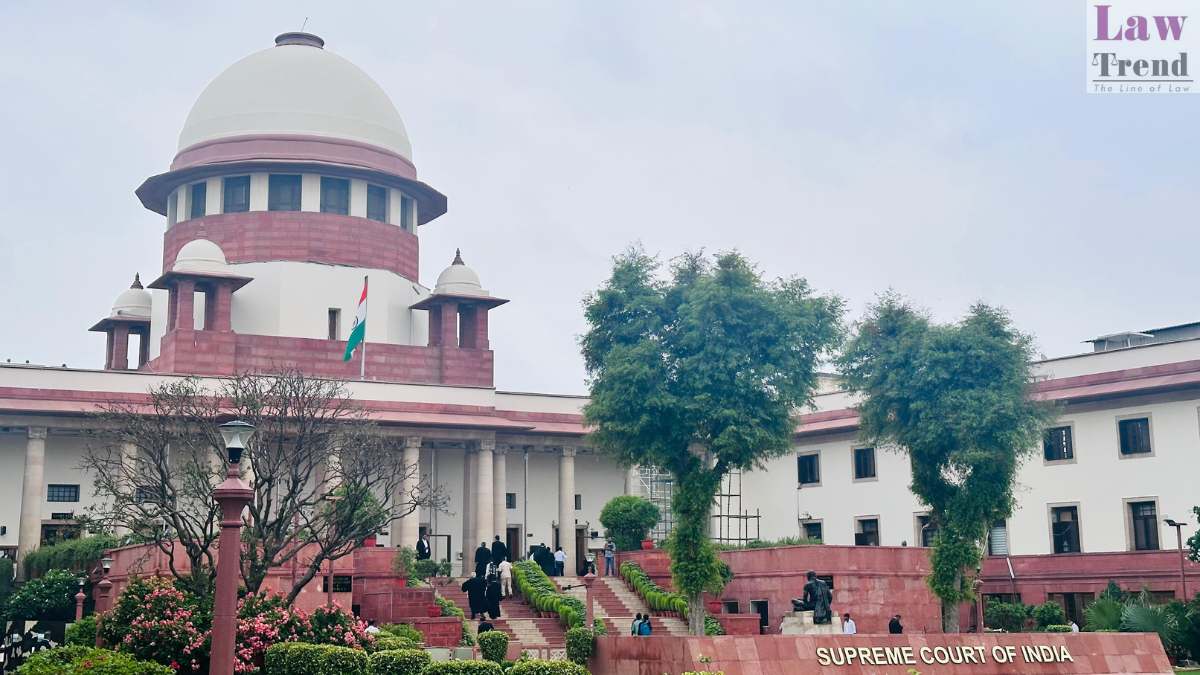
The Supreme Court of India on Monday initiated a comprehensive legal review of the Transgender Persons (Protection of Rights) Amendment Act, 2026. A bench comprising Chief Justice of India (CJI) Surya Kant and Justice Joymalya Bagchi issued notices to the Central Government, as well as all States and Union Territories, seeking their formal responses to a batch of petitions challenging the constitutional validity of the new legislation.
While the petitioners sought immediate relief, the bench clarified its stance on the implementation of the law for the time being. “There is no question of granting any interim order,” the Court remarked during the proceedings.
The legal challenge follows the recent passage of the amendment bill by Parliament on March 25, 2026. The legislation subsequently received Presidential assent on March 30, 2026.
The 2026 Amendment has become a point of significant legal contention due to its narrowed scope. Specifically, the statute excludes “social orientations” from its protective ambit—a move that petitioners argue undermines the original intent of the 2019 Act and violates fundamental rights.
Additionally, the Act introduces a framework for graded punishment. Under these provisions, the severity of the penalty is determined by the gravity of the harm inflicted on transgender individuals, rather than maintaining uniform sentencing for specific classes of offenses.
During Monday’s hearing, the two-judge bench acknowledged the weight of the constitutional questions raised. To ensure a thorough judicial examination, the bench directed that the matter be placed before a larger three-judge bench. The CJI will be responsible for the formal constitution of this specialized bench.
The Supreme Court has scheduled the next hearing for six weeks from now, giving the Centre and state governments time to file their counter-affidavits.




