

“Ya Allah! Rasgulla!” Remarks in Comedy Shows Do Not Establish Deliberate Malice: Bombay HC Quashes FIR Against Shekhar Suman
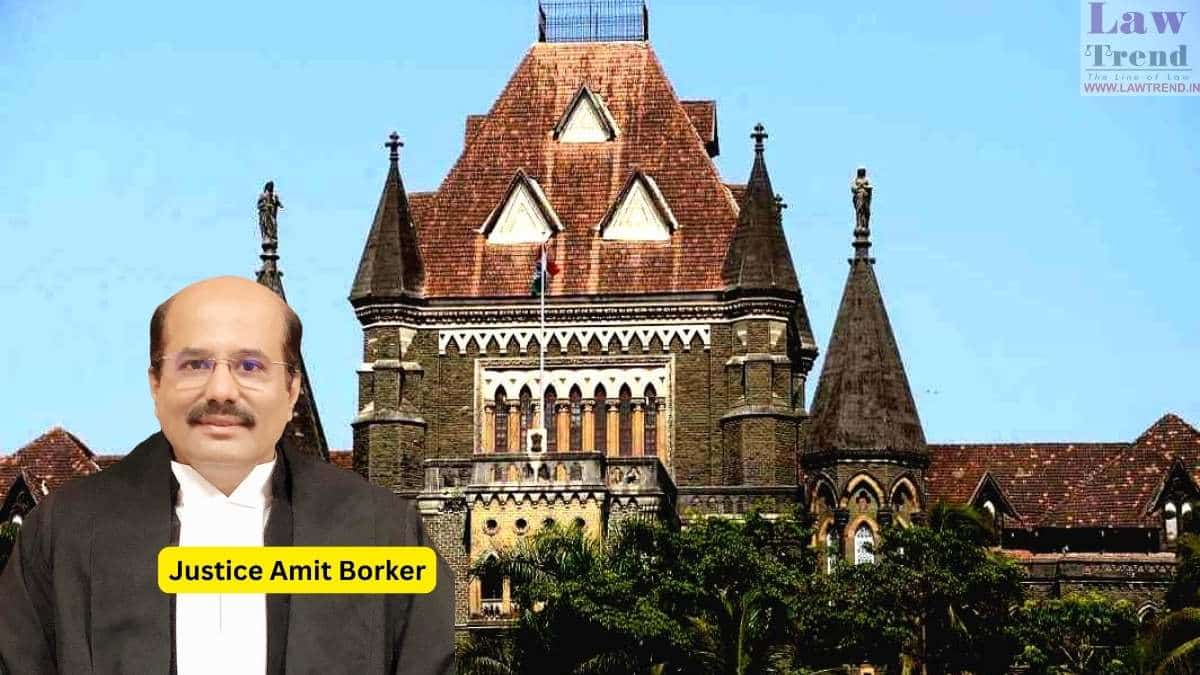

The Bombay High Court has quashed a First Information Report (FIR) registered against actor Shekhar Suman and performing artist Bharti Singh for allegedly outraging religious feelings during a comedy show. The Court, presided over by Justice Amit Borkar, held that expressions used in a humorous context in a comedy programme do not, by themselves, establish the “deliberate and malicious intention” required to attract Section 295-A of the Indian Penal Code (IPC).

Background of the Case

The matter originated from an episode of the television programme “Comedy Circus Ka Jadoo” telecast on Sony Entertainment Television (SET) on November 20, 2010. During the episode, Petitioner Bharti Singh performed a character styled as “Umrao Jaan,” while Petitioner Shekhar Suman functioned as a Judge evaluating the performance.

The FIR (C.R. No. 265 of 2010) was registered at Pydhonie Police Station based on a complaint by Mr. Mohd. Imran Dadani Rasabi, President of Raza Academy. The complainant alleged that the use of the expressions “Ya Allah! Rasgulla! Dahi Bhalla!” during the performance offended the religious sentiments of the Muslim community. The police subsequently issued notices to the participants and the distributor, Multi Screen Media (MSM), leading the petitioners to approach the High Court for quashing the proceedings.

Arguments of the Parties

Petitioners: Mr. Niteen Pradhan, appearing for the petitioners, argued that the programme was a “light entertainment programme” intended solely for humor and comic exchange. He contended that:

  • The essential ingredients of Section 295-A IPC—deliberate and malicious intention—were “conspicuously absent” in the complaint.
  • The expressions “Dahi Bhalla” and “Rasgulla” are common food items without religious connotations.
  • The prosecution was legally infirm as no prior sanction was obtained under Section 196 of the Code of Criminal Procedure (CrPC), which is a “condition precedent” for taking cognizance of such offences.
  • The case fell within the ratio of Ramji Lal Modi vs. State of Uttar Pradesh (1957), where the Supreme Court held that acts which incidentally cause offence but lack deliberate malice do not attract Section 295-A.
READ ALSO  SC Examines Scope of Judicial Review in Service Matters

State: Mrs. Megha Bajoria, learned Additional Public Prosecutor, opposed the petitions, submitting that the allegations in the FIR disclosed the commission of cognizable offences. She argued that the seriousness of the allegations required a trial where evidence could be appreciated, rather than interference by the High Court at this preliminary stage.

The Court’s Analysis

Justice Amit Borkar emphasized that the context of a performance is paramount. “A comedy show is not judged by the same standards as a doctrinal speech or a political statement,” the Court observed, noting that such performances must be read as a whole rather than by selecting stray expressions.

Regarding the legal requirements of Section 295-A IPC, the Court stated:

READ ALSO  Karnataka High Court Denies Doctor's Plea to Quash CBI Proceedings for 2006 PG Entrance Test Malpractice

“The language of the section itself speaks of deliberate and malicious intention of outraging the religious feelings of a class of citizens. Both elements are necessary. The intention must be deliberate, and it must also be malicious. If one of them is absent, the offence will not be fully made out.”

The Court found that the words “Ya Allah! Rasgulla! Dahi Bhalla!” were used for rhyme and comic effect. It noted that the words “Dahi Bhalla” and “Rasgulla” are “neutral in ordinary social use” and that “mere mention of food items in a comic act cannot amount to insult of religion.”

Lack of Common Intention (Section 34 IPC)

The Court further observed that common intention cannot be assumed merely from presence in a programme or participation in a televised act. For the Petitioner Judge specifically, the Court found that the record did not disclose he uttered the words or shared a design to insult, noting that “the role attributed to them is too remote to bring them within the purview of offences alleged.”

Mandatory Sanction under Section 196 CrPC

A critical finding was the absence of mandatory sanction. The Court noted:

READ ALSO  NCPCR requests Maharashtra Government to file Urgent Appeal against Bombay HC's "Skin to Skin" Judgement

“The provision is mandatory. It is intended to prevent abuse of prosecution in matters of sensitive public expression… This omission goes to the legality of the prosecution.”

Finally, the Court criticized the “casual manner” in which criminal law was invoked against artists, holding that trial is not a substitute for legal foundation.

Decision

Allowing both writ petitions, the High Court quashed FIR No. 265 of 2010 and all consequential proceedings. The Court concluded that continuation of criminal proceedings where the complaint does not disclose legal ingredients and mandatory sanction is missing would amount to a “misuse of process.”

Case Details:

  • Case Title: Shekhar Suman v. The State of Maharashtra and Others (with Bharti Singh v. State of Maharashtra)
  • Case No.: Writ Petition No. 1902 of 2012 with Writ Petition No. 1906 of 2012
  • Bench: Justice Amit Borkar
  • Date: April 29, 2026

Law Trend
Law Trendhttps://lawtrend.in/
Legal News Website Providing Latest Judgments of Supreme Court and High Court

Related Articles

Latest Articles

