

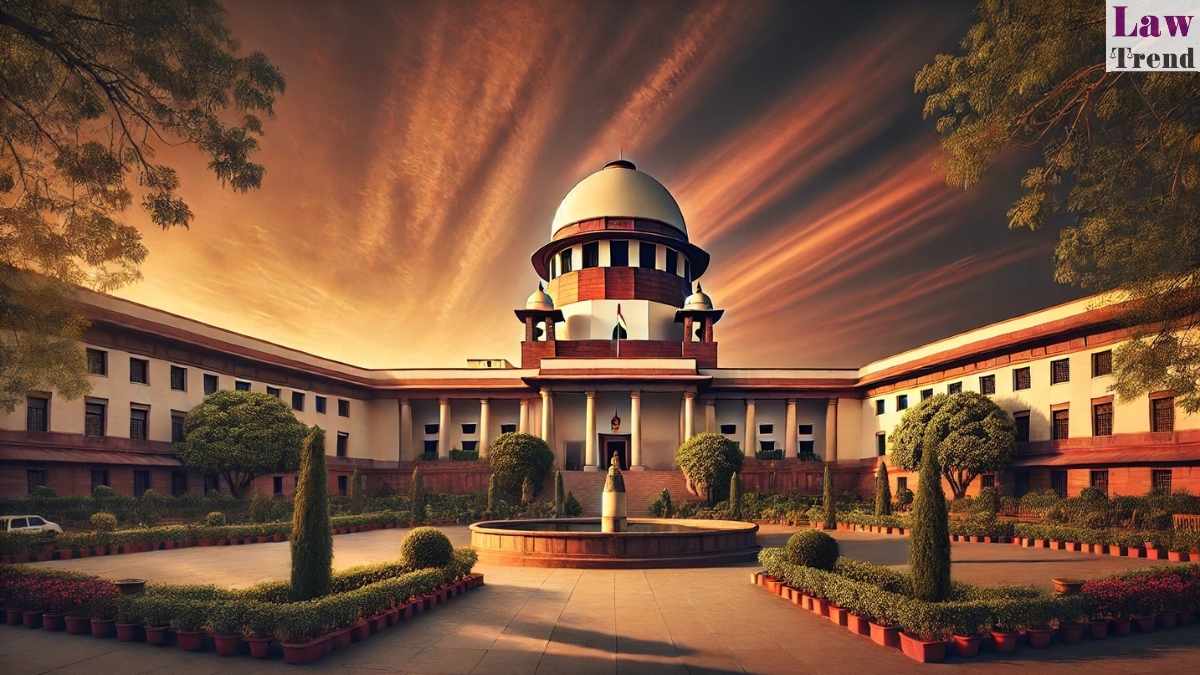
The Supreme Court of India on Wednesday declined to issue new directions or create specific criminal offences to tackle hate speech, asserting that the current legal framework is sufficient to address the issue. A bench comprising Justices Vikram Nath and Sandeep Mehta emphasized that the power to define crimes and prescribe punishments rests solely with the legislature, citing the “doctrine of separation of powers” as a constitutional barrier to judicial intervention in such matters.
The court was responding to petitions seeking judicial directions to curb the rising instances of hate speech across the country. The central question was whether a “legislative vacuum” exists that would justify the court exercising its extraordinary powers to fill the gap. The court concluded that no such vacuum exists, as existing criminal laws already cover the spectrum of hate speech offences, and it is not the role of the judiciary to expand criminal liability.
While pronouncing the verdict, the bench underscored the constitutional boundaries between the different branches of government. Justice Vikram Nath, writing for the bench, noted that the judiciary must respect the domain of the legislative authorities when it comes to the creation of penal laws.
“The Constitutional scheme founded upon the doctrine of separation of powers does not permit the judiciary to create new offences or expand the contours of criminal liability through judicial directions,” the court observed.
The bench further clarified that while Constitutional courts have the mandate to interpret laws and protect fundamental rights, they lack the authority to act as a legislature.
“The precedents of this court consistently affirm that while Constitutional courts may interpret the law and issue directions to secure the enforcement of fundamental rights, they cannot legislate or compel legislation,” the bench stated.
The court referred to the existing provisions of the Indian criminal law system, noting that they are equipped to deal with hate speech. However, the bench did not rule out the possibility of future legislative action.
The court noted that it remains open to the Central Government and competent legislative authorities to decide if further measures are necessary. Specifically, the bench mentioned that authorities could consider whether amendments are required in light of “evolving societal challenges” or the recommendations made in the Law Commission’s 267th report of March 2017, which had suggested specific additions to the Indian Penal Code to define and penalize hate speech more precisely.
Concluding that the current legal remedies are adequate and that judicial overreach into the legislative domain would be improper, the Supreme Court declined to grant the prayers sought in the petitions. The responsibility for any further legal tightening or the creation of new statutory offences remains with the Parliament.




