

Higher Qualification Cannot Substitute Mandatory Work Experience in Public Recruitment: Supreme Court
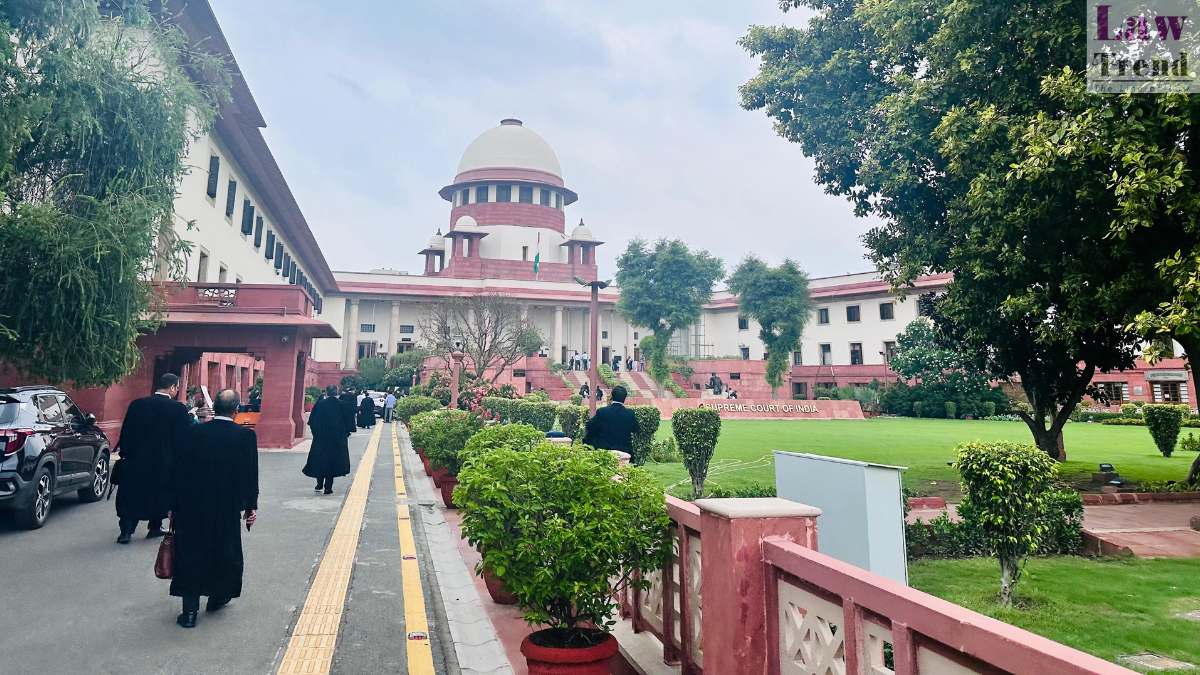
The Supreme Court of India has held that a higher academic qualification cannot substitute or override a mandatory “essential” work experience requirement prescribed in recruitment rules. The Bench, comprising Justice J.K. Maheshwari and Justice Atul S. Chandurkar, upheld the Himachal Pradesh High Court’s decision to set aside the appointment of a candidate who lacked the requisite five-year experience, despite holding a Master’s degree (M.Tech) and securing the highest marks in the selection process.

The Court emphasized that the power of relaxation, while available under statutory rules, must be exercised consciously with reasons recorded in writing and cannot be presumed to have been exercised merely because an appointment was made.

Background of the Case

The controversy originated from a 2016 recruitment process initiated by the Himachal Pradesh Board of School Education (the “Board”) for the post of Computer Hardware Engineer. The essential qualifications included a B.E./B.Tech degree and “at least 5 years’ experience in computer manufacturing/maintenance from a company of repute.” The rules also specified that “preference will be given to candidate with M.Tech in Electronic Degree.”

The appellant, Himakshi, secured the highest marks (152) and held an M.Tech degree but had only one year of work experience. The respondent, Rahul Verma, scored 143 marks and claimed to have six years of experience. Another candidate, Gaurav, scored 151 marks with approximately 2.5 years of experience. The Board selected Himakshi, leading to a legal challenge by Rahul.

While a Single Judge of the High Court initially upheld Himakshi’s appointment citing the Board’s power to relax rules for “well-qualified” candidates, the Division Bench later set aside the selection, finding that none of the candidates—including Rahul—actually satisfied the strict five-year experience requirement in a “company of repute.”

READ ALSO  [120-B IPC] Evidence Showing Meeting of Minds Between Conspirators Necessary For Conviction, holds Supreme Court

Arguments of the Parties

For the Selected Candidate (Himakshi): Senior Counsel Mr. P.S. Patwalia argued that Himakshi was the most meritorious candidate. He contended that under Rule 18 of the Recruitment and Promotion (R&P) Rules, the Board had the discretion to relax experience requirements for candidates who are “otherwise well qualified.” He further argued that her long tenure in service (since 2016) and subsequent regularisation in 2019 warranted equitable consideration.

For the Unsuccessful Candidate (Rahul): Senior Counsel Mr. M.C. Dhingra submitted that the five-year experience was a mandatory “threshold” condition. He argued that preference for a higher degree (M.Tech) only applies among candidates who first meet all essential eligibility criteria. He sought his own appointment on the grounds of possessing the requisite length of experience.

For the Board: The Board’s counsel admitted upon inquiry that there was “no express decision” or recorded reasoning to formally relax the experience requirement for Himakshi during the selection process.

Court’s Analysis and Observations

The Supreme Court addressed three primary legal issues:

READ ALSO  पशुओं की मुकदमे के दौरान अभिरक्षा से जुड़े नियम को चुनौती: सुप्रीम कोर्ट ने केंद्र सरकार से मांगा जवाब

1. Essential vs. Preferential Qualifications The Court clarified that essential qualifications are “threshold conditions” that cannot be diluted by comparative merit. Regarding the preference for an M.Tech degree, the Court observed:

“A preference operates only within the zone of eligible and merit candidates; it does not enlarge or modify the field of eligibility itself… the stage of applying preference arises only after a candidate is found to fulfil the essential qualifications prescribed for the post.”

The Bench noted that allowing a higher degree to compensate for a lack of experience would “invert the scheme of the R&P Rules” and introduce “subjectivity into the selection process.”

2. The Exercise of Power to Relax The Court examined whether the Board had actually exercised its power under Rule 18 to relax the experience criteria. It noted that the Board failed to produce any record of a “conscious, reasoned and demonstrable exercise of discretion.” Citing Rekha Chaturvedi v. University of Rajasthan, the Court reiterated that:

“The University/Selection Committee must mention in its proceedings of selection the reasons for making relaxations, if any, in respect of each of the candidates in whose favour relaxation is made.”

3. Equitable Consideration and Long Service The appellant sought protection based on her decade-long service, citing cases like Ram Sarup v. State of Haryana and Buddhi Nath Chaudhary v. Abahi Kumar. However, the Court distinguished these, noting that in those cases, the deficiency was marginal or curable. In this case, the defect went to the “root of eligibility.” The Court held:

READ ALSO  Right to Construct Temple on Private Property is Protected by Articles 25 and 26 of Constitution: Allahabad HC

“The experience in service on the said post could not be substituted by the experience required at the threshold… no claim of equity can arise in favour of one candidate… when the basic eligibility criteria itself remains unfulfilled.”

Final Decision

The Supreme Court dismissed the appeals, confirming the High Court’s judgment that invalidated the selection. The Court found that since the entire process was vitiated by the failure to adhere to eligibility criteria at the threshold, no candidate—including the respondent Rahul—could be directed to be appointed.

The Court granted the Board liberty to issue a fresh advertisement for the post, emphasizing that any new selection must be conducted “strictly in accordance with the R&P Rules.”

Case Details:

  • Case Title: Rahul Verma & Ors. v. Himakshi & Ors.
  • Case No.: Civil Appeal No. 5942 of 2023 (with C.A. No. 5943 of 2023)
  • Bench: Justice J.K. Maheshwari and Justice Atul S. Chandurkar
  • Date: April 20, 2026

Law Trend
Law Trendhttps://lawtrend.in/
Legal News Website Providing Latest Judgments of Supreme Court and High Court

Related Articles

Latest Articles
