

Hostile Witness Testimony Can Prove Bribe Demand if Corroborated: Supreme Court Restores Conviction
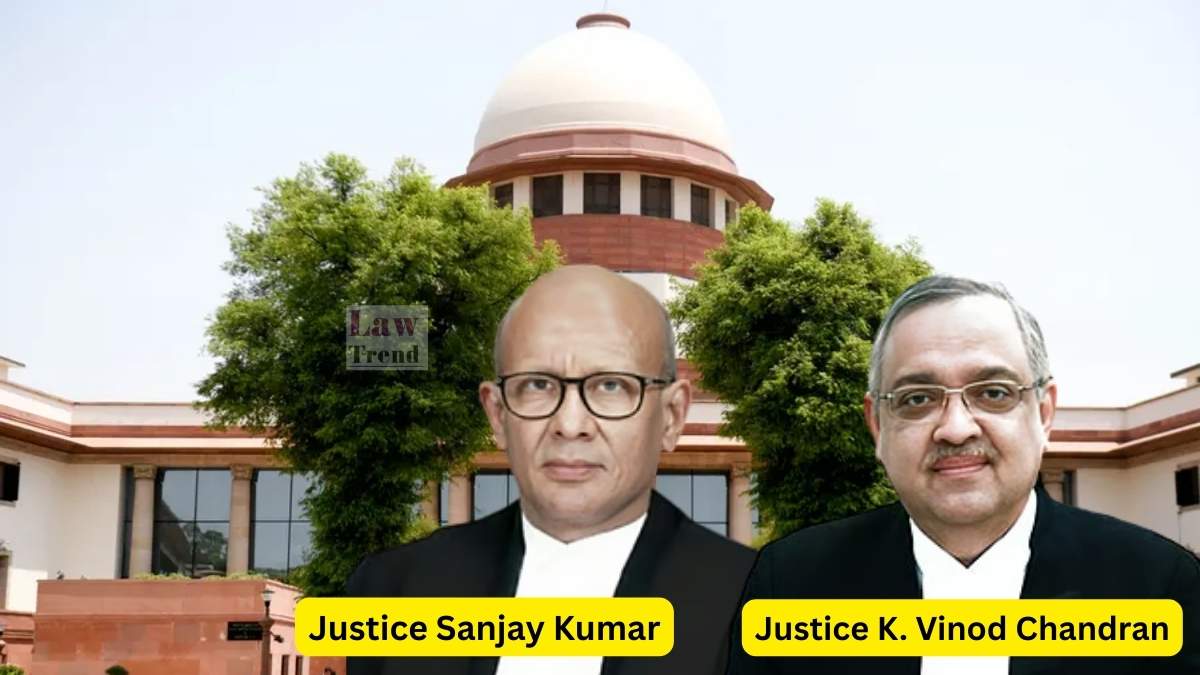

The Supreme Court of India has set aside a High Court acquittal, restoring the conviction of a Taluk Supply Officer (TSO) under the Prevention of Corruption Act, 1988. The Bench, comprising Justices Sanjay Kumar and K. Vinod Chandran, held that the testimony of a hostile witness does not stand “washed off the record” and can be used to establish a demand for a bribe if certain portions remain creditworthy and are corroborated by other evidence.

Background

The case originated from a prosecution initiated under Sections 7 and 13(1)(d) read with 13(2) of the Prevention of Corruption Act, 1988. The complainant, an Authorized Ration Dealer (ARD), alleged that the accused, K.A. Abdul Rasheed, then a Taluk Supply Officer, consistently refused to countersign the mandatory ‘Abstract’ of ration card changes. The prosecution’s case was that the accused demanded a bribe of ₹500 for the signature.

A trap was laid by the Vigilance Department on July 20, 2009. While the marked currency was recovered from the accused’s shirt pocket and his left-hand wash turned pink in the phenolphthalein test, the complainant (PW1) turned partially hostile during the trial.

The trial court convicted the accused, sentencing him to two years of concurrent imprisonment. However, the High Court acquitted the accused, citing “prevaricating deposition” by the complainant and a lack of direct evidence regarding the demand at the time of the trap, relying on the Constitution Bench decision in Neeraj Dutta v. State (NCT of Delhi).

Arguments of the Parties

For the State (Appellant): Senior Counsel Shri Raghenth Basant argued that despite inconsistent statements, there was sufficient oral evidence regarding the demand. He emphasized that the acceptance of the bribe was proved by PW1 and corroborated by independent witness PW2 and the trap officer PW17. He further argued that the accused’s explanation for possessing the money was a “deliberate falsehood.”

READ ALSO  Recording Phone conversations without consent violates right to privacy: Chhattisgarh High Court

For the Accused (Respondent): Senior Counsel Shri P.B. Suresh Kumar contended that the presumption of innocence was fortified by the High Court’s acquittal. He relied on Jayaraj B. v. State of Andhra Pradesh, arguing that on identical facts, the demand was found not proved. He pointed out that the complainant had denied his previous statements regarding the demand during cross-examination.

The Court’s Analysis

The Supreme Court scrutinized the deposition of PW1, noting that while he affirmed defense suggestions in cross-examination to help the accused, his chief examination and responses to specific confrontations remained creditworthy.

READ ALSO  सुप्रीम कोर्ट ने सूरत एपीएमसी भूमि दुरुपयोग में हाईकोर्ट के हस्तक्षेप का समर्थन किया, इसे 'घोटाला' बताया

The Court referred to the Constitution Bench in Neeraj Dutta v. State (NCT of Delhi) and the precedent in Sat Paul v. Delhi Administration, observing:

“It is for the Judge of fact to consider in each case whether as a result of such cross-examination and contradiction, the witness stands thoroughly discredited or can still be believed in regard to a part of his testimony.”

The Bench noted that PW1 had affirmed before the trial court that he had confirmed the truthfulness of his oral complaint to independent witnesses at the time it was recorded. This was fully corroborated by PW2 (independent witness) and PW17 (Vigilance Officer).

The Court observed:

“The evidence of PW1 was pock marked with inconsistent versions, but it is for the court to scrutinize the same and find out whether there is anything creditworthy enabling proof of the allegation raised.”

Regarding the acceptance of the money, the Court found the accused’s explanation—that the ₹500 was a loan repayment for a third party—to be a “false explanation” and a “compelling circumstance pointing to the guilt.”

READ ALSO  SC Extends by a Year Exemption to Linguistic Minority School Students From Writing Tamil Language Paper

Decision

The Supreme Court concluded that the earlier demand was established despite the prevarications of the complainant. The Bench held that the High Court erred in finding that no demand had been established.

“We allow the appeal setting aside the order of the High Court and restoring the order of the trial court,” the Court ruled. The Court maintained the two-year sentence, noting it was the statutory minimum for the offences.

Case Details:

  • Case Title: The State of Kerala v. K.A. Abdul Rasheed
  • Case No.: Criminal Appeal No. [To be assigned] of 2026 (@SLP (Crl.) No. 1808 of 2026)
  • Bench: Justice Sanjay Kumar, Justice K. Vinod Chandran
  • Date: April 15, 2026

Law Trend
Law Trendhttps://lawtrend.in/
Legal News Website Providing Latest Judgments of Supreme Court and High Court

Related Articles

Latest Articles

