

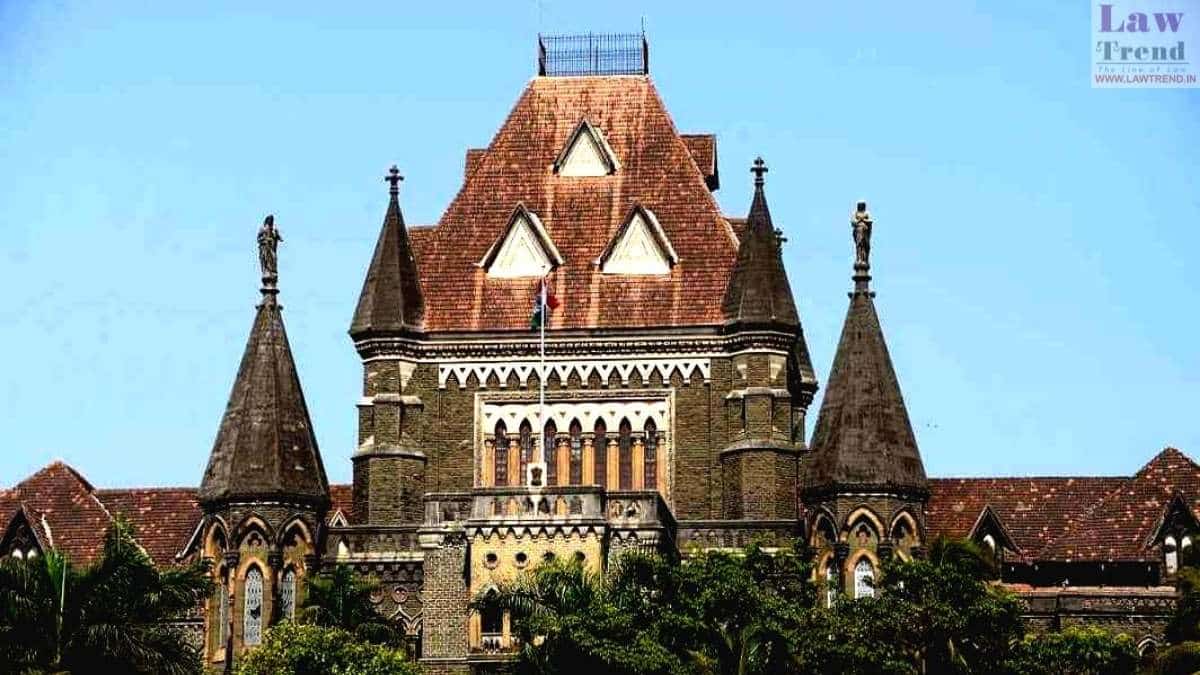
The Bombay High Court has raised significant constitutional concerns over recent amendments to prison rules that impose a “blanket ban” on furlough for prisoners convicted under special statutes such as MCOCA and the POCSO Act. Observing that such restrictions may violate fundamental rights and undermine the reformative approach of the justice system, the court has referred the matter to a larger bench for a definitive ruling.
The order was delivered on April 10 by the Nagpur bench, comprising Justices Anil Pansare and Nivedita Mehta, while hearing a petition filed by Rohit Tangappa Joseph. Joseph, an aide of gangster Chhota Rajan, is currently serving a life sentence for the 2011 murder of veteran journalist J Dey.
The legal challenge arose after the Amravati prison authorities rejected Joseph’s application for a 28-day furlough to attend to a family emergency. The authorities cited a December 2024 amendment to the Maharashtra Prisons (Furlough and Parole) Rules, which introduced strict prohibitions on granting furlough to those convicted of serious offences or crimes under special Acts like the Maharashtra Control of Organised Crime Act (MCOCA) and the Protection of Children from Sexual Offences (POCSO) Act.
Joseph, who was convicted of murder and criminal conspiracy under the IPC and relevant MCOCA provisions, argued that the denial was arbitrary.
In its detailed observation, the Division Bench questioned the rationale behind isolating convicts of special statutes from the standard reformative process. The court noted that while furlough is a conditional privilege, a total prohibition based solely on the nature of the offence is counter-productive.
“The objective of furlough is to enable prisoners to remain in touch with their families and deal with family matters, to provide relief from the detrimental impact of continuous captivity in prison and to enable prisoners to remain hopeful about their future and have an active interest in life,” the High Court remarked.
The bench further highlighted the nuance required in organized crime cases. It pointed out that in syndicates, different members play vastly different roles. “To treat them all at par for the purpose of deciding eligibility for furlough would amount to treating unequals as equals. It creates a class within a class of persons,” the court observed.
The High Court expressed skepticism regarding the presumption that certain convicts do not require family contact or relief from captivity. “We do not find any rational as to why should prisoners, irrespective of the fact that they are convicted under a particular Act, be not permitted to remain in touch with their families,” the bench stated.
The court clarified that while denying furlough based on a prisoner’s specific conduct in jail or to protect societal interests might be justified, a blanket ban based only on the statute of conviction defeats the very purpose of the privilege.
Given the existence of conflicting previous judgments on this issue, the Division Bench has directed the plea to be placed before the Chief Justice of the High Court to constitute a larger bench to decide whether the state can legally deny furlough in this manner.
The petitioner, Rohit Joseph, was one of the key persons convicted alongside gangster Chhota Rajan for the killing of J Dey. Dey was shot dead near his residence in Powai, Mumbai, on June 11, 2011. According to the prosecution, the hit was ordered by Rajan, who was reportedly incensed by articles Dey had written about his criminal activities.




