

Vacancy Due to Non-Joining Cannot be Claimed as a Right in Absence of Waiting List Rules: Supreme Court

The Supreme Court of India has held that in the absence of specific statutory provisions for a waiting list or an additional list, a candidate cannot claim appointment to a post left unfilled by a selected candidate as a matter of right.

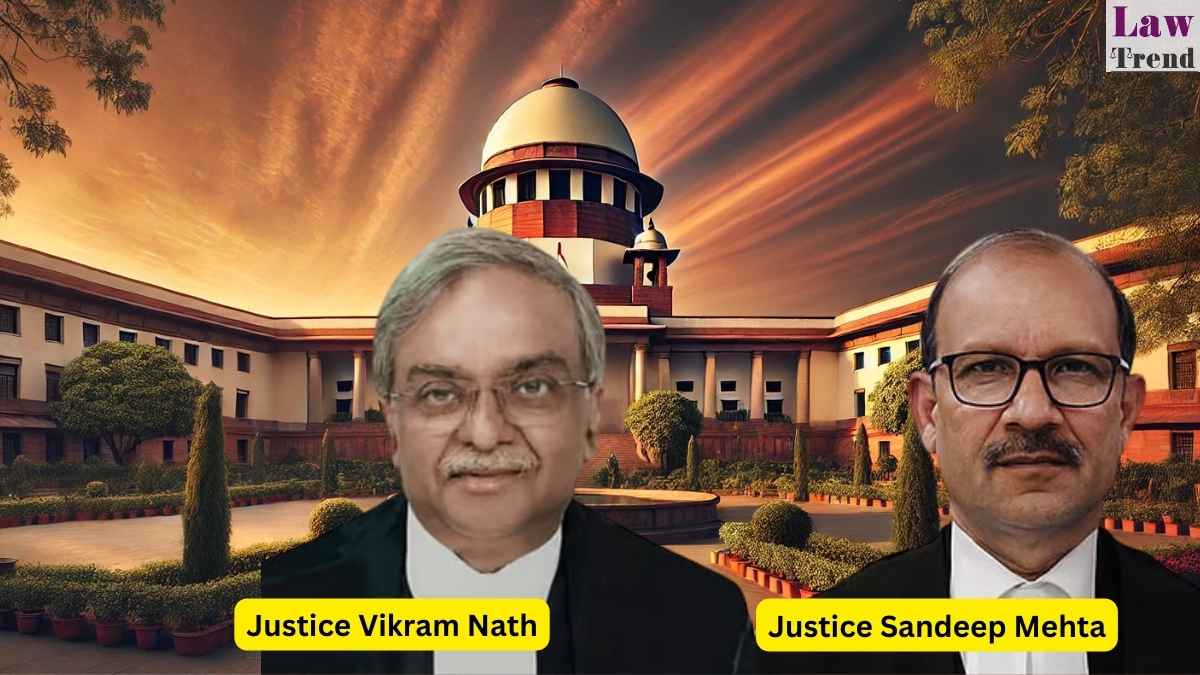
A Bench of Justice Vikram Nath and Justice Sandeep Mehta set aside a Karnataka High Court judgment that had directed the State to consider a candidate for the post of Assistant Commissioner (KAS) simply because the topper in that category failed to complete pre-appointment formalities. The Court emphasized that the “factual existence of an unfilled post” does not automatically create a “legal right” for the next candidate in line.

Background of the Case

The case originated from a 2011 recruitment notification issued by the Karnataka Public Service Commission (KPSC) for 362 Gazetted Probationer posts. The respondent, Santhosh Kumar C, an ex-serviceman, participated in the process.

In the final select list published on March 21, 2014, one Sri Aiyappa M.A. was selected for the post of Assistant Commissioner, Karnataka Administrative Service (KAS), Group A, under the General Merit Ex-Military Person (GM/Ex-MP) category. The respondent was selected for a different post: Assistant Commissioner of Commercial Taxes, Group A.

However, Sri Aiyappa M.A. did not undergo the mandatory medical examination or police verification and never reported for duty. The respondent, who had already joined his assigned post in May 2022, submitted a representation to the Department of Personnel and Administrative Reforms (DPAR) claiming he should be appointed to the KAS post as he was the next candidate in order of merit.

READ ALSO  Supreme Court: Job Advertisements Without Specified Vacancies Are Invalid and Lack Transparency

DPAR rejected the request, stating that the Karnataka Recruitment of Gazetted Probationers (Appointment by Competitive Examinations) Rules, 1997 (the “1997 Rules”) did not provide for a waiting list. The Karnataka State Administrative Tribunal (the “Tribunal”) upheld this rejection, but the Karnataka High Court later reversed it, prompting the State to appeal to the Supreme Court.

Arguments of the Parties

The State of Karnataka argued that the recruitment process concluded once the final select list was published. They contended that under Rule 11 of the 1997 Rules, the KPSC is only required to prepare a list equal to the number of vacancies. They maintained that any vacancy arising from non-joining must be treated as a fresh vacancy for future recruitment.

The Respondent contended that since the selected candidate never even reached the stage of medical examination, the vacancy remained “unfilled” within the original recruitment cycle. He argued that as the candidate immediately below the selected person, who had expressed a preference for the KAS post, he was entitled to be considered.

The Court’s Analysis

The Supreme Court closely examined Rule 4(3) and Rule 11 of the 1997 Rules. The Court observed that the scheme is “one of recruitment against notified vacancies” and not an “open-ended reservoir of candidates.”

The Bench noted:

READ ALSO  सुप्रीम कोर्ट ने राज्य बार काउंसिलों में SC/ST वकीलों के लिए आरक्षण की याचिका ठुकराई, कहा—चुनाव शुरू होने के बाद बहुत देर से आया मामला

“Rule 11… contemplates preparation of separate lists, equal to the available number of vacancies, for each of the services and groups of posts advertised… The Rule does not indicate that the list is to continue as an open-ended source of appointment even after the notified vacancies have been exhausted or the selection process has otherwise run its course.”

The Court further highlighted that the 1997 Rules do not provide for any “reserve list, waiting list, or additional list.” In the absence of such an enabling provision, the State cannot be compelled to “travel further downward” to fill a post.

Referring to the landmark judgment in Shankarsan Dash v. Union of India (1991), the Court reiterated:

“inclusion of a candidate’s name in a select list does not by itself confer an indefeasible right to appointment. A select list makes a candidate eligible for consideration in accordance with the governing rules. It does not create a vested right to claim appointment dehors the statutory framework.”

The Bench also cited Rakhi Ray v. High Court of Delhi (2010) and State of Orissa v. Rajkishore Nanda (2010) to affirm that appointments must strictly conform to notified vacancies and governing rules.

READ ALSO  Court Convicts Man for Sexually Harassing Lady Police Officer by Making 300 Calls in 48 Hours

Regarding the High Court’s reasoning, the Supreme Court stated:

“In our view, this approach conflates the factual existence of an unfilled post with the legal question as to the permissible mode of filling it… Once the Rules themselves define the contours of the list and do not provide for any reserve or additional list, the absence of a selected candidate from the field cannot enlarge the statutory operation of the list.”

Final Decision

The Supreme Court concluded that the Tribunal was correct in its initial assessment. It held that the respondent could not claim a right to the post as the statutory framework did not permit the operation of the select list beyond the initial allocation.

The Court allowed the appeal, set aside the Karnataka High Court’s judgment dated April 21, 2025, and dismissed the original writ petition.

Case Details:

  • Case: State of Karnataka & Ors. v. Santhosh Kumar C
  • Citation: 2026 INSC 276 (Civil Appeal No. of 2026 arising out of SLP (C) No. 35896 of 2025)
  • Bench: Justice Vikram Nath and Justice Sandeep Mehta
  • Date: March 23, 2026

Law Trend
Law Trendhttps://lawtrend.in/
Legal News Website Providing Latest Judgments of Supreme Court and High Court

Related Articles

Latest Articles

