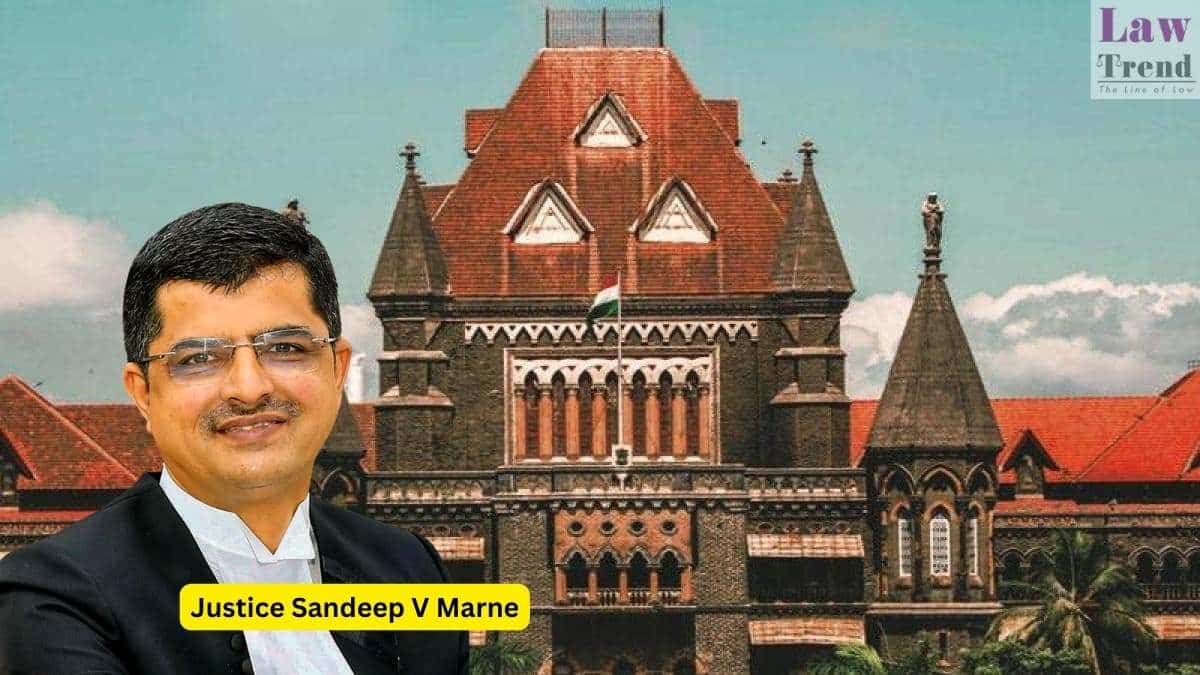
The Bombay High Court has ruled that a person who questions the title or ownership of a testator in respect of properties bequeathed in a Will does not possess a ‘caveatable interest’ and is considered a ‘stranger’ to probate proceedings. Justice Sandeep V. Marne held that such individuals cannot maintain an application for the revocation of probate, as the Probate Court is not competent to determine questions of title.
The Court allowed a Civil Revision Application filed by Sunil Waman Bhide, setting aside a Pune Trial Court’s order that had previously entertained a revocation application filed by the relatives of the deceased testator.
Background
The dispute centered around the Will of Nalini alias Rajeshwari Nagarkar, dated August 23, 2005. Under the Will, Rajeshwari bequeathed certain properties in Satara to her son-in-law, Sunil Waman Bhide (the Applicant), and other properties to her three children. Following her death in 2008, the named executor obtained probate from the Court of Civil Judge Senior Division, Pune, on December 13, 2011.
In 2013, the testator’s brother, Laxman Gopal Kanhere, and his son, Chandrahas, filed a Miscellaneous Application seeking revocation of the probate under Section 383 of the Indian Succession Act, 1925. They contended that Rajeshwari had no right to execute the Will because the properties actually belonged to her mother, Radhabai, who had allegedly executed a subsequent Will in 1997 in favor of Chandrahas, cancelling a previous 1992 Will in favor of Rajeshwari.
The Applicant (Bhide) challenged the maintainability of this revocation application. However, the Trial Court rejected his objection on December 20, 2022, prompting the revision before the High Court.
Arguments of the Parties
For the Applicant: Dr. Abhinav Chandrachud argued that the respondents were questioning the title of the testator, which makes them strangers to the probate proceedings. Relying on Krishna Kumar Birla v. Rajendra Singh Lodha (2008), he submitted that a caveatable interest exists only if the probate defeats a line of succession the caveator would otherwise follow. He noted that the respondents were not claiming through Rajeshwari but were asserting an independent title.
For the Respondents: Senior Advocate S.M. Gorwadkar argued that the probate was “superfluous and inconsequential” as the Will was executed in Pune for properties in Satara, which does not mandate probate under Section 213 of the Indian Succession Act. He further contended that the respondents had a share in the property and that the Probate Court’s grant interfered with their rights.
Court’s Analysis and Observations
The High Court focused on the definition of “caveatable interest” and the jurisdiction of a Probate Court.
Justice Marne observed that the respondents’ primary grievance was that Rajeshwari did not have the title to the properties she bequeathed. Referring to the Supreme Court’s decision in Kanwarjit Singh Dhillon v. Hardyal Singh Dhillon, the Court noted:
“It was, therefore, not competent for the Probate Court to determine whether late S. Kirpal Singh had or had not the authority to dispose of the suit properties which he purported to have bequeathed by his will. The Probate Court is also not competent to determine the question of title to the suit properties…”
The Court reconciled a perceived conflict between two Supreme Court judgments: Krishna Kumar Birla and G. Gopal v. C. Bhaskar. While G. Gopal suggested that even a “slight interest” allows a person to file a caveat, the High Court clarified that this applies to those who would inherit the estate through the testator if the Will were set aside.
In this case, Justice Marne noted:
“Any person questioning existence of title in respect of the estate or capacity of the testator to dispose of property by will on the ground outside the law of succession, becomes a stranger to the probate… They are questioning the title of the testator claiming that she was not the owner of the properties… since this plea is raised, there is no question of Respondent Nos. 1 to 4 inheriting the properties bequeathed by Rajeshwari, through her.”
On the issue of whether probate is “optional” for Wills executed outside presidency towns, the Court cited Mahesh N. Bhat v. Mark Uppaluri, affirming that while not compulsory, the law does not prohibit the grant of probate for such Wills.
Decision
The High Court concluded that the Trial Court committed a material irregularity by holding the revocation application maintainable.
“The Applicants in Civil Miscellaneous Application No. 616 of 2013 do not have a caveatable interest since they are seeking revocation of probate essentially by questioning title of the testator,” the Court held. It further noted that the respondents had already filed a substantive title suit where their claims could be properly adjudicated.
The Court set aside the Trial Court’s order and dismissed the Miscellaneous Application for revocation of probate.
Case Details:
- Case Title: Sunil Waman Bhide v. Chandrahas Laxman Kanhere & Ors.
- Case Number: Civil Revision Application No. 351 of 2023
- Bench: Justice Sandeep V. Marne
- Date of Judgment: March 17, 2026