

Right of Private Defence Cannot Justify Disproportionate Force: Allahabad HC Converts Acquittal to Conviction Under Sec 304 Part II IPC
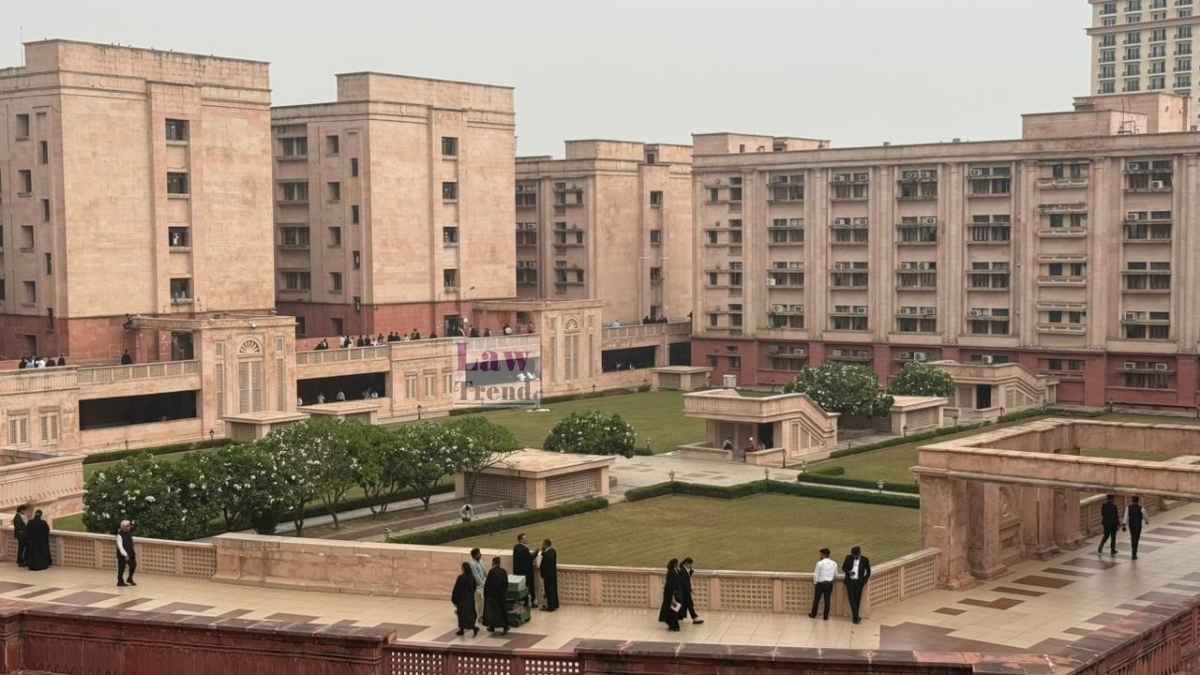

The Lucknow Bench of the Allahabad High Court has set aside a 1986 acquittal of two men involved in a 1984 fatal assault, ruling that the right of private defense cannot be used to justify the exercise of disproportionate and lethal force. The Division Bench, comprising Justice Rajnish Kumar and Justice Babita Rani, converted the acquittal into a conviction under Section 304 Part II of the Indian Penal Code (IPC), observing that the trial court’s original findings were “patently perverse.”

Background of the Case

The case dates back to June 15, 1984, in District Unnao, arising from a dispute over a parnala (rainwater pipe). The deceased, Jamuna Prasad, was fixing the pipe on his roof, which was opposed by his neighbors—Tulsi Ram, Lakshmi Narain, Jagat Pal, and Harnaam—who feared water would drain onto their property.

On Tulsi Ram’s instigation, Lakshmi Narain and Jagat Pal (armed with lathis) and Harnaam (armed with a bhala or spear) allegedly assaulted Jamuna Prasad on his roof. The victim’s brother, Amrit Lal (PW1), was also injured. Jamuna Prasad later succumbed to his injuries. On March 31, 1986, the Special Sessions Judge, Unnao, acquitted the accused, granting them the benefit of private defense. The State of U.P. appealed in 1987. Due to the deaths of Tulsi Ram and Lakshmi Narain during the pendency of the appeal, the proceedings continued only against Jagat Pal and Harnaam.

Arguments of the Parties

For the State (Appellant): The learned AGA contended that the trial court erred in granting the plea of self-defense based on minor, superficial injuries found on accused Harnaam. It was argued that the prosecution is not mandated to explain trivial injuries and that the right to self-defense does not permit the taking of a life in response to a minor altercation.

For the Respondents (Accused): The defense argued that the deceased and the informant were the aggressors. They maintained that the prosecution’s failure to explain Harnaam’s injuries proved that the incident was suppressed and that the accused acted solely to protect their person and property.

READ ALSO  Allahabad HC Denies Bail to Abbas Ansari

The Court’s Analysis

The High Court focused on the legal limits of private defense and the weight of medical evidence.

1. On Disproportionate Force and Private Defense: The Court emphasized that under Section 99 of the IPC, the right of private defense does not extend to inflicting more harm than is necessary. The Bench observed:

“The nature and type of the weapons used by the accused persons speaks volumes of their intent and by no stretch of imagination can it be said that they used such deadly weapons for mere self-defence.”

The Bench further noted that the deceased was empty-handed and performing routine work on his own roof. It held that a dispute over a parnala does not confer a right to resort to violence. Citing Bihari Lal v. State of Bihar (2008), the Court held that even if a quarrel occurred, the accused must prove a “grave apprehension about the safety of their life” to justify such retaliation.

READ ALSO  917 सहायक प्रोफेसर भर्ती मामला : अपर सचिव ने बताया- शिक्षा सेवा आयोग गठन के लिए समिति गठित

2. On Non-Explanation of Injuries: Addressing the trial court’s reliance on Harnaam’s unexplained injuries, the High Court clarified the law using State of Gujarat v. Bai Fatima (1975) and Lakshmi Singh v. State of Bihar (1976). It held that non-explanation is only fatal if injuries are grievous. In this case:

“The injuries established on the person of accused are simple in nature, therefore… non-explanation of his injuries is not so much fatal which may render the case of prosecution as unreliable.”

READ ALSO  Law is Doomed if Law Enforcement Agency Itself Acts Illegally; Allahabad HC Summons SP On Allegation of Forcible Eviction

3. Culpable Homicide vs. Murder: The Court found that while there was no evidence of a “pre-meditated intention to kill”—as each accused struck only one blow and did not repeat the assault—they acted with the knowledge that a bhala blow could be fatal. Consequently, the offense was identified as culpable homicide not amounting to murder.

Decision of the Court

The High Court set aside the 1986 acquittal. Respondents Jagat Pal and Harnaam were convicted under Section 304 Part II read with Section 34 and Section 323/34 of the IPC. Harnaam’s acquittal under Section 25 of the Arms Act was sustained due to investigative lapses.

The Bench cancelled the bail bonds of the convicts and ordered them to be taken into custody immediately. The case is listed for May 11, 2026, for a hearing on the sentence.

Case Details

  • Case Title: State of U.P. vs. Tulsi Ram
  • Case No.: Government Appeal No. 91 of 1987
  • Bench: Justice Rajnish Kumar and Justice Babita Rani
  • Date: April 30, 2026

Law Trend
Law Trendhttps://lawtrend.in/
Legal News Website Providing Latest Judgments of Supreme Court and High Court

Related Articles

Latest Articles

