

Non-Compliance with Procedural Safeguards Under NDPS Act Not Fatal if Recovery and Possession Proved: Chhattisgarh High Court
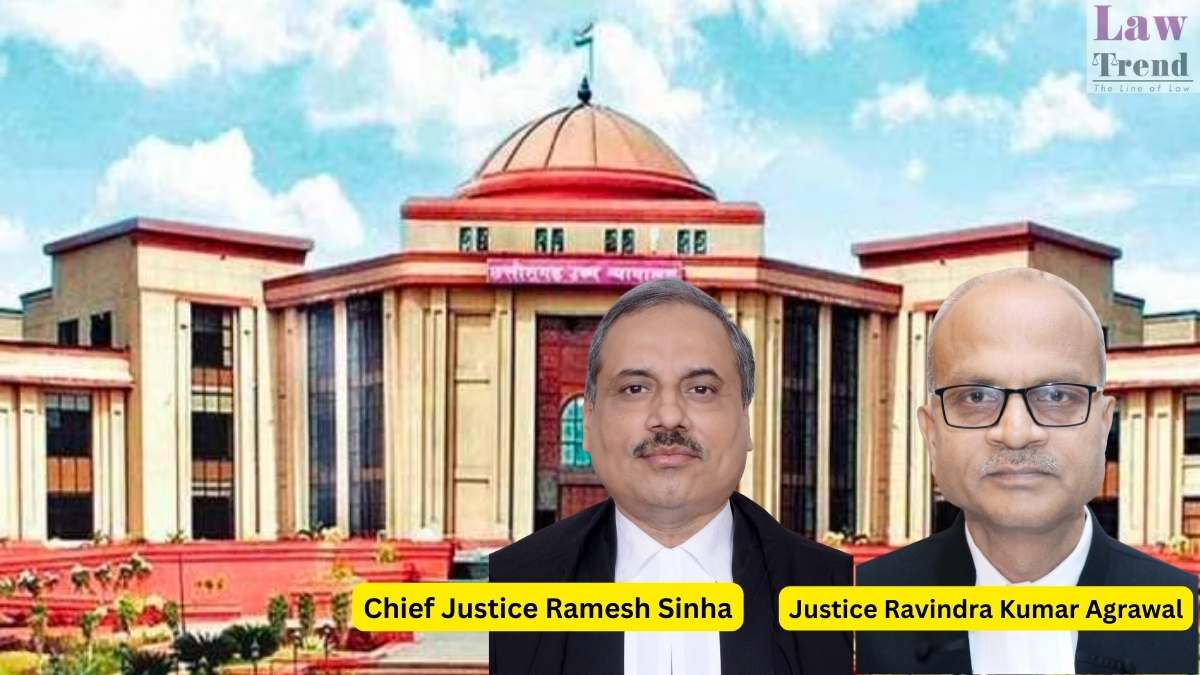

The High Court of Chhattisgarh has affirmed that procedural lapses or non-compliance with Sections 42, 50, and 52-A of the Narcotic Drugs and Psychotropic Substances (NDPS) Act, 1985, do not automatically vitiate a prosecution’s case if the recovery, possession, and chain of custody are established through cogent evidence. The Division Bench, comprising Chief Justice Ramesh Sinha and Justice Ravindra Kumar Agrawal, held that substantive proof of an offence cannot be overridden by procedural technicalities unless prejudice to the accused is demonstrated.

Background of the Case

The appellant, Sheikh Rehman Qureshi, was arrested on May 4, 2024, following secret information received by the Station House Officer of Police Station Telibandha, Raipur. The police intercepted the appellant beneath the Kashiram Nagar overbridge, where he was found in possession of a black bag. Upon search, the police recovered 25 strips containing a total of 600 capsules of “Spasmo Proxyvon Plus.” Forensic analysis later confirmed the presence of psychotropic substances, including Dicyclomine, Tramadol, and Acetaminophen.

On September 15, 2025, the Special Judge (NDPS Act), Raipur, convicted the appellant under Section 22(c) of the NDPS Act, sentencing him to 15 years of rigorous imprisonment and a fine of ₹1,50,000. The appellant challenged this conviction, alleging serious procedural violations and a broken chain of custody.

Arguments of the Parties

For the Appellant: Counsel for the appellant, Mr. Ali Afzaal Mirza, argued that the prosecution case was “vitiated due to serious procedural lapses.” Key arguments included:

  • Non-compliance with Section 52-A and 55: The inventory did not contain proper descriptions, and the sampling process was defective as only 48 out of 600 capsules were tested.
  • Tampering Concerns: It was alleged that the malkhana register had overwritings and the seal was not deposited with the seized articles.
  • Section 50 Violation: The appellant contended he was not properly apprised of his right to be searched before a Gazetted Officer or Magistrate.
  • Delay: Counsel pointed out a delay in sending samples to the Forensic Science Laboratory (FSL) and inconsistencies in the dates of sampling.
READ ALSO  Chhattisgarh HC Denies Anticipatory Bail to Ex-Advocate General in Corruption Case

For the State: Mr. Shaleen Singh Baghel, Government Advocate, opposed the appeal, stating that the conviction was based on “proper appreciation of both oral and documentary evidence.” He argued that:

  • Section 50 was not strictly applicable as the recovery was from a bag, not a personal search.
  • There was “substantial compliance” with Section 52-A.
  • The chain of custody was duly maintained, and minor discrepancies did not impact the root of the case.
READ ALSO  Senior Citizens Act | Neglecting Elderly Parent Can Invalidate Property Gifted Out of Love and Affection: Delhi HC

Court’s Analysis and Observations

The Court systematically addressed the legal points raised. Regarding the competence of the Investigating Officer (I.O.), the Court noted that Sub-Inspectors are empowered by State Government notifications to conduct searches and investigations under the NDPS Act.

On Section 43 vs. Section 42: The Court clarified that since the seizure occurred in a “public place” (under an overbridge) while the appellant was in transit, Section 43 of the NDPS Act applied. The Bench observed:

“The rigours of Section 42 relating to prior recording of information… are not mandatory in the same manner as applicable to searches of enclosed premises.”

On Section 50 (Personal Search): The Bench dismissed the argument regarding Section 50, reiterating established Supreme Court precedents like State of Himachal Pradesh v. Pawan Kumar (2005). The Court stated:

“The search of a bag, briefcase or container carried by the accused cannot be treated as a personal search and therefore the provisions of Section 50 would not apply in such a situation.”

On Section 52-A (Mandatory Safeguards): The Court emphasized that Section 52-A is a procedural safeguard, not an inexorable rule. Citing the recent Supreme Court ruling in Bharat Aambale v. State of Chhattisgarh (2025), the Bench noted:

READ ALSO  Mere Presumption of Possible Apprehension Is Not a Ground for Case Transfer: Chhattisgarh High Court

“Non-compliance of the procedure envisaged under Section 52A may be fatal only in cases where such non-compliance goes to the heart or root of the matter… The emphasis must be on substantive justice rather than procedural technicalities.”

The Court found that the inventory was prepared before a Magistrate and the chain of custody was “complete and unbroken.” The FSL report conclusively proved the capsules contained controlled psychotropic substances.

Decision

The High Court concluded that the prosecution successfully established the appellant’s “conscious and exclusive possession” of the contraband. It held that the statutory presumptions under Sections 35 and 54 of the NDPS Act operated against the appellant, which he failed to rebut.

Finding no merit in the appeal, the Court dismissed it and affirmed the judgment of conviction and the 15-year sentence passed by the Trial Court.

Case Details Block:

  • Case Title: Sheikh Rehman Qureshi v. State of Chhattisgarh
  • Case No.: CRA No. 2151 of 2025
  • Bench: Chief Justice Ramesh Sinha and Justice Ravindra Kumar Agrawal
  • Date: 27.04.2026

Law Trend
Law Trendhttps://lawtrend.in/
Legal News Website Providing Latest Judgments of Supreme Court and High Court

Related Articles

Latest Articles

