

Testimony of Sole Reliable Eyewitness Sufficient for Conviction Despite Hostile Witnesses and Defective Investigation: High Court at Allahabad
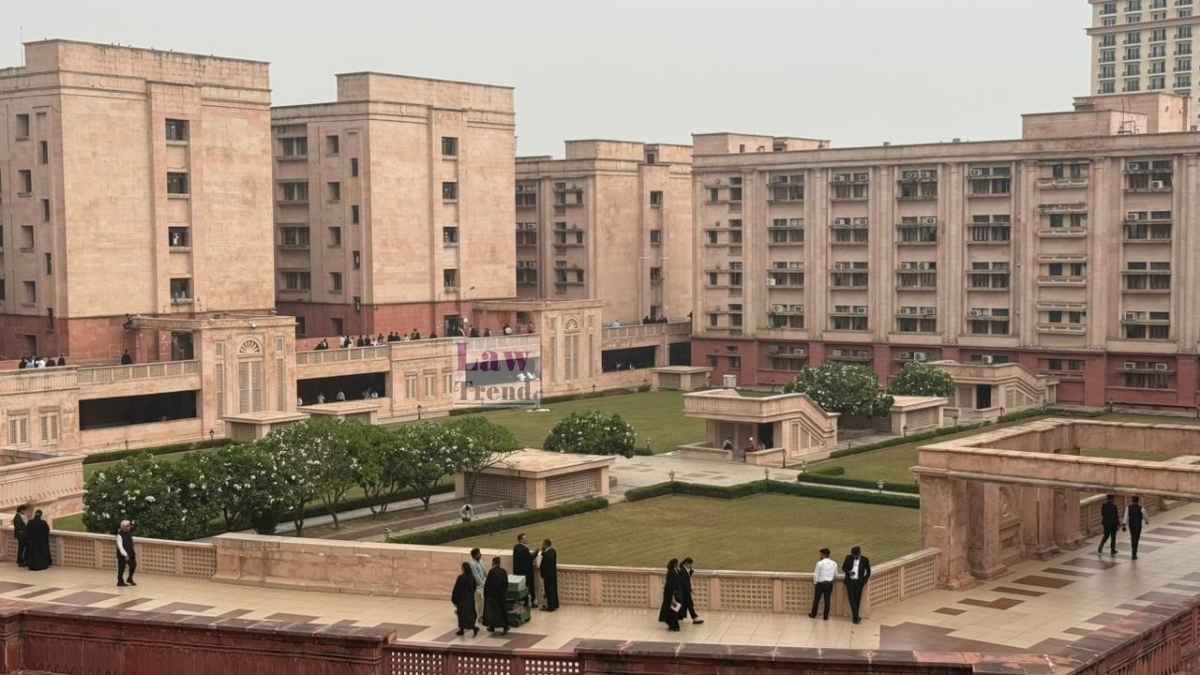

The High Court of Judicature at Allahabad, Lucknow Bench, has dismissed a criminal appeal challenging a 1986 conviction for a brutal murder involving a beheading. The Division Bench, comprising Justice Rajnish Kumar and Justice Zafeer Ahmad, affirmed the life imprisonment of the surviving appellants, ruling that the testimony of a single reliable eyewitness is sufficient for conviction even in the absence of independent corroboration or the recovery of the murder weapon.

Background of the Case

The incident dates back to July 15, 1984, in village Manjore, District Unnao. According to the prosecution, the deceased, Suraj Deen, was working in his agricultural field with his son, Brij Kishore (PW-1). At approximately 11:30 A.M., four accused—Suresh, Awadhesh, Rakesh, and Santosh—arrived at the spot.

The prosecution alleged that Suresh caught the legs of Suraj Deen while Rakesh and Santosh used a gandasa (chopper) to decapitate him. Awadhesh, armed with a country-made pistol, stood guard. After the murder, Awadhesh allegedly wrapped the severed head in polythene, placed it in a bag, and fled. The motive was attributed to a 25-year-old enmity stemming from the murder of Santosh’s father, Rajjan Tiwari, for which the deceased had been prosecuted and acquitted decades earlier.

While the appeal was pending, appellant no. 1 (Suresh) and appellant no. 2 (Awadhesh) passed away, leading to the abatement of the appeal against them. The proceedings continued for Rakesh and Santosh.

READ ALSO  PIL Against 'Adipurush' Movie: Allahabad High Court Issues Notice To CBFC

Arguments of the Parties

The learned counsel for the appellants contended that the Trial Court erred by convicting the accused based solely on the testimony of PW-1, especially since other alleged eye-witnesses (PW-3 and PW-4) were either disbelieved or turned hostile. They argued that PW-1 was an “interested witness” (being the son) and that his presence was doubtful as he worked in Kanpur. Furthermore, they pointed to the non-recovery of the gandasa and the absence of an immediate motive.

Conversely, the learned AGA for the State and the counsel for the complainant argued that PW-1’s testimony was natural, cogent, and inspired confidence. They maintained that minor inconsistencies do not vitiate a criminal trial and that motive remains secondary when direct ocular evidence is available.

The Court’s Analysis

The High Court addressed several key legal principles regarding evidence and investigation:

1. Conviction on Sole Testimony Referring to Section 134 of the Indian Evidence Act, the Court noted that the law emphasizes the quality, not quantity, of evidence. Citing Anil Phukan v. State of Assam (1993), the Bench observed:

READ ALSO  Widow Daughter-in-Law Is Entitled to Maintenance from Her Father-in-Law, Even If She Chooses Not to Live in Her Matrimonial Home: Allahabad High Court

“Indeed, conviction can be based on the testimony of a single eyewitness and there is no rule of law or evidence which says to the contrary provided the sole witness passes the test of reliability.”

2. Related vs. Interested Witness The Court rejected the argument that PW-1’s testimony should be discarded simply because he was the son of the deceased. Citing Mohd. Rojali Ali v. State of Assam (2019), the Court held that a close relative is often the last person to shield the real culprit. The Bench noted:

“The evidence of a witness cannot be ignored or thrown out solely because it emanates from a person closely related to the victim.”

3. Defective Investigation and Non-Recovery of Weapon The Court held that the failure to recover the murder weapon is not fatal if ocular testimony is trustworthy. Citing Brahm Swaroop v. State of U.P. (2011) and Ashok Kumar Singh Chandel v. State of U.P. (2002), the Court remarked that:

“Defects in investigation cannot be a ground for acquittal when there is otherwise reliable and trustworthy evidence available on record.”

READ ALSO  [All HC Full Bench] Is Writ of Habeas Corpus Maintainable Against a Judicial Order sending the victim to Women Protection Home/Juvenile home?

4. Motive in Direct Evidence Cases The Bench clarified that while motive is crucial in circumstantial cases, it loses significance when credible direct evidence exists. Citing Chandan v. State (NCT of Delhi) (2024), the Court affirmed that the absence of a strong immediate motive does not create a dent in the prosecution’s case if the eyewitness account is cogent.

The Decision

Concluding that PW-1 was a “natural and credible witness,” the High Court found no manifest error in the Trial Court’s judgment. The Bench affirmed the conviction of Rakesh (Appellant No. 3) and Santosh (Appellant No. 4) under Sections 302/34 and 201/34 of the IPC.

The Court ordered the surviving appellants, who were on bail, to surrender within 15 days to serve their life sentences.

Case Details:

  • Case Name: Suresh and 3 Others v. State of U.P.
  • Case Number: Criminal Appeal No. 737 of 1986
  • Bench: Justice Rajnish Kumar and Justice Zafeer Ahmad
  • Date: March 18, 2026

Law Trend
Law Trendhttps://lawtrend.in/
Legal News Website Providing Latest Judgments of Supreme Court and High Court

Related Articles

Latest Articles

