

Supreme Court Affirms Conviction of Excise Constable in 1990 Bribery Case; Reduces Sentence to Statutory Minimum Citing Appellant’s Age
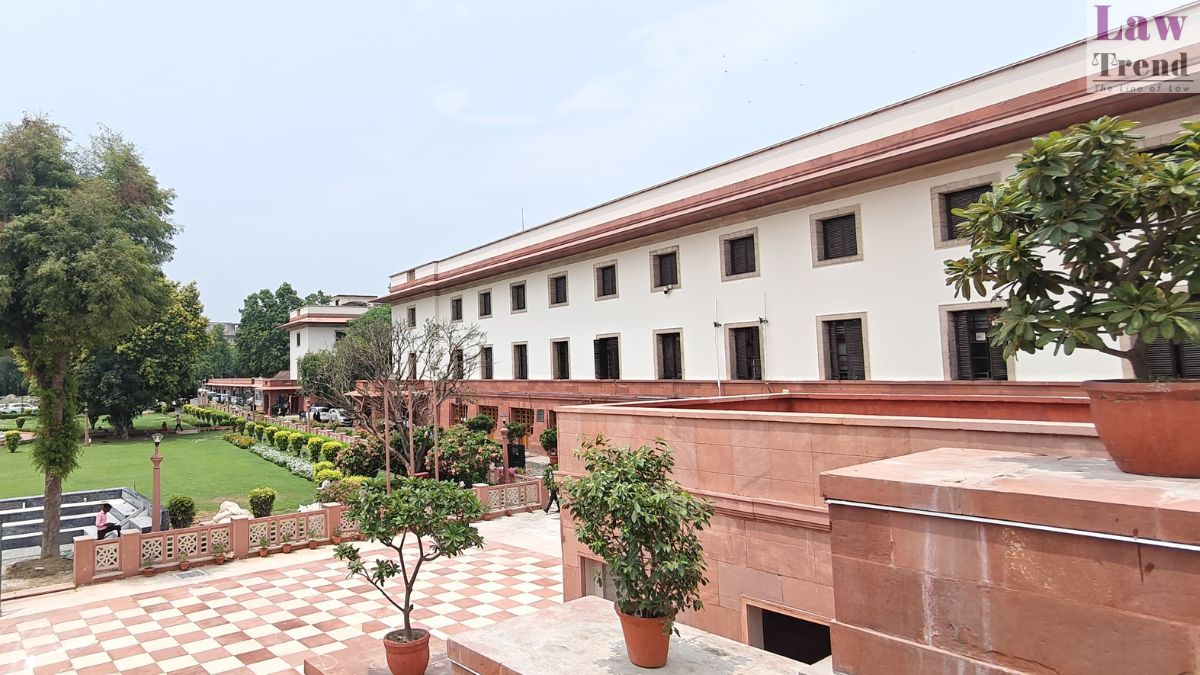

The Supreme Court of India has upheld the conviction of an Excise Constable, Raj Bahadur Singh, for offences under the Prevention of Corruption Act (P.C. Act), 1988, arising from a 36-year-old bribery case. While maintaining the conviction, a Bench comprising Justice Pankaj Mithal and Justice Prasanna B. Varale modified the sentence, reducing the term of imprisonment to the statutory minimum on account of the appellant’s age, which is currently approximately 75 years.

Background of the Case

The case dates back to June 1990. The appellant, Raj Bahadur Singh, was serving as a Constable in the Excise Department in District Udham Singh Nagar, Uttarakhand. The complainant, Kashmir Singh (PW1), who was reportedly involved in the business of manufacturing contraband liquor, alleged that during a raid on June 16, 1990, the appellant demanded a bribe of ₹500 to spare him from being forwarded to the competent court.

A trap was organized by the Vigilance Department on June 19, 1990, at a restaurant in Khatima. According to the prosecution, five currency notes of ₹100 denomination, treated with phenolphthalein powder, were recovered from the appellant in the presence of independent witnesses. The subsequent hand-wash test in sodium carbonate solution turned pink, confirming the presence of the powder.

Trial and High Court Proceedings

The Trial Court, on March 3, 2006, convicted the appellant under Section 7 and Section 13(2) of the P.C. Act, sentencing him to one year of rigorous imprisonment (R.I.) for the former and two years of R.I. for the latter. The High Court of Uttarakhand, in its judgment dated April 13, 2012, dismissed the appellant’s appeal and sustained the conviction and sentence.

Arguments of the Parties

Before the Supreme Court, the appellant’s counsel argued that the complainant had a motive to falsely implicate the constable to allow his contraband business to flourish. It was contended that there were material contradictions between the testimony of the complainant (PW1) and the shadow witness (PW2). The defense further claimed that the appellant was not afforded an opportunity to examine himself as a witness and noted that the tainted currency notes were not produced before the court.

READ ALSO  Whether Single Judge Bench of SC Grant Divorce under Article 142 of Constitution? Answers SC

Conversely, the State of Uttarakhand argued that the prosecution had proved its case beyond reasonable doubt. It was submitted that PW2, an independent witness, corroborated the entire chain of events. The State maintained that the appellant had sufficient opportunity to demand the gratification and that the complaint was not a result of personal enmity.

Court’s Analysis

The Supreme Court found no merit in the appellant’s challenges to the conviction. Regarding the credibility of the shadow witness (PW2), the Court observed:

READ ALSO  जेल में सुधार के मुद्दे पर राज्य बहुत गंभीर नहीं- इलाहाबाद हाईकोर्ट ने यूपी के मुख्य सचिव को तलब किया

“Now, merely on the statement that PW-2 had an acquaintance with PW-1, one cannot jump to the conclusion that PW-2 was an interested witness. To brand the witness as an interested witness, the defense is required to bring specific material before the Court showing the hostility of the particular witness.”

The Court rejected the argument regarding the non-production of currency notes, noting that this ground was never raised before the Trial Court or the High Court. Furthermore, the Court noted that the appellant had not availed himself of the opportunity to testify in open court under the provisions of the Act.

The Bench agreed with the High Court’s assessment that a defense witness (the restaurant owner) was not trustworthy as he was a local resident likely unwilling to incur the “wrath” of a government servant from the same town.

Decision of the Court

The Supreme Court held that the concurrent findings of the lower courts were not warranted for interference regarding the conviction. However, the Court took a lenient view of the sentencing.

READ ALSO  मध्य प्रदेश हाईकोर्ट ने वरिष्ठ अधिवक्ता पद के लिए साक्षात्कार की तिथि निर्धारित की

The Court noted that the appellant was approximately 40 years old at the time of the offence and is now around 75 years of age. Having spent approximately 2 months and 24 days in custody, the Court modified the sentence to the statutory minimum:

“We are of the opinion that the sentence awarded by the Trial Court and upheld by the High Court can be modified to the extent of minimum sentence for the said offences namely, rigorous imprisonment of 6 months for the offence under Section 7 of P.C. Act and rigorous imprisonment of 1 year for the offence under Section 13(2) of P.C. Act.”

The appeal was disposed of with the modified sentence.

Case Details:

  • Case Title: Raj Bahadur Singh vs. State of Uttarakhand
  • Case Number: Criminal Appeal No. 1105 of 2013
  • Judges: Justice Pankaj Mithal and Justice Prasanna B. Varale
  • Date of Judgment: March 13, 2026

Law Trend
Law Trendhttps://lawtrend.in/
Legal News Website Providing Latest Judgments of Supreme Court and High Court

Related Articles

Latest Articles

