

Criminal Conviction Cannot Be Sustained on Basis of Possibility or Suspicion; Allahabad High Court Acquits Two Accused After 42 Years
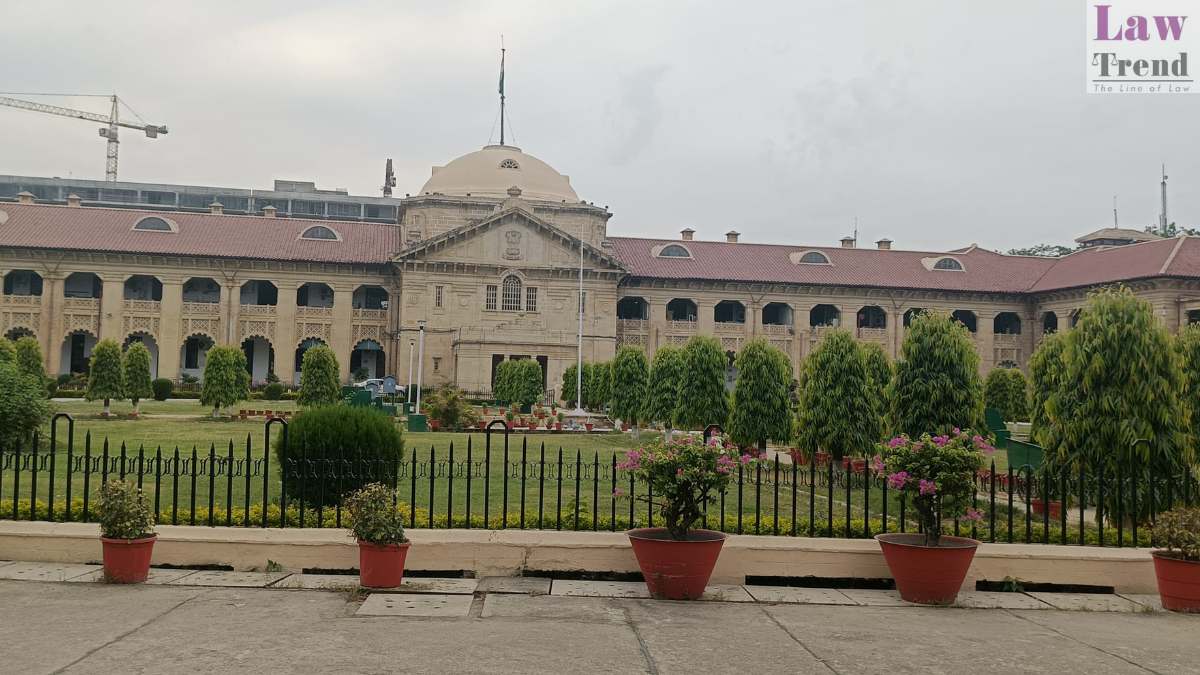

The Allahabad High Court has set aside the conviction of two men in a 1983 murder and attempted murder case, emphasizing that a criminal conviction cannot rest on mere “possibility or suspicion.” The Division Bench, comprising Justice Siddharth and Justice Garima Prashad, extended the benefit of doubt to the surviving appellants, Natthi and Bharat, observing significant infirmities in the prosecution’s evidence.

The court delivered its judgment on March 12, 2026, in two connected appeals—Criminal Appeal No. 639 of 1984 and Criminal Appeal No. 428 of 1984—challenging the February 8, 1984, order of the Additional Sessions Judge-X, Agra. While the primary accused, Raghuveer Singh and Jagram, died during the pendency of the appeal (leading to the abatement of their cases), the court scrutinized the roles of the remaining appellants, Natthi and Bharat.

Background of the Case

The case originated from an incident on May 25, 1983, in village Raibha, District Agra. According to the prosecution, an altercation occurred between one Than Singh and the son-in-law of an individual named Nappa. Later that evening, while Than Singh and Tikam Singh were exercising near a hut, four accused—Raghuveer Singh, Bharat, Natthi, and Jagram—arrived.

Raghuveer Singh was allegedly armed with a gun, Bharat with a country-made pistol, and Natthi and Jagram with knives. The prosecution alleged that Natthi and Jagram stabbed Than Singh, while Raghuveer Singh and Bharat fired shots. Than Singh succumbed to his injuries, while Tikam Singh (PW-2) sustained knife wounds. The trial court convicted all four under Sections 302/34 and 307/34 of the Indian Penal Code (I.P.C.).

Arguments of the Parties

The counsel for the appellants, Mr. Kamlesh Kumar Tripathi, argued that the prosecution evidence was unreliable and riddled with material contradictions. He highlighted that:

  • There was no motive for Natthi and Bharat to participate, as the original dispute was between the deceased and Nappa’s son-in-law.
  • Despite allegations of firing from close range, no empty cartridges were recovered, and no firearm injuries were found on the victims.
  • The Investigating Officer (I.O.) and the doctor who treated the injured witness (PW-2) were not examined, depriving the defense of cross-examination on material points.
READ ALSO  इलाहाबाद हाईकोर्ट ने नोएडा में किसानों की भूमि से बाड़ हटाने का आदेश दिया

The Additional Government Advocate (A.G.A.) supported the conviction, arguing that the homicidal death of Than Singh was proved and that the testimony of the injured witness (PW-2) carried significant weight.

Court’s Analysis and Observations

Upon perusing the record, the High Court found several “material infirmities” that created reasonable doubt regarding the participation of Natthi and Bharat.

1. Doubtful Presence of Eyewitnesses The court noted that the informant (PW-1) admitted he witnessed the occurrence from the temple side and reached the spot only after the accused had fled. “Once PW-1 himself admits that he remained away from the place where the assault was actually taking place, his ability to observe the occurrence clearly and assign a precise role to each accused becomes doubtful,” the Bench observed.

2. Lack of Corroboration for Firearm Allegations Regarding appellant Bharat, the court noted that the allegation of firing from close range lacked objective corroboration. “Admittedly no empty cartridge was recovered from the place of occurrence. No firearm injury was found… No firearm was recovered from Bharat,” the judgment stated.

3. Ambiguity in Role Attribution For appellant Natthi, the court found that PW-2 failed to clarify who among the two knife-wielders (Natthi or Jagram) inflicted which injury. “In the absence of such clear attribution… it would be unsafe to hold with certainty that Natthi participated in the assault,” the court held.

4. Non-Examination of Material Witnesses The Bench took a serious view of the non-examination of the Investigating Officer and the treating doctor. Citing Behari Prasad v. State of Bihar (1996) 2 SCC 317, the court remarked that while non-examination of the I.O. is not always fatal, in this case, it caused prejudice to the defense. Similarly, the absence of the doctor’s testimony left the nature of PW-2’s injuries uncertain, impacting the Section 307 I.P.C. charge.

READ ALSO  When Inquiry Into caste certificates can be reopened? Supreme Court Judgment

5. Benefit of Doubt Invoking the principle from Kali Ram v. State of Himachal Pradesh (1973) 2 SCC 808, the court reiterated that “the golden thread which runs through the web of criminal jurisprudence is that the prosecution must prove its case beyond reasonable doubt.”

The court further observed:

“Criminal conviction cannot be sustained on the basis of possibility or suspicion. Where the evidence on record admits of two views, the view favourable to the accused must prevail.”

The Decision

The High Court allowed both appeals, setting aside the 1984 judgment of the trial court. Appellants Natthi and Bharat were acquitted of all charges under Sections 302/34 and 307/34 I.P.C. The court directed that both appellants be released forthwith, provided they are not wanted in any other case.

READ ALSO  Non-Impleadment of Partnership Firm in Cheque Bounce Case is a Curable Defect: Delhi HC Allows Amendment of Complaint with ₹35,000 Costs

Case Details:

  • Case Name: Jag Ram and another vs. State of U.P.
  • Case No.: CRLA No. 639 of 1984 with CRLA No. 428 of 1984
  • Bench: Justice Siddharth and Justice Garima Prashad
  • Date : March 12, 2026
  • Counsel for Appellants: Kamlesh Kumar Tripathi, T. Ghosh, T. Rathore
  • Counsel for Respondent: A.G.A.
  • Cited Cases: Lakshmi Singh v. State of Bihar (1976), Behari Prasad v. State of Bihar (1996), Kali Ram v. State of Himachal Pradesh (1973), State of Rajasthan v. Teja Ram (1999), Raees Ahmad @ Raesu v. State of U.P. (2026).

Law Trend
Law Trendhttps://lawtrend.in/
Legal News Website Providing Latest Judgments of Supreme Court and High Court

Related Articles

Latest Articles

