

Mutation Proceedings Cannot Be Stalled Due to Pending Municipal Dues: Allahabad High Court
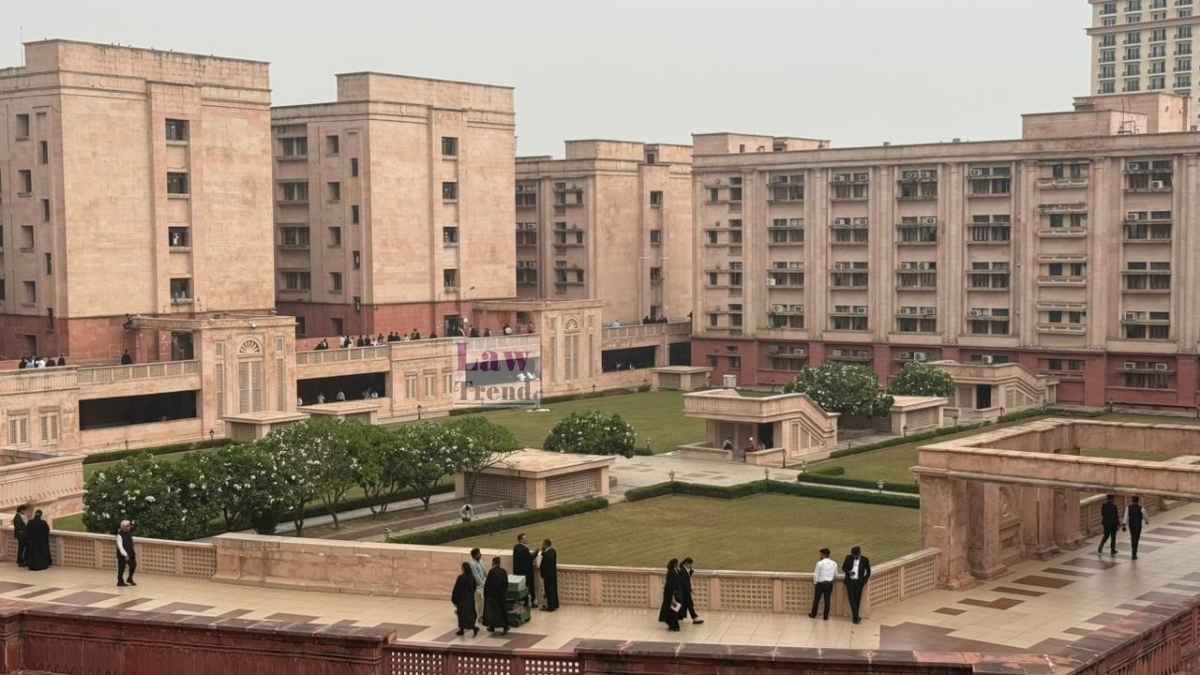
The Allahabad High Court at Lucknow has ruled that municipal authorities cannot stall mutation proceedings on the grounds of pending municipal dues unless there is an explicit statutory provision permitting such a condition. The court observed that the Municipal Commissioner lacks the authority to impose conditions for mutation that are not contained within the governing statute.

The Division Bench, comprising Justice Rajan Roy and Justice Abdhesh Kumar Chaudhary passed this order while disposing of a writ petition filed by Deepa Gupta.

Background of the Case

The petitioner, Deepa Gupta, moved the High Court seeking a direction for the mutation of her name in the municipal records regarding a premises she claimed to have purchased in 2009. The Lucknow Municipal Corporation had reportedly withheld the mutation, citing an internal order passed by the Municipal Commissioner. According to this order, a mutation entry cannot be completed unless all outstanding dues on the premises have been deposited.

Court’s Analysis and Observations

The court examined whether the Municipal Commissioner possessed the legal authority to impose such a condition. The Bench noted that the mutation process is statutorily governed by Section 213 of The U.P. Municipal Corporation Act, 1959.

The Court observed:

READ ALSO  Allahabad High Court Clarifies ₹125 Fee Cap for Photo-Affidavit ID; Modifies Direction on Notarized Affidavits

“Although it is the case of Municipal Corporation, Lucknow that there is an order passed by the Municipal Commissioner by which mutation order cannot be passed unless dues on the premises have been deposited, but no such provision in The U.P. Municipal Corporation Act, 1959… or in any rule or regulation made thereunder has been placed before us…”

The Bench further emphasized that Section 213 of the Act does not contain any such “embargo” or restriction. It held that the Municipal Commissioner apparently has no authority to override the statute through administrative orders.

Regarding the statutory framework, the Court stated:

“The mutation proceedings shall not be stalled on the ground that there are municipal dues on the premises unless there is any statutory provision to this effect.”

Furthermore, the Court quashed notices that had been issued to the “erstwhile owner,” noting that the individual in question is “no more.”

On Liability of Municipal Taxes

While ruling in favor of the petitioner on the mutation issue, the Court also addressed the petitioner’s obligation to pay taxes. The Bench noted that since the petitioner has been in possession of the premises since 2009, she is under an obligation to pay municipal taxes unless she can prove otherwise.

READ ALSO  In Money Laundering Cases Jail is Rule and Bail is Exception, Rules Allahabad HC

The Court directed the Municipal Corporation to:

  1. Determine if the premises is taxable under the Act, 1959.
  2. Calculate the tax and send a notice to the petitioner within three weeks.
  3. If the petitioner disputes the liability, she may move a representation with specific objections.

The Court clarified that if the Corporation finds the petitioner liable after considering her objections, it “shall proceed to recover it as per law.”

The Decision

The Court directed that the petitioner’s mutation application be considered “as per law, ignoring the aforesaid decision/order” of the Municipal Commissioner. The Bench ordered that the application be decided at the earliest, preferably within three months, provided there are no other legal impediments.

The writ petition was accordingly disposed of.

READ ALSO  Litigant Cannot Be Allowed to Fill Lacunae at Final Argument Stage: Delhi HC Dismisses SBI's Plea to File Additional Documents in 10-Year-Old Suit

Case Details

  • Case Name: Deepa Gupta vs. State of U.P. Thru. Addl. Chief Secy./Prin. Secy. Deptt. Of Housing And Urban Planning, Lko And 2 Ors.
  • Case Number: WRIT-C No. 709 of 2026
  • Bench: Justice Rajan Roy and Justice Abdhesh Kumar Chaudhary
  • Date : February 25, 2026

Law Trend
Law Trendhttps://lawtrend.in/
Legal News Website Providing Latest Judgments of Supreme Court and High Court

Related Articles

Latest Articles


