

Will Shrouded In Suspicious Circumstances Cannot Be Validated Merely By Proving Due Execution: Supreme Court
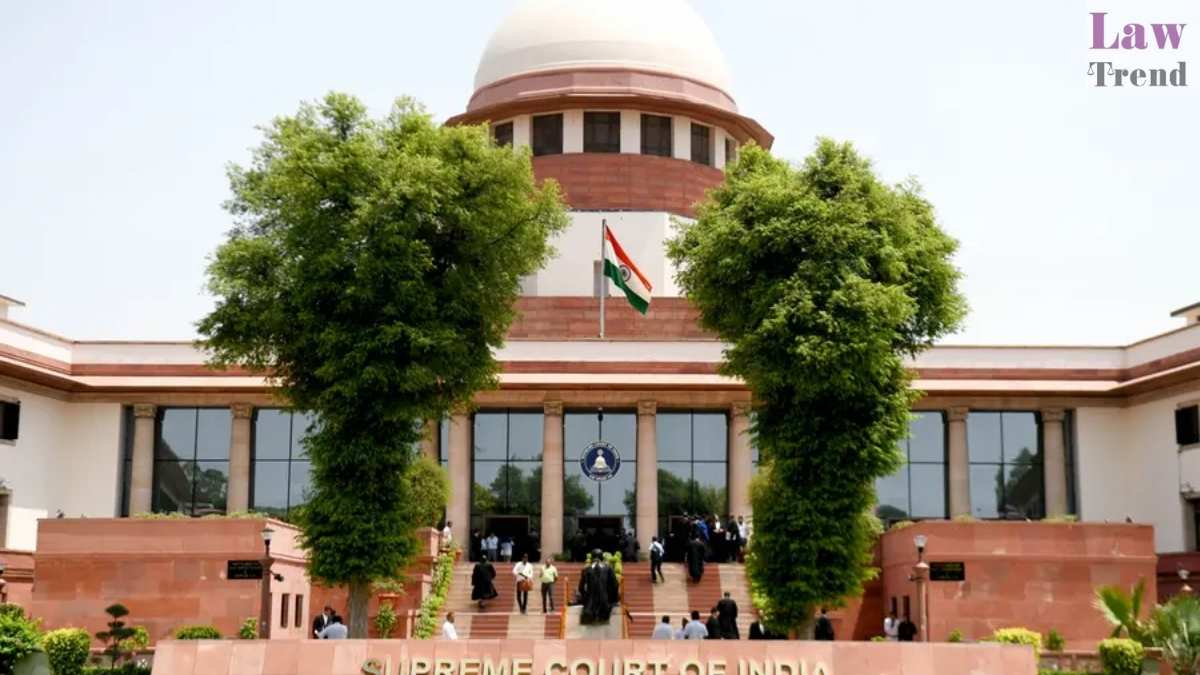

The Supreme Court of India has ruled that merely proving the execution and attestation of a Will under Section 63 of the Indian Succession Act is not sufficient to establish its validity if the document is surrounded by suspicious circumstances. A bench comprising Justice Manoj Misra and Justice K.V. Viswanathan set aside a Himachal Pradesh High Court judgment, clarifying that a Will must satisfy the judicial conscience of the court, and its propounder must offer a cogent explanation for any suspicious features.

With this ruling, the apex court restored the concurrent decrees of the trial court and the first appellate court, which had rightly discarded a disputed Will that completely disinherited a dependent wife in favor of non-relatives and contained uninitialed alterations on its registration page.

Background of the Case

The dispute arose from Civil Suit No. 51/1993, filed by Bhambo Devi, the widow of late Chhajju Ram. Chhajju Ram, an illiterate agriculturist who owned the suit schedule property, died childless and intestate on February 5, 1992. As he left behind no issues, his widow was his sole Class I heir under normal intestate succession. However, the defendants—Bishan Dass and Ram Singh—asserted ownership over the property by producing a registered Will dated November 6, 1974.

The defendants mutated the revenue records in their favor based on this Will. Bhambo Devi challenged the mutation and the Will, alleging it was a forged document and an act of fraud or undue influence. She sought a declaration of sole ownership and possession of the property. The defendants countered, claiming Chhajju Ram executed the Will in their favor out of love and affection for services they rendered to the couple.

The Trial Court decreed the suit in favor of the widow, finding multiple suspicious circumstances. Chief among these was the unexplained disinheritance of the wife on the flimsy ground that she had “sufficient ornaments and cash” (without details), and critical, uninitialed alterations at the back of the Will where the Sub-Registrar’s registration endorsement was located. At multiple places on the back, the name “Laxmi Kant Bassi” was written, crossed out, and replaced by hand with “Chhajju” without any initials or endorsement of the Sub-Registrar.

READ ALSO  Lok Sabha passes the Government of Delhi (Amendment Bill) 2021

During the pendency of the First Appeal, Bhambo Devi passed away, and Sardari Lal (the appellant) was eventually impleaded as her legal representative. The First Appellate Court affirmed the Trial Court’s decree. However, on a second appeal, the High Court of Himachal Pradesh reversed these concurrent findings, holding that since execution and attestation were proved by an attesting witness under Section 63 of the Succession Act, the cuttings on the back page were immaterial, and the Will was valid.

Arguments of the Parties

The appellant argued that the plaintiff’s status as the sole Class I heir was admitted by the defendants, meaning no separate proof of her right to inherit was needed. They contended that the burden of proving a Will lies heavily on its propounder, who must satisfy the court’s judicial conscience. The appellant highlighted multiple suspicious circumstances, including the unnatural disinheritance of a caring wife, the illiterate status of the testator, and the unexplained cuttings on the registration page which eliminated the presumption of proper registration. They relied on several precedents, including H. Venkatachala Iyengar v. B.N. Thimmajamma and Rani Purnima Debi v. Kumar Khagendra Narayan Deb.

The respondents (defendants) contended that the plaintiff’s pleas were self-contradictory, alleging both that the Will was bogus and that it was executed under fraud or undue influence. They argued that because the plaintiff did not testify or lead evidence to prove fraud, the suit had to fail. They maintained that the Will’s execution was fully proved by an attesting witness, and that the cuttings on the registration page had no bearing on the body of the Will on the front page. They relied on Madhukar D. Shende v. Tarabai Aba Shedage and Sridevi v. Jayaraja Shetty to argue that unequal or complete disinheritance does not automatically invalidate a Will.

The Court’s Analysis

The Supreme Court examined several key issues, starting with the consistency of the plaintiff’s pleadings. The Court noted that alternative pleadings are permissible under the Code of Civil Procedure (CPC) and that pleading fraud alternatively does not constitute a clear, unequivocal admission of the Will’s execution.

READ ALSO  सुप्रीम कोर्ट का अहम सवाल: क्या लिव-इन रिलेशनशिप में रहने वाले पुरुष पर चल सकता है धारा 498A का केस? कार्यवाही पर लगाई रोक

Furthermore, the Court held that the plaintiff’s non-examination was not fatal to the suit. Since the defendants did not traverse the plaintiff’s assertions regarding her marriage and Chhajju Ram’s exclusive ownership, those facts stood admitted under the “doctrine of non-traverse” (Order VIII Rule 5 of the CPC) and did not require proof.

Addressing the standard of proof for Wills, the Supreme Court cited the three-judge bench decision in Smt Jaswant Kaur v. Smt. Amrit Kaur, observing:

“In cases where the execution of a will is shrouded in suspicion, its proof ceases to be a simple lis between the plaintiff and the defendant. What, generally, is an adversary proceeding becomes in such cases a matter of the court’s conscience and then the true question which arises for consideration is whether the evidence led by the propounder of the will is such as to satisfy the conscience of the court that the will was duly executed by the testator. It is impossible to reach such satisfaction unless the party which sets up the will offers a cogent and convincing explanation of the suspicious circumstances surrounding the making of the will.”

Applying this standard, the Supreme Court evaluated the suspicious circumstances:

  1. Disinheritance of the Wife: The Court observed that while disinheritance alone may not always be suspicious, depriving a caring, dependent wife in favor of non-relatives is highly unnatural and “pinches the Court’s conscience.” The reasons offered in the Will (that the wife had ornaments and the beneficiaries had served the testator) were found to be factually incorrect or flimsy.
  2. Illiteracy and Incorrect Recitals: The testator was an illiterate agriculturist who could only use a thumb mark. The Will contained significant factual errors, such as describing the beneficiaries as the testator’s “nephews” and claiming he lived with them, which the evidence disproved.
  3. The Cuttings on the Will: Under the Registration Act, 1908, a registration certificate carries a presumption of regularity. However, because the name of the presenter was altered from “Laxmi Kant Bassi” to “Chhajju” without any initials from the Sub-Registrar, the Court held that the benefit of this presumption was lost. The Court noted that this alteration made it impossible to verify if the Sub-Registrar actually read over the Will to Chhajju Ram or verified his identity.
READ ALSO  निर्मूल साक्ष्यों पर आधारित नहीं हो सकती सजा: सुप्रीम कोर्ट ने दोषपूर्ण जांच के आधार पर फांसी की सजा पाए कैदी को किया बरी

Finally, the Court addressed the High Court’s jurisdiction under Section 100 of the CPC. Referencing the three-judge bench decision in Mansinghrao Yeshwant Rao Patil v. Ramchandra Govindrao Patil, the Supreme Court noted:

“The use of time-honored phrases like ‘the conscience of the Court being satisfied’ cannot convert a question of fact into one of law. The phrase is only a rule of prudence and is nothing more than a picturesque way of saying that when the legal heirs to property are being divested in whole, or in part, of their inheritance by a man who is no longer available for examination as a witness great caution should be employed before upholding such an act. But despite all this the question remains one of fact.”

The Court concluded that since the lower courts’ finding of unexplained suspicious circumstances was a well-reasoned finding of fact, the High Court had no substantial question of law before it and had exceeded its jurisdiction by interfering under Section 100 CPC.

The Decision

The Supreme Court allowed the appeal and set aside the judgment and order of the High Court of Himachal Pradesh. The Court affirmed the decree passed by the trial court and the first appellate court, thereby restoring the declaration of ownership and permanent injunction in favor of the late widow’s legal representative. No order was made as to costs.

Case Details

Case Title: Sardari Lal v. Bishan Dass & Ors.
Case No.: Civil Appeal No. 10990 of 2016
Bench: Justice Manoj Misra, Justice K.V. Viswanathan
Date: July 06, 2026

Law Trend
Law Trendhttps://lawtrend.in/
Legal News Website Providing Latest Judgments of Supreme Court and High Court

Related Articles

Latest Articles

